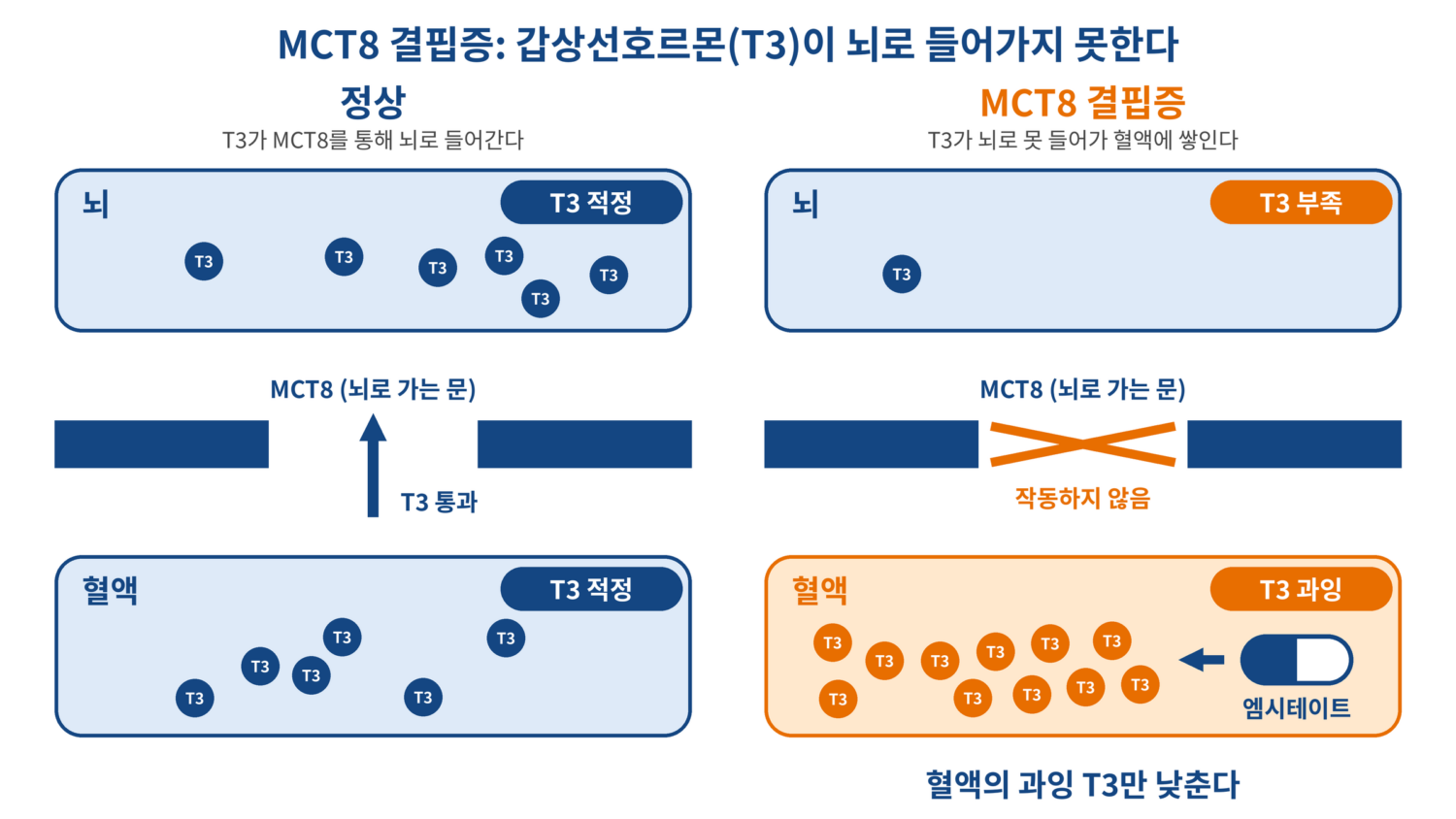
Thyroid hormone is essential for infant brain development. But when the cellular "gateway" that transports the hormone into the brain is defective from birth, thyroid hormone accumulates in the bloodstream while the brain remains severely deprived.
This physiological paradox lies at the heart of MCT8 deficiency, also known as Allan-Herndon-Dudley syndrome—a rare, debilitating genetic disorder.
On September 28, the U.S. Food and Drug Administration (FDA) approved Emcitate (tiratricol), developed by Swedish biopharmaceutical company Egetis Therapeutics, to treat peripheral thyrotoxicosis in adult and pediatric patients with MCT8 deficiency. It marks the first FDA-approved treatment for the condition.
The approval is specifically indicated for peripheral thyrotoxicosis—a state in which excess thyroid hormone in the blood overstimulates peripheral tissues such as the heart and skeletal muscles—rather than proven improvement in central neurological or cognitive function.
Severe Motor Impairments and Life-Threatening Complications
MCT8 is a specialized transport protein responsible for shuttling active thyroid hormone (T3) across cell membranes, particularly into the brain. Mutations in the SLC16A2 gene on the X chromosome impair this transport, preventing T3 from reaching brain tissue while causing it to build up to toxic levels in the blood. Because it is an X-linked condition, MCT8 deficiency predominantly affects males, occurring in approximately 1 in 70,000 live male births.
According to the FDA, most patients suffer from profound developmental delays, leaving them unable to sit or walk independently, with severely restricted speech, intellectual disability, and feeding difficulties.
The disorder carries a severe prognosis. In an international natural history study analyzing 151 patients across 47 institutions in 22 countries, 32 patients (21.2%) died during follow-up. The primary causes of death were recurrent respiratory infections and sudden cardiac death. Median survival was estimated at 35 years, with substantial variation among individuals.
Significant Reduction in Blood T3, but Neurodevelopmental Limitations Remain
Tiratricol, the active ingredient in Emcitate, is a thyroid hormone analog structurally similar to T3. It enters cells without relying on the defective MCT8 transporter, effectively clearing excess T3 from the circulation.
In a 12-month clinical trial involving 46 pediatric and adult patients, treatment with tiratricol reduced mean serum T3 levels by 63%, from 323 ng/dL down to a normal range of 118 ng/dL. Participants also experienced reductions in peak systolic blood pressure (averaging 4.1 mmHg) and heart rate (averaging 8.9 beats per minute).
The pivotal trial supporting FDA clearance, the randomized ReTRIACt study, evaluated 15 patients with stabilized T3 levels. Patients were randomized to either discontinue treatment (8 patients) or maintain therapy (7 patients) for 30 days. All eight patients who discontinued tiratricol experienced a rapid rebound in T3 levels, whereas those who continued therapy maintained stable levels, demonstrating statistically significant control over thyroid hormone excess.
However, trials have not confirmed a restoration of impaired neurodevelopment. In a separate 96-week study involving 22 infants and young children under 30 months of age, the treatment failed to meet its primary motor development endpoints (GMFM-88 and BSID-III gross motor scales). While blood T3 levels dropped significantly in these young patients, data showing that treatment restores brain development remains lacking.
Emcitate first received marketing authorization from the European Medicines Agency in February 2025. Following additional clinical trials requested by the FDA, Egetis Therapeutics completed its U.S. application in January 2026, securing approval under priority review in roughly eight months.
Dosing Guidelines and Clinical Considerations
Emcitate is supplied as tablets to be dissolved in water and administered orally or via a feeding tube once daily, or in two to three divided doses. Prescribing guidelines advise against co-administering other thyroid medications, such as levothyroxine, and warn against abrupt discontinuation, recommending gradual dose tapering instead.
During dose titration, patients must be monitored for signs of thyrotoxicosis, including elevated heart rate, high blood pressure, diarrhea, excessive sweating, and insomnia. The drug label also explicitly notes that Emcitate is not indicated for weight loss.
Cases Documented in South Korea
MCT8 deficiency is officially designated as a nationally managed rare disease by the Korea Disease Control and Prevention Agency (KDCA).
In a 2021 study published in the Annals of Child Neurology by researchers at Seoul National University Children's Hospital, nine Korean boys diagnosed with the condition via genetic testing between 2010 and 2020 were evaluated. All nine exhibited severe developmental delays, hypotonia, spasticity, and elevated serum T3 levels; seven were non-ambulatory and non-verbal.
While the median age at their first clinical visit was 6 months, thyroid function testing was performed at a median age of 16 months (ranging from 8 to 83 months). Researchers emphasized that in male infants, the combination of marked developmental delay, severe hypotonia, spasticity, and elevated T3 should prompt early genetic testing for MCT8 deficiency.