Actress Jennifer Lawrence recently drew attention during an interview about cosmetic procedures when she remarked, “I want to try buccal fat removal, but I can’t because I feel like everyone would notice.”
The term “buccal fat removal” alone often makes the procedure sound like a guaranteed way to slim the face. The logic seems simple: remove fat from full cheeks to achieve a smoother, narrower facial contour. Because of this assumption, many patients enter plastic surgery consultations with fundamental misconceptions about what the surgery can actually accomplish.
Buccal fat removal is not simply a face-slimming procedure. Rather, it reduces the volume of the deep buccal fat pad to create shadowing beneath the cheekbones, making the zygomatic arches appear more prominent by comparison. Medical literature notes that in appropriately selected patients, removing buccal fat reduces mid-cheek fullness while emphasizing cheekbone projection, adding definition and a sculpted, angular contour to faces with less pronounced cheekbones.
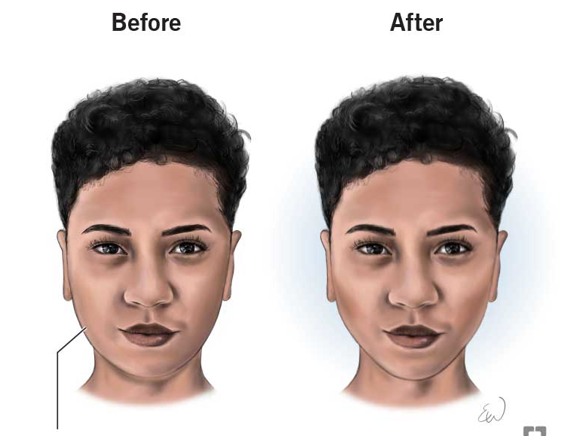
However, reducing volume beneath the cheekbones in East Asian faces—where cheekbones are often already wide or prominent—can produce the opposite effect. Instead of making the face look smaller, it can cause the cheekbones to stand out even more and leave the cheeks looking hollow. Furthermore, as facial fat naturally diminishes with age, this hollowing can become even more pronounced over time.
Most patient expectations stem from a basic misunderstanding of where buccal fat is actually located. In clinical practice, at least 95% of people misidentify its position.
Patients who request buccal fat removal almost invariably point to the bulging area below the corners of the mouth, asking, "Isn't there too much buccal fat right here?"
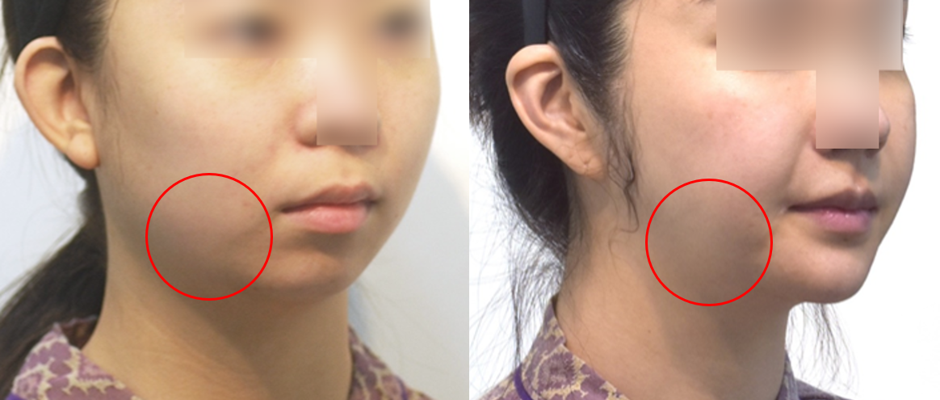
In reality, the buccal fat pad sits higher, in the upper region of the mid-cheek. Bulging near the mouth is not caused by buccal fat; it stems from surrounding oral muscles, soft tissue, or a lack of underlying skeletal support. Removing buccal fat leaves the lower mouth bulge untouched while causing unwanted hollowing beneath the cheekbones.
What, then, should someone do if the area beside the corners of the mouth looks puffy?
During consultations, patients who complain of lower cheek fullness often share a familiar set of overlapping concerns:
"My cheeks are too puffy."
"My mouth looks like it sticks out."
"My philtrum seems too prominent."
"I think I have a double chin, too."
Assuming these are four separate issues, patients often consider buccal fat removal, orthodontic treatment to set the mouth back, philtrum reduction surgery, and submental liposuction for a double chin.
Upon closer examination, however, these symptoms frequently trace back to a single root cause: a retruded chin tip, commonly known as a weak chin.
When the lower jaw and chin tip lack forward projection, soft tissues around the mouth are not properly supported, making the corners of the mouth appear thick and heavy. Compared to a receded chin, the mouth appears relatively protrusive and the philtrum looks exaggerated. A lack of submental length and support under the jaw can also create the illusion of a double chin, even without excess fat.
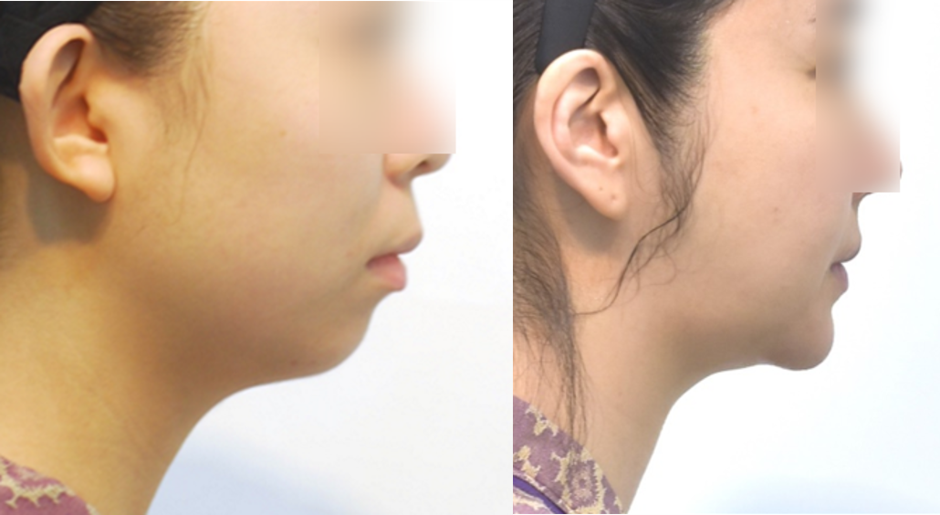
While attempting to address each bulge individually leads to multiple separate procedures, recognizing the underlying structural issue changes the entire strategy.
In many cases, simply advancing the chin tip forward provides proper structural support for the lower face. This refines the area around the mouth, reduces the impression of a protruding mouth and philtrum, and sharpens the jawline under the chin all at once. What appeared to be four distinct problems was actually one skeletal issue manifesting in multiple ways.
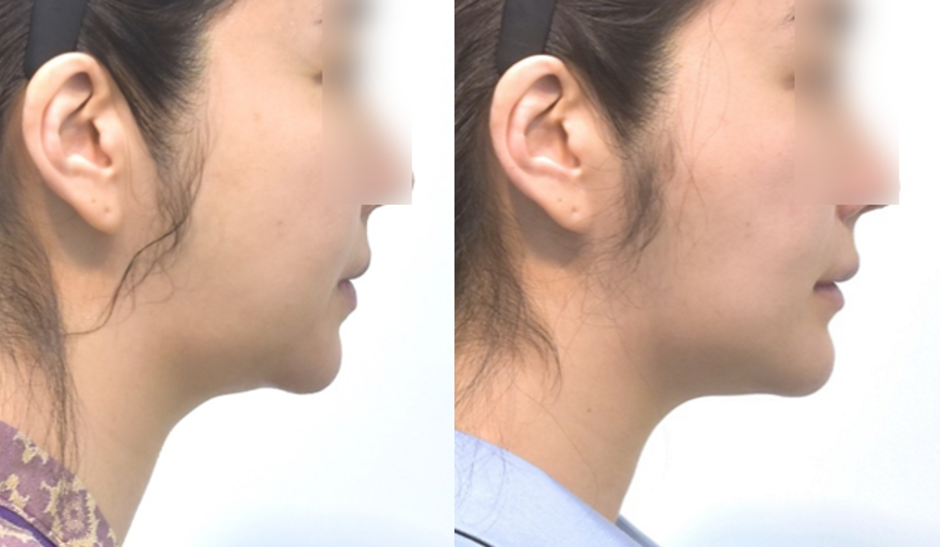
Naturally, some individuals do possess genuine buccal fat hypertrophy, and for patients with suitable facial architecture, buccal fat removal yields excellent results. What matters most is accurately identifying the root cause of the unwanted fullness.
A common mistake in plastic surgery is assuming that what is visible is automatically the cause—reducing what protrudes, removing what looks thick, or cutting what appears long.
But facial anatomy is rarely that simple. Often, rather than reducing what sticks out, providing proper structural support where it is lacking makes the face appear smaller and far more naturally refined.
If you are considering buccal fat removal, instead of searching the mirror for cheek fat to eliminate, ask yourself one essential question: "Is that fullness really caused by buccal fat?"