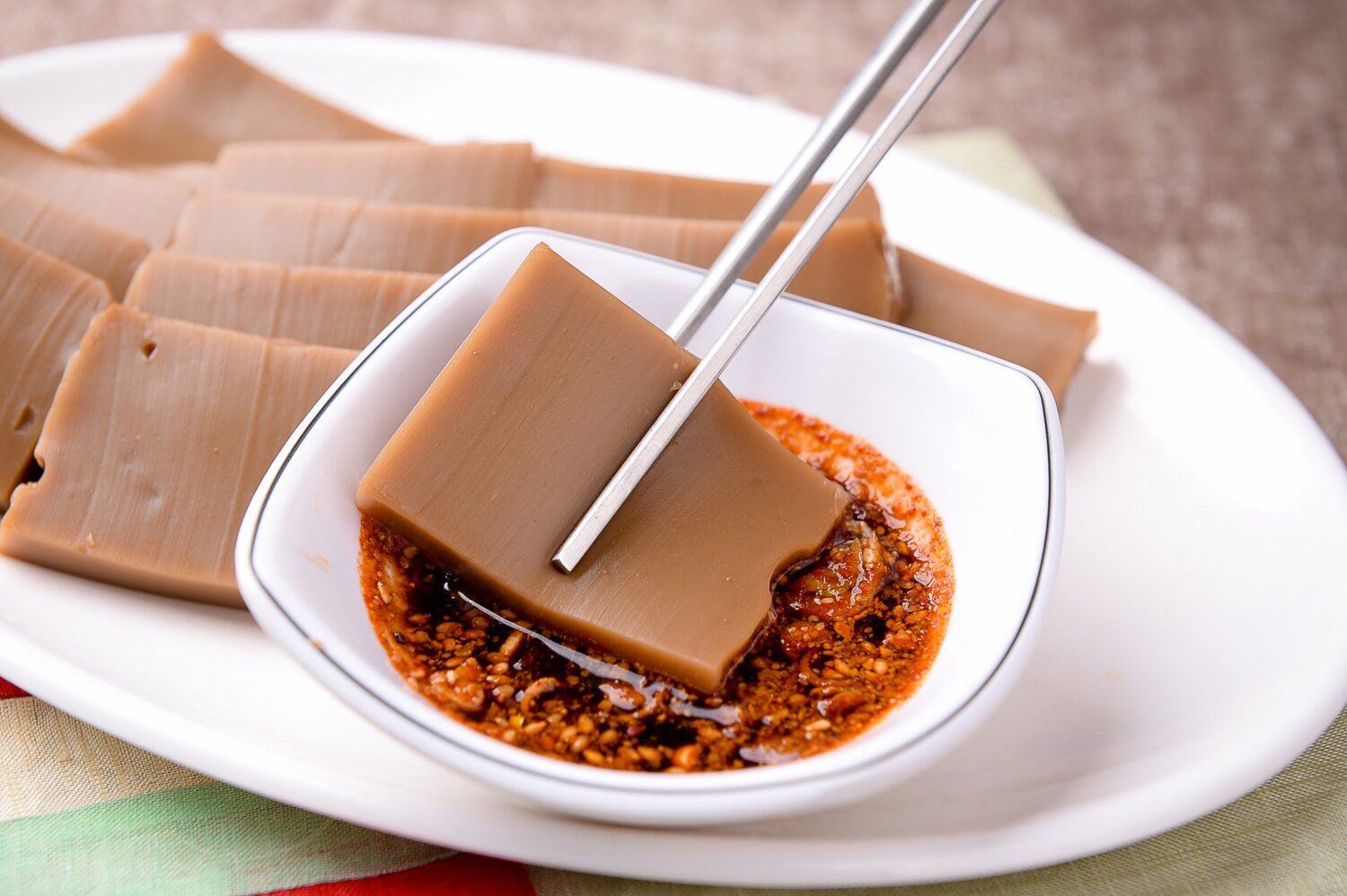
Gen Z and millennials are lining up for acorn jelly (dotorimuk). An acorn-jelly specialty shop in Mangwon-dong, Seoul, recently went viral among younger foodies for its "cup mukbap"—a portable, convenient version of acorn jelly soup served in a cup. Long lines and "open runs" (waiting outside before business hours) have become a regular sight, even on weekdays.
Long viewed primarily as a classic side dish or a traditional post-hike meal, acorn jelly is undergoing a major revival as a trendy menu item actively sought out by younger diners. As crisp autumn weather settles in, this seasonal delicacy made from fresh acorns offers both rich nutritional benefits and a light, satisfying bite.
89% Water, 46 Calories per 100g: A Light Autumn Delicacy
Autumn is peak season for acorns, the fruit of oak trees that ripen and drop as temperatures cool. Raw acorns contain high levels of tannins, which impart a sharp, astringent taste. To craft the jelly, acorns are soaked and repeatedly rinsed in water to leach out the astringency. They are then finely ground to extract starch, which is mixed with water, boiled, and allowed to cool until it sets.
The primary appeal of acorn jelly lies in its remarkably low calorie density relative to its volume. According to nutritional data from the Ministry of Food and Drug Safety, acorn jelly contains just 46 kcal per 100 g. Water accounts for 88.6 g—nearly 89% of its total weight—while fat accounts for just 0.3 g, carbohydrates 10.4 g, and protein 0.3 g.
This high water ratio allows diners to feel full without incurring a heavy caloric burden. Because managing visceral and abdominal fat relies on maintaining a balanced total daily calorie intake, incorporating acorn jelly into a meal plan can serve as an effective weight-management tool.
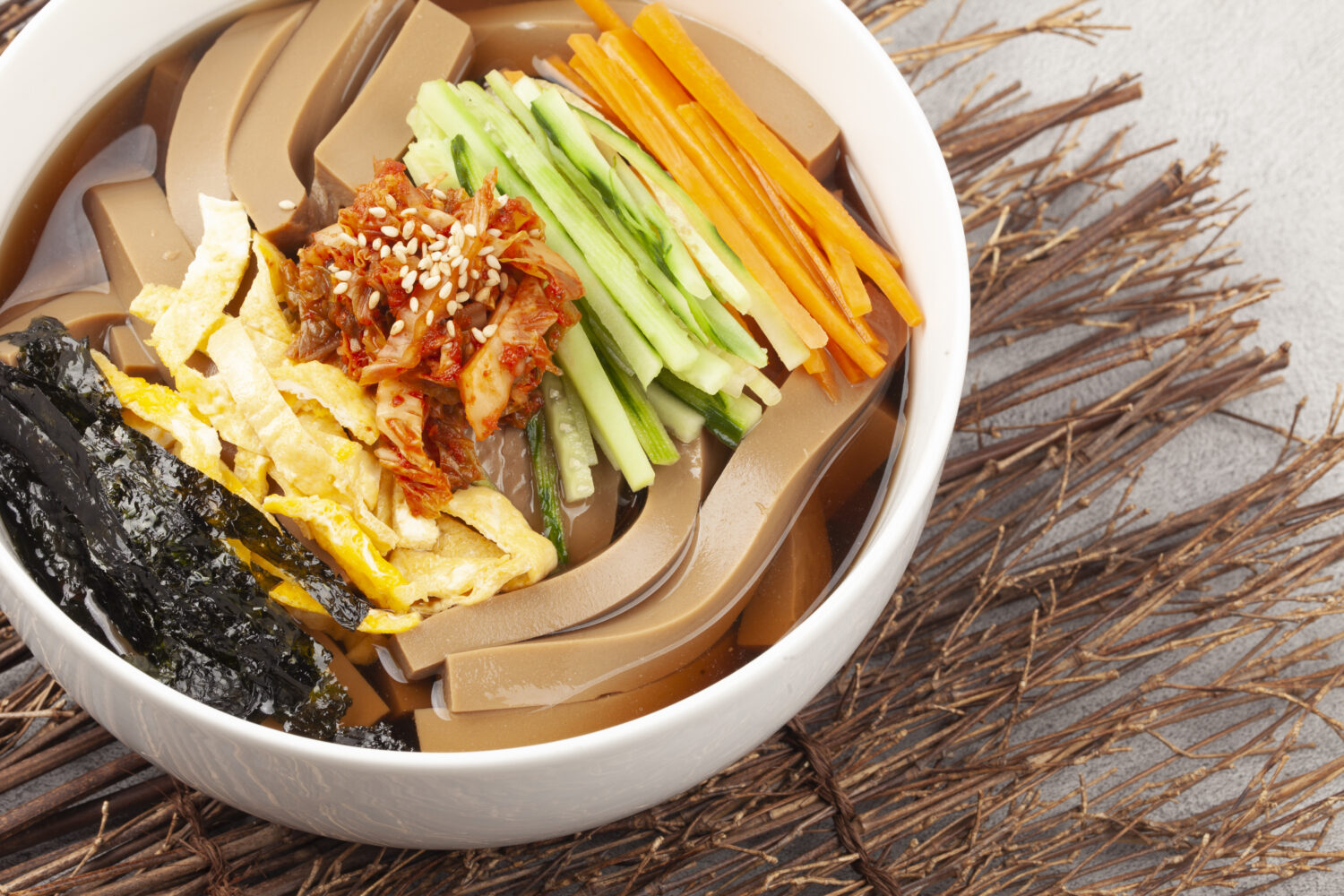
Post-Run "Cup Mukbap"? Mind Your Rice and Seasoning Portions
The viral popularity of "cup mukbap" on social media has turned a traditional sit-down dish into an effortless takeout meal. It has become particularly popular among runners grabbing a light bite after workouts or picnickers heading to nearby Mangwon Hangang Park.
However, health experts remind consumers that acorn jelly remains a carbohydrate-based food made from refined starch, containing roughly 10 g of carbohydrates per 100 g. When consumed as mukbap—where the jelly is served in broth over rice or noodles—it can easily result in excessive carbohydrate stacking.
To enjoy mukbap healthily, diners should adjust their add-ins. If the serving size includes a generous portion of jelly, reducing the accompanying rice portion is recommended. Adding protein sources such as hard-boiled eggs or tofu helps round out the nutritional profile. Alternatively, preparing it as muk-muchim (seasoned jelly salad) with fresh cucumbers, lettuce, and perilla leaves preserves its delicate flavor while boosting dietary fiber intake.
Diners should also monitor sodium and oil levels. Pouring excessive soy sauce seasoning or using sodium-rich pre-made cold noodle broths can quickly spike salt intake. While sesame oil or perilla oil enhances the jelly's nutty aroma, vegetable oils are calorie-dense and should be used sparingly for scent rather than heavy seasoning.