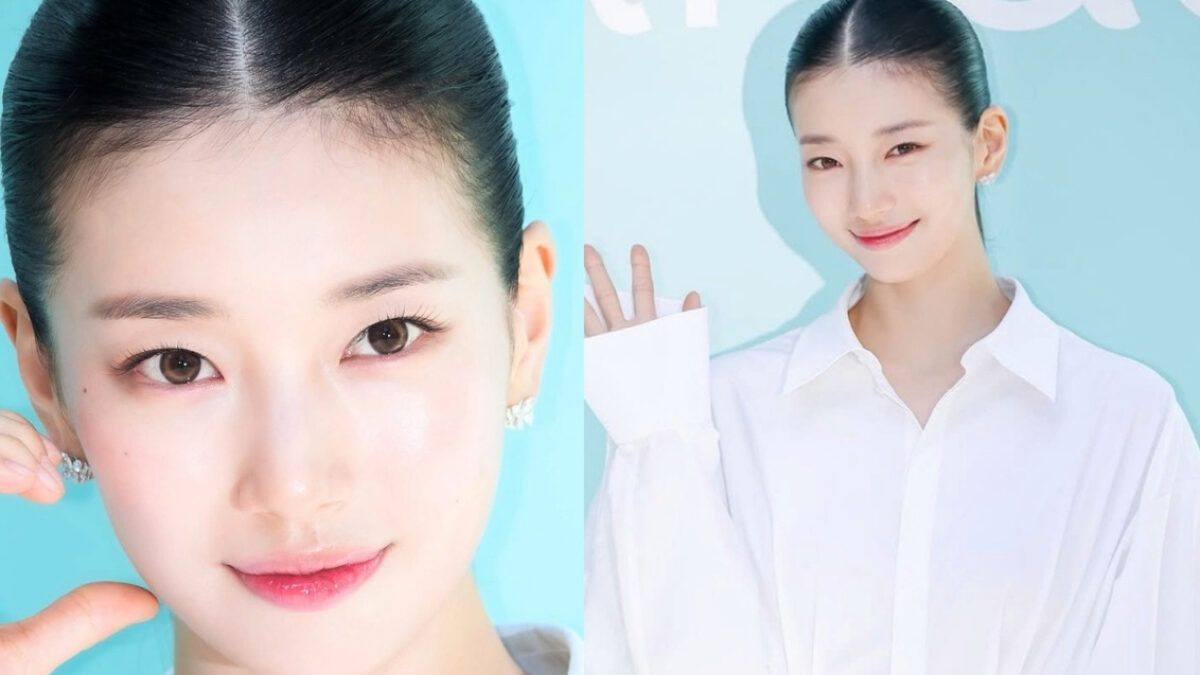
Actor and singer Suzy recently drew widespread attention with a striking new hairstyle at a pop-up event for a global beauty brand. Wearing a crisp white shirt, black stockings, and classic heels, Suzy completed her sophisticated look with a dramatically slicked-back ponytail—smoothing her hair flat against her scalp and sweeping it straight back without a part.
Often referred to as a "sleek ponytail" or "all-back" style, the look pulls the bangs and side hair tightly back to create a polished, high-gloss finish. Because this is a style Suzy rarely wears publicly, her bold appearance quickly became a major talking point.
Achieving the Sleek Look: Styling and Flyaway Control
Despite its high-fashion appearance, a sleek ponytail is relatively straightforward to style. The process begins by brushing the hair thoroughly to detangle it, then sweeping it straight back or creating a sharp part. Using a brush to smooth the surface, the hair is secured at the desired height—typically at the nape of the neck or the middle of the head.
Stylists emphasize that the hair does not need to be pulled painfully tight to achieve this effect. U.S. beauty publication Allure recommends blow-drying the hair straight, applying a light coat of hair oil, and using a fine-bristle brush to smooth the surface. For shorter, stubborn flyaways along the hairline, applying a small amount of wax or gel and pressing them down with a small comb or a mascara-style "flyaway fixer" wand helps secure the finish. Because an all-back ponytail fully exposes facial contours, cheekbones, and the jawline, it is a popular choice for showcasing statement jewelry like earrings and necklaces.
The Risks of Tight Styling: Understanding Traction Alopecia
While the sleek ponytail offers a sophisticated aesthetic, making a habit of tying hair tightly can lead to significant scalp damage. According to the American Academy of Dermatology (AAD), repeatedly wearing tight hairstyles—including sleek ponytails, buns, and braids—can trigger a condition known as traction alopecia.
Traction alopecia develops when continuous tension is exerted on the hair follicles—the small sacs in the skin from which hair grows. Initial signs typically appear along areas subject to the greatest strain, particularly the forehead and temples. Early symptoms include hair thinning or breakage around the hairline, scalp redness, itching, and small, pimple-like bumps.
In its early stages, traction alopecia is considered a reversible, non-scarring form of hair loss, and follicles can recover if the tight styling is discontinued. However, prolonged strain over time can permanently damage hair follicles, replacing healthy tissue with scar tissue and resulting in irreversible hair loss.
Prevention Tips: Protecting Your Scalp and Hairline
Dermatologists stress that preventing traction alopecia requires simple adjustments to daily hair routines. The most critical rule is to avoid pulling the hair tightly in the same direction every day. After wearing a slicked-back style, it is best to alternate the next day by wearing hair down or securing it in a loose style.
Additionally, hair ties should not be wrapped excessively tight to the point of putting strain on the scalp, and the hairline should always be kept relatively relaxed. If a hairstyle causes scalp tenderness or triggers a headache, it is a clear indicator that the hair is tied too tightly and should be loosened immediately.