In older adults with osteoporosis, performing spinal fixation surgery—inserting screws and rods to stabilize the spinal column—presents major clinical challenges. Weakened bone density makes it difficult to anchor hardware firmly, raising the risk of screw loosening, mechanical failure, and secondary vertebral fractures.
Yet when severe structural damage leaves the spine unstable or directly compresses spinal nerves, surgical stabilization becomes unavoidable.
A landmark legal dispute erupted at this exact medical boundary. On September 18, 2019, the Health Insurance Review and Assessment Service (HIRA) clawed back 7,160,258 KRW in national health insurance reimbursements from Busan St. Mary’s Hospital after surgeons performed spinal fixation on an osteoporosis patient. HIRA argued the procedure exceeded standard coverage guidelines for osteoporotic fractures.
The hospital filed suit, contending that the patient’s severe structural instability made surgery medically essential. Lower courts consistently ruled in favor of the hospital, and on March 12, the Supreme Court of Korea dismissed HIRA’s final appeal—bringing an end to a legal battle that spanned six years and six months.
Six months after the final verdict, however, debate continues in clinical practice over how national health insurance review standards should evaluate fixation surgery for osteoporotic spinal fractures.
The core issue centers on a straightforward clinical dilemma: Should a patient be denied insurance coverage for necessary stabilization surgery simply because they have weak bones, even when their spine has severely collapsed?
"Collapsed Bone" vs. "Shattered Bone": Clinical Realities vs. Policy Guidelines
Typical osteoporotic spinal fractures occur as compression fractures, where a weakened vertebra collapses under load. Physicians often manage these conservatively with braces and medication, or perform minimally invasive cement augmentation such as vertebroplasty.
In contrast, a "burst fracture" occurs when high-impact force shatters the vertebra, pushing bone fragments in multiple directions. These fragments risk invading the spinal canal, compressing critical nerve structures and creating severe biomechanical instability.
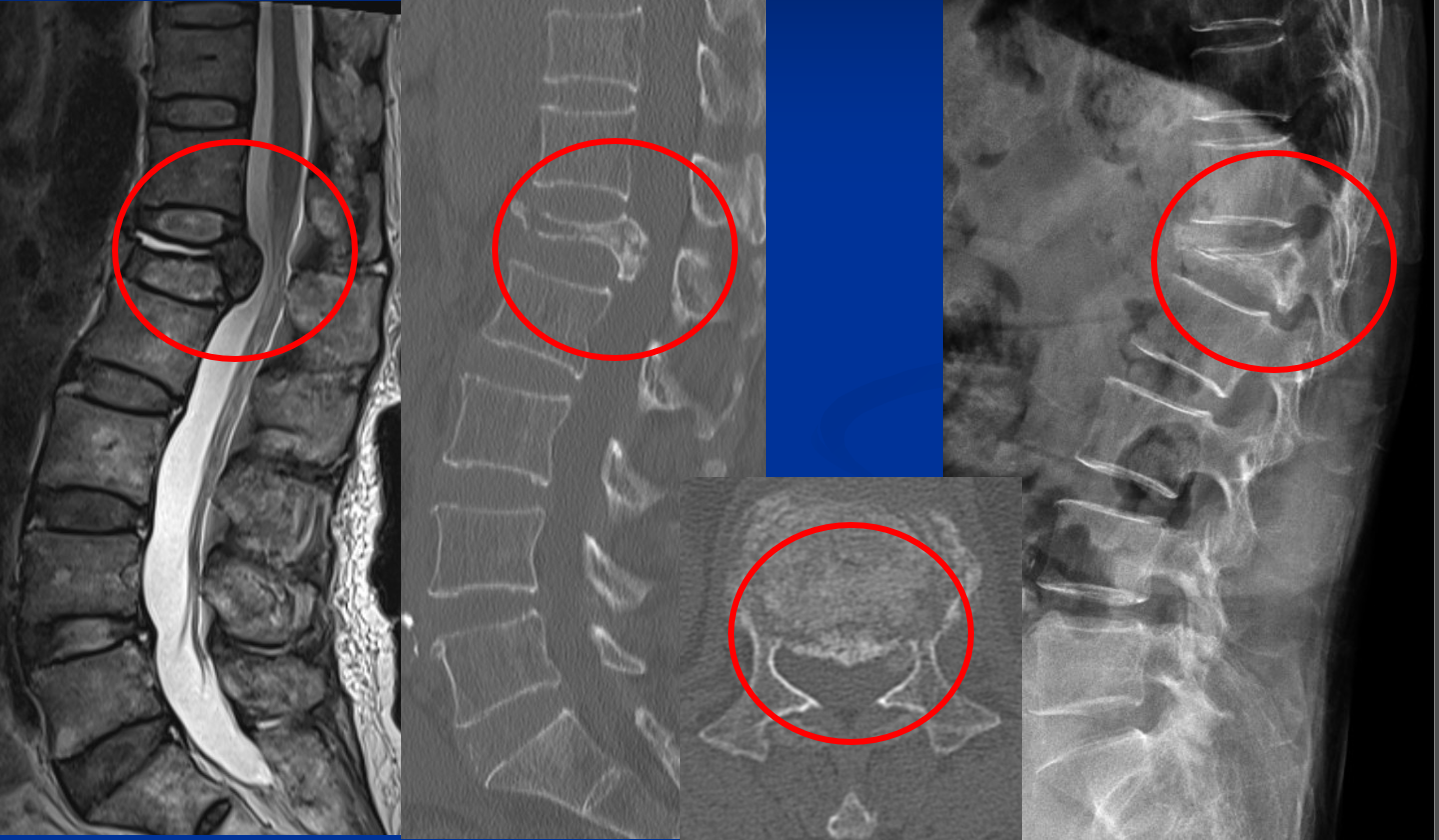
National health insurance benefit criteria historically maintained a rigid distinction between routine osteoporotic compression fractures and unstable spinal fractures. Friction arose when both conditions presented simultaneously in a single patient—an osteoporotic burst fracture. HIRA insisted on applying restrictive criteria intended for standard osteoporotic fractures, while the hospital argued that acute spinal instability justified coverage under unstable fracture guidelines.
Legal Precedent Established, but Administrative Alignment Remains
The Busan High Court rejected HIRA's narrow interpretation, ruling that it found "no explicit statutory grounds to exclude osteoporotic fractures from the benefit criteria for unstable spinal fractures when genuine structural instability exists."
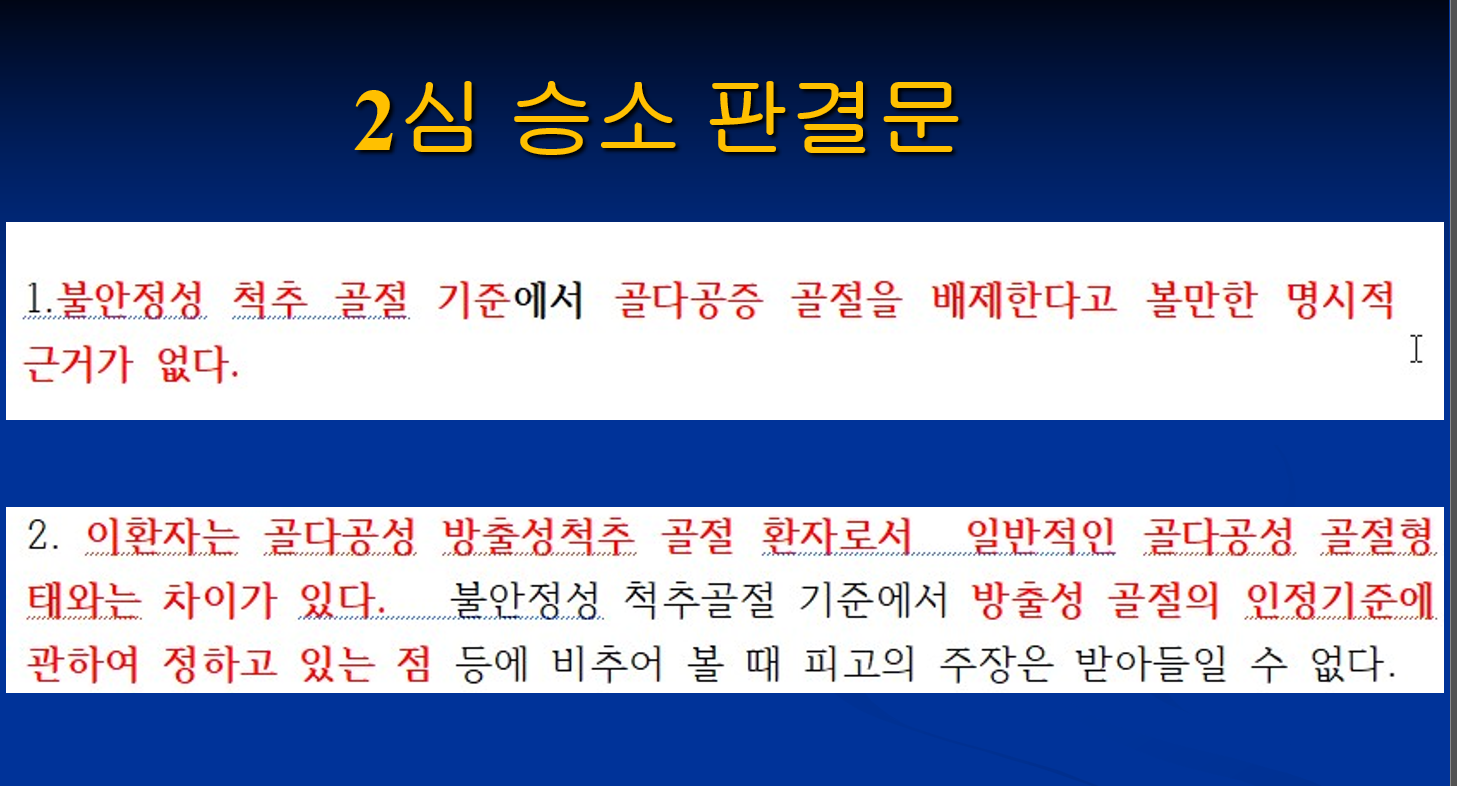
By dismissing HIRA’s appeal, the Supreme Court finalized this legal standard. While the verdict does not grant blanket authorization for all spinal fixation procedures in osteoporosis patients, it establishes a key precedent: the presence of underlying osteoporosis cannot automatically disqualify a patient from reimbursement when an unstable burst fracture is present.
Attention now shifts to whether HIRA will adjust its administrative review practices. While judicial rulings do not automatically rewrite national health insurance regulations, this finalized Supreme Court precedent creates an authoritative benchmark for evaluating similar reimbursement claims.
Ahn Sung-joon, Head of Orthopedics at Busan St. Mary’s Hospital and Chair of the Korean Lumbar Spine Research Society, who led the legal challenge, highlighted the broader implications for the medical community.
"Even at recent academic conferences, spine surgeons voiced deep frustration over arbitrary reimbursement cuts for fixation surgery in osteoporotic fracture patients," Ahn said.

Ahn plans to detail the Supreme Court case and its implications at the society’s upcoming winter conference. "When a patient's spine becomes structurally unstable, fixation surgery is imperative regardless of whether they have osteoporosis," Ahn stressed. "Health insurance review criteria must be updated and clarified so these patients can receive appropriate surgical care without administrative barriers."