
It is a familiar refrain in the healthcare industry that managing hospital finances has grown exceptionally difficult. However, determining the precise structural drivers behind this persistent decline has long been a subject of debate.
While conventional wisdom often points toward rising baseline salaries, new accounting research reveals a different reality. A study led by Park Jun-young of Yonsei University’s Department of Preventive Medicine, alongside Kim Tae-hyun of the Graduate School of Public Health and Lee Sang-gyu of the Graduate School of Convergence Health and Medicine, published findings in the Journal of Hospital Management tracking nine years of financial statements (2016–2024) across 253 institutions—47 tertiary hospitals and 206 general hospitals. Utilizing a single balanced-panel design, the study minimizes statistical distortion to provide a definitive financial picture of South Korean hospitals.
A Nationwide Shift into Operating Deficits
The medical cost ratio—the proportion of medical operating expenses relative to medical revenues—serves as the primary metric for hospital financial health. A ratio exceeding 100% indicates an operating deficit. Over the nine-year study period, the average medical cost ratio across all 253 hospitals rose from 96.7% in 2016 to 104.7% in 2024, shifting average operating profit margins from +3.3% into a -4.7% deficit.
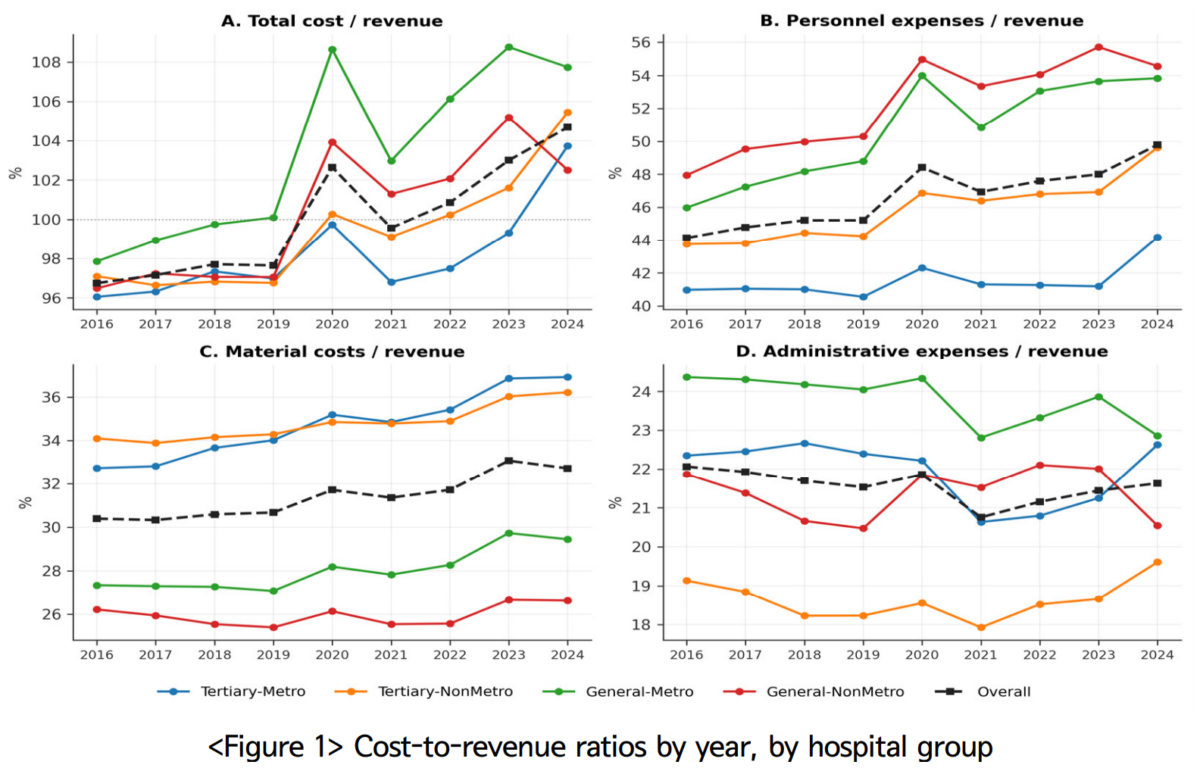
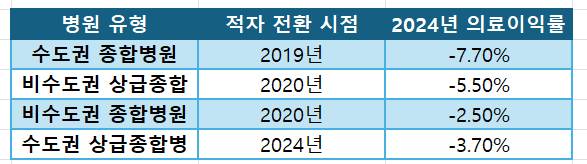
The timeline of this downturn varied by hospital category and geography:
General Hospitals in the Seoul Metropolitan Area: First crossed into structural deficits in 2019, dispelling the belief that location in the capital guarantees profitability.
Non-Seoul Tertiary and General Hospitals: Entered the red a year later in 2020 as the COVID-19 pandemic intensified.
Seoul-Area Tertiary Hospitals: Long considered the most financially resilient, this group maintained positive margins through 2023 (+0.7%) before suffering a steep 4.4 percentage point drop into deficits in 2024 (-3.7%).
By 2024, all four major categories of general and tertiary hospitals were operating at a loss simultaneously for the first time.
Statutory Burdens and Drug Costs Drive the Deficit
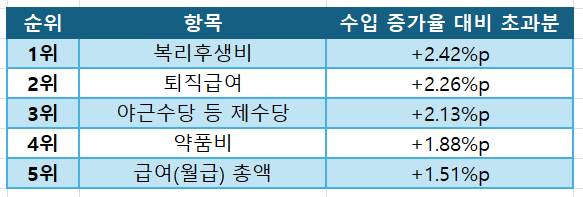
To identify the primary cost drivers, researchers evaluated 12 spending categories against average annual revenue growth (5.17%).
Rather than baseline wages, the fastest-growing cost categories were statutory expenditures that hospitals cannot easily alter:
Employee Benefits (+2.42 percentage points above revenue growth): Encompasses mandatory employer contributions to the four major social insurance programs (National Pension, National Health Insurance, Employment Insurance, and Industrial Accident Compensation Insurance) and welfare outlays.
Retirement Benefits (+2.26 percentage points).
Mandatory Allowances (+2.13 percentage points).
Pharmaceutical Expenses (+1.88 percentage points): Grew at an average annual rate of 7.05% nationwide, peaking at 7.7% among Seoul-area tertiary hospitals treating complex conditions.
Base Salaries (+1.51 percentage points): Ranked fifth overall, rising more slowly than legally mandated employment overhead.
Conversely, outsourced service costs grew at a slower rate than overall revenue, challenging the common policy assumption that third-party contracting is the primary driver of hospital financial distress. Overhead and administrative expenses also showed minimal growth, offering little evidence of administrative waste.
The Impact of Zero-Margin Pharmaceutical Reimbursement
Rising pharmaceutical expenditures present a unique financial challenge under South Korea’s actual transaction price reimbursement system, introduced in 1999. Because hospitals must bill drugs at their exact acquisition cost, they earn zero direct profit margin on pharmaceutical sales.
As expensive, advanced therapies account for a larger share of care, hospital revenues increase in absolute terms, but so do the associated non-reimbursable handling costs—including cold-chain storage, inventory risk, dispensing management, and hazardous waste disposal. Consequently, higher drug sales expand the cost denominator without generating net income, compressing overall profit margins.
Broad-Based Structural Crisis
The financial downturn is not isolated to underperforming institutions. In 2024, the median operating profit margin among the 253 hospitals stood at -3.2%, demonstrating that more than half of all institutions operate at a loss. Even the top 25th percentile of hospitals recorded a modest average margin of just +1.5%.
Furthermore, because the panel included only institutions that operated continuously from 2016 through 2024, the findings exclude hospitals that closed during the period. The actual financial strain across the broader health system may therefore be more severe than the data reflects.
Policy Implications
The study indicates that addressing hospital deficits requires targeted structural adjustments rather than broad reimbursement increases or wage controls:
Realigning national health insurance reimbursement models to account for the indirect administrative and operational costs associated with handling high-cost pharmaceuticals.
Exploring government policy mechanisms to alleviate the rising burden of mandatory social insurance contributions for healthcare providers.
Recognizing that hospital financial pressures stem primarily from non-discretionary statutory costs rather than internal administrative inefficiency.