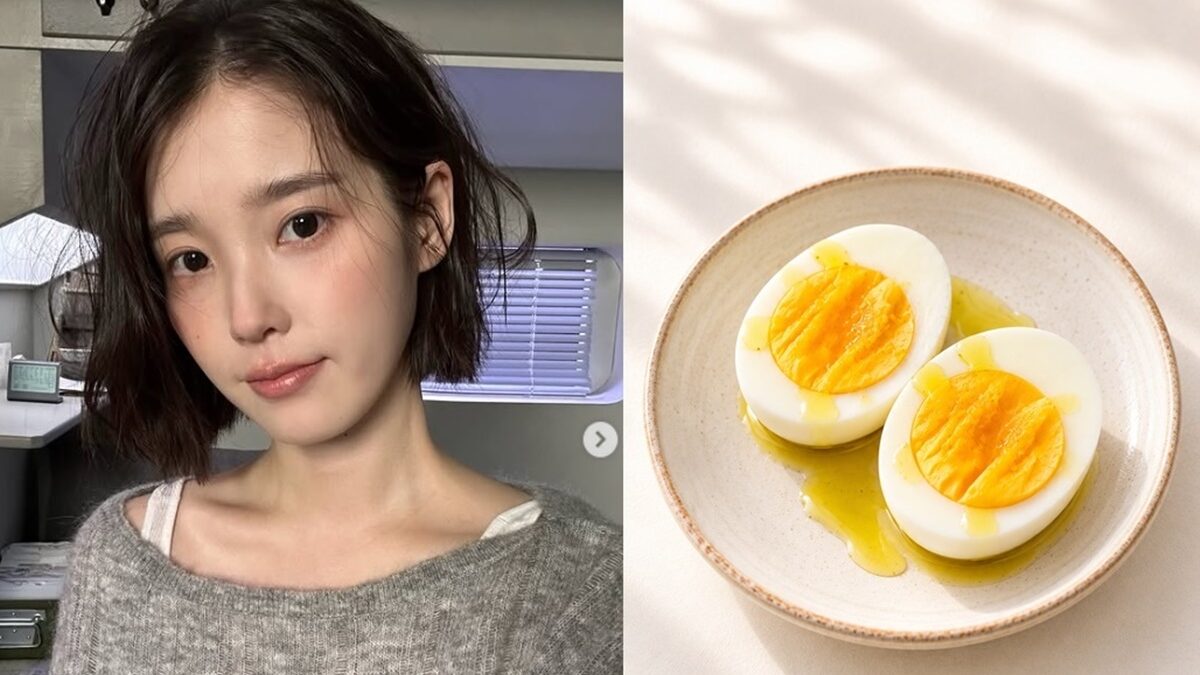
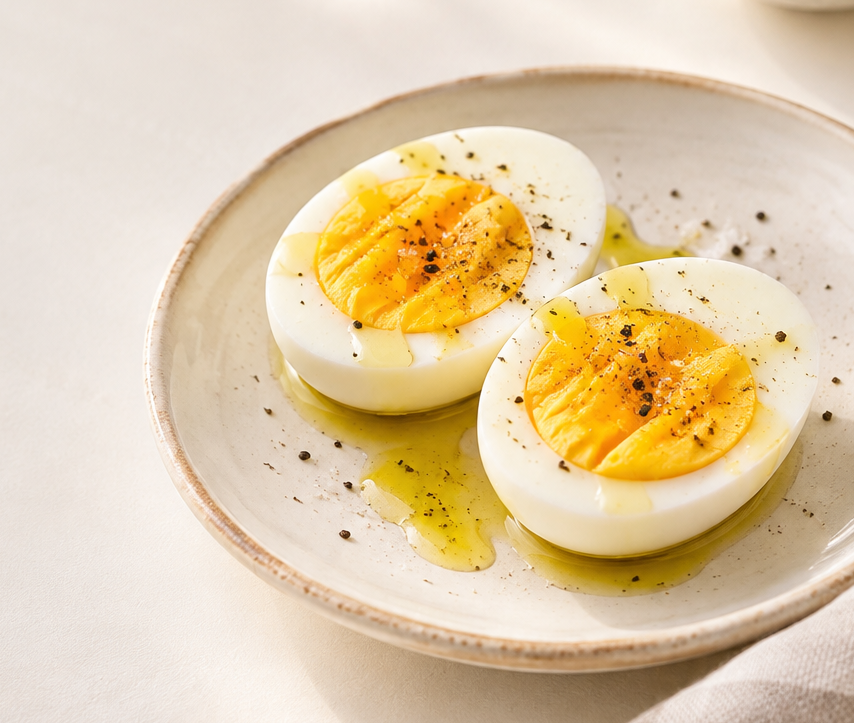
Singer and actor IU (33) recently shared her personal approach to staying trim during stage greetings for her concert films IU Concert: The Golden Hour and IU Concert: The Winning. When asked by a fan about her diet routine, she revealed a simple go-to meal: boiled eggs paired with olive oil.
"It's filling," IU explained. "If you eat two boiled eggs and drizzle olive oil all over them, you won't feel hungry all day. Try it. The olive oil is key—I think incorporating healthy fat is essential. Having that in the morning keeps hunger away all day long."
The artist, who recently released her digital single "From This Star," debuted in 2008 and has maintained a height of 162 cm and a weight around 44 kg for nearly two decades. Alongside this egg-and-oil combination, IU is known for eating small portions and chewing her food thoroughly. Here is a closer medical and nutritional look at her diet and eating habits.
Boiled Eggs and Olive Oil: A Satiety-Boosting Duo
Boiled eggs pack a high protein punch for relatively few calories. A single large egg yields roughly 6 g of protein, meaning two eggs supply 12 g. Because protein takes longer to digest, it naturally prolongs feelings of fullness, helping curb impulse snacking and reduce overall meal portions later in the day.
In a study involving 152 overweight or obese adults, participants who ate two eggs for breakfast as part of a calorie-restricted diet experienced greater weight loss and reductions in body mass index (BMI) after eight weeks compared to those who consumed a bagel breakfast of equivalent calories. However, no difference in weight loss occurred among participants who did not restrict their total calories. This indicates that eggs themselves do not inherently induce weight loss; rather, they serve as a high-satiety protein source when overall caloric intake is managed.
Olive oil, meanwhile, is rich in oleic acid, a beneficial monounsaturated fatty acid. Replacing saturated fats like butter with appropriate amounts of olive oil supports cardiovascular health. Dietary fat slows gastric emptying—the rate at which food leaves the stomach—extending satiety after a meal. Consequently, pairing the high protein of eggs with the healthy fats in olive oil can effectively delay the return of hunger.
The 'Natural Wegovy' Trend: Benefits and Limitations
Online, the combination of boiled eggs, a drizzle of olive oil, and a dash of salt and pepper has recently earned the nickname "natural Wegovy." The logic behind the trend centers on high satiety from protein and fat, helping people naturally manage portion sizes. The addition of black pepper provides warmth and aroma, enhancing flavor without requiring excessive sodium.
However, "natural Wegovy" is merely an online moniker, not a medical term. There is currently no clinical evidence suggesting this food pairing delivers weight-loss effects comparable to obesity medications like Wegovy. Experts emphasize that it should be viewed not as a drug alternative, but simply as a dietary choice that supports satiety.
Furthermore, while olive oil is a heart-healthy fat, it is densely calorie-packed—delivering roughly 120 kcal per tablespoon. Overpouring olive oil can unintentionally spike daily calorie intake, undermining weight loss goals. For those monitoring their weight, experts recommend starting with a modest 1 teaspoon of olive oil and keeping salt usage minimal.

Small Portions and Thorough Chewing: Scientific Basis and Cautions
IU’s practice of eating small portions also aligns with fundamental weight-management principles. Reducing serving sizes at each meal makes controlling total energy intake far easier. Behavioral studies show that individuals served from larger bowls or given larger portions consistently consume more food. Serving an appropriate portion from the outset is an effective safeguard against overeating.
Crucially, eating small portions should mean consuming nutrient-dense foods in adequate amounts—not subsisting solely on a couple of eggs or engaging in extreme calorie restriction. Relying strictly on eggs and olive oil over extended periods can lead to deficiencies in dietary fiber, vitamin C, calcium, and complex carbohydrates. A healthy diet requires balance through vegetables, fruits, whole grains, dairy, and varied protein sources, consistent with World Health Organization (WHO) guidelines.
Additionally, IU’s thorough chewing habit—once noted by a colleague as "nibbling a single piece of gimbap for up to 30 minutes"—offers tangible digestive benefits. Prolonged chewing slows eating velocity, giving the brain sufficient time to process satiety signals sent from the gut. Breaking food into smaller particles well-mixed with saliva also alleviates gastrointestinal strain. Research confirms that increasing chew counts and eating time significantly reduces overall food intake and subjective hunger, making techniques like putting down utensils between bites an effective way to manage appetite.