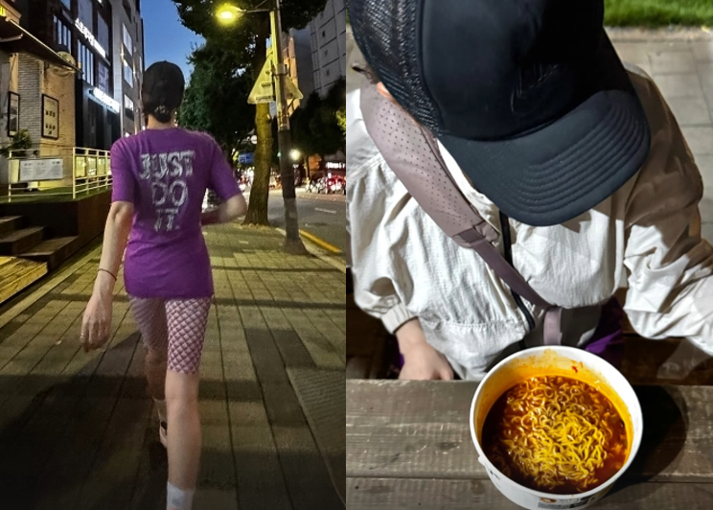
Actor Kim Hye-soo recently offered fans a glimpse into her fitness routine: enjoying instant ramen by the Han River following a nighttime run.
In photos uploaded to her social media, Kim appeared in comfortable athletic wear, showcasing custom white-and-teal sneakers with her name, "hyesoo," stitched on the heel. After her workout, she took a break along the riverbank to eat a bowl of instant ramen. Working up a sweat naturally causes the body to crave carbohydrates and salty foods as it seeks to replenish depleted energy.
While instant ramen quickly supplies carbohydrates, it is typically high in sodium and fat while lacking essential protein and dietary fiber. For those who find giving up Han River ramen unrealistic, practical adjustments in product selection, cooking methods, and eating habits can significantly reduce the nutritional strain.

Why Post-Workout Cravings Hit—and How Sodium Causes Bloating
Running rapidly depletes glycogen stored in the muscles and liver. Although ramen noodles offer fast-acting carbohydrates to restore energy, their lack of protein makes them an incomplete post-workout recovery meal on their own. Adding a fully cooked egg or pairing the meal with unsweetened soy milk can help compensate for the missing protein.
Consuming salty broth prompts the body to hold onto water to regulate blood sodium concentrations. This fluid retention often leads to facial, hand, or foot swelling the next morning and a temporary rise in body weight, which reflects water retention rather than an immediate gain in body fat.
Smart Convenience Store Choices: Portion Size and Air-Dried Noodles
When selecting ramen at a riverside convenience store, checking the nutritional label on the back for total calories and sodium content is essential. Caloric values among bagged ramen vary depending on noodle weight and whether the noodles are deep-fried. Choosing smaller portion sizes or non-fried, air-dried noodles offers a much lighter alternative.
Adding side items like gimbap, rice balls, or hot bars alongside ramen causes carbohydrates, fats, and sodium to climb all at once. If ramen is the main meal, skipping extra carb-heavy sides and relying on protein-rich options like eggs or soy milk helps maintain satiety without overwhelming the body.
Cooking Adjustments and Mindful Eating Order
When using automated instant cookers, adding extra water and using only about two-thirds of the seasoning packet helps lower sodium intake. Simply diluting the soup with more water reduces the perception of saltiness, but drinking all the broth leaves total sodium consumption largely unchanged. Trimming the seasoning powder itself is the primary step, followed by consuming mostly the noodles and leaving the broth behind.
Adjusting the order in which you eat also aids calorie and appetite control. If adding an egg, cook both the yolk and white thoroughly, then eat the egg and toppings first before moving to the noodles. Consuming protein first and eating slowly gives the body adequate time to register fullness, helping prevent overeating. Finally, skipping pickled radish or stir-fried kimchi—which introduce high levels of sodium through pickling—and pairing the meal with plain water supports overall balance.