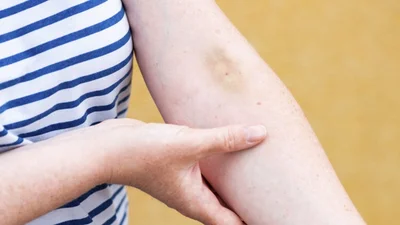

Smartphones and computers dominate our daily lives. As a result, many people suffer from turtle necks or neck pain. While symptoms like 'my neck hurts', 'my shoulder hurts', and 'I have a headache' are similar, actual cervical diseases can be categorized into several types.
Typical examples include cervical disc herniation, where the disc compresses the nerve roots causing arm numbness or pain; foraminal stenosis, where the passage for the nerves narrows; and central stenosis and myelopathy, where the spinal cord itself is compressed.
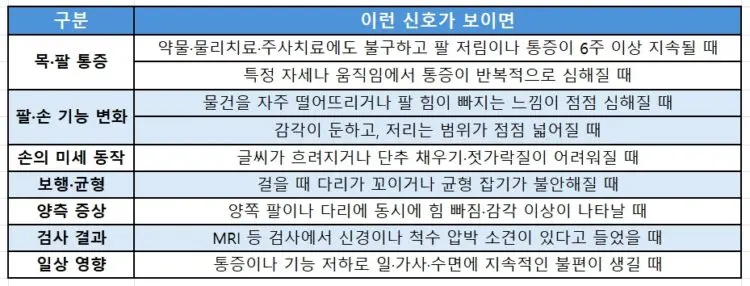
This distinction is not merely about different disease names. It serves as a criterion that can change the direction of treatment. If the main symptoms are pain or numbness in one arm, the approach differs from cases where fine motor skills in the hands become dull or walking becomes unstable. Especially in cervical diseases accompanied by myelopathy, special attention is needed in choosing the timing for treatment and the method of surgery.
Cervical diseases can improve with conservative treatments such as medication, physical therapy, and injection therapy. However, if pain recurs or neurological symptoms progress, surgery may be considered.
In such cases, consider visiting a hospital
Director Yoon Myung-soo of Busan National University Hospital stated, "While how quickly one recovers is important, what matters more at this time is how safely the nerves can be protected while resolving the symptoms." This is because the neck is an area where the spinal cord, nerves, and blood vessels are densely packed in a small space.
Complex and concerning cervical diseases... What surgical method is right for me?
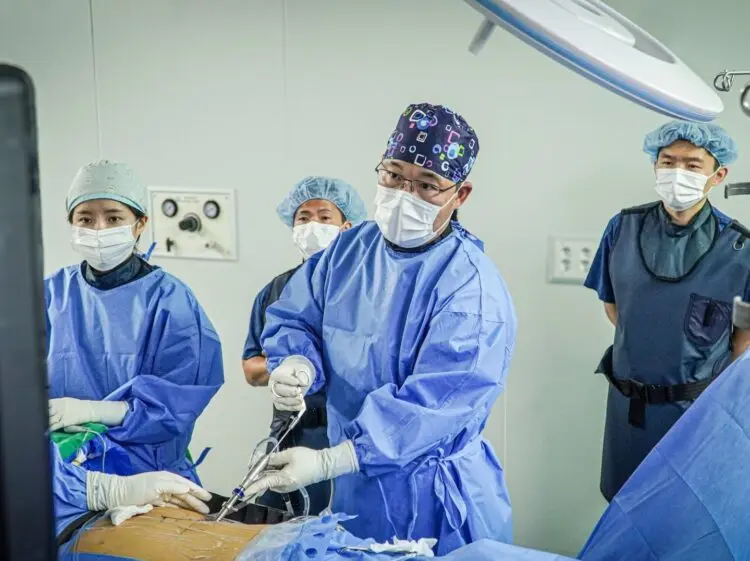
Recently, the trend in cervical surgery has shifted towards 'minimally invasive' surgery, which reduces the incision range and minimizes damage to surrounding tissues. Among these, a notable method is 'single-port' spinal endoscopic surgery. This approach involves inserting an integrated set of an endoscope and surgical instruments through a small incision to access the lesion. This differs from 'bi-directional endoscopic (UBE) surgery', where the endoscope and surgical instruments are inserted separately.
In clinical practice, the advantages of single-port endoscopy are best demonstrated in 'posterior foraminotomy'. This procedure accesses the foramen, the passage for nerves, from the back of the neck to remove discs or bone spurs that compress the nerves. The advantages are also evident in treating disc herniation or foraminal stenosis. In a narrow working space, direct access to the lesion at a single angle allows for techniques focused on nerve root decompression.
According to a meta-analysis of several studies, the complication rate of single-port cervical endoscopic surgery performed with appropriate indications is around 5-8%, significantly lower than that of open surgery (12-18%). Director Yoon stated, "Complications such as dural tears or nerve damage are relatively rare, and the recurrence rate is also low," adding that "positive results have been reported in terms of postoperative pain (VAS) and neck disability index (NDI) improvement."
A rare technique in the Busan area... What matters more is 'selection ability'
However, there are not many medical institutions in the Busan-Ulsan-Gyeongnam area that perform single-port cervical endoscopy. Doctors are also rare. This is because expensive specialized equipment is required, and it takes more time and experience to become familiar with various indications compared to the bi-directional (UBE) method.
Director Yoon Myung-soo of Busan National University Hospital is a leading figure in this field, having performed single-port endoscopic surgery on the neck and lower back for a long time and with expertise. I asked him a few questions.
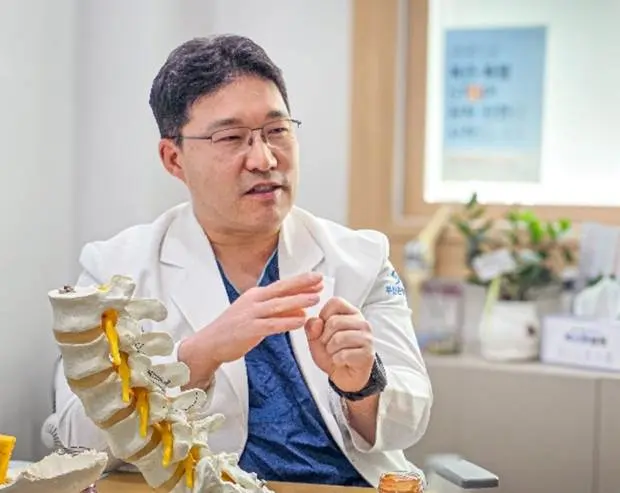
From a patient's perspective, how should one distinguish between 'single-port' and 'bi-directional'?
"In actual clinical practice, the difference between single-port and bi-directional is not that significant. Rather, what is much more important is who has handled how many cases and what variety of lesions. Just as the experience and skill of the pilot operating the plane are more important than whether the aircraft is a Boeing or an Airbus, the same applies to cervical surgery. Therefore, I believe that question misses the core point a bit."
Even if the difference is not significant, don't each have their strengths?
"Single-port surgery has the important characteristic of being able to get as close as possible to the problematic lesion due to its procedural nature. The surgical instruments can enter right up to the lesion and precisely remove only the compressed area. It's like a sniper skillfully targeting only the critical area of the target. On the other hand, bi-directional surgery requires creating adequate working space near the lesion to use two instruments. While it uses a larger area, this process inevitably causes more damage to surrounding tissues."
However, there are criticisms that single-port has 'limited suitable indications.'
"I can't say that statement is entirely wrong. However, once sufficient experience is accumulated, one can approach the lesion with a three-dimensional understanding of its direction and relationship with the nerves. After that, such issues do not become problematic. For patients, the advantages become greater, especially in terms of causing less damage to the skin or body. When looking at the previous surgical sites of patients who come for re-surgery, those differences become evident."
What about the criticism that 'it is difficult to secure visibility when bleeding is severe'?
"That is mainly a concern raised by beginners or intermediate practitioners. For a skilled single-port surgeon, issues like bleeding or visibility are well within the controllable range. The difference is much more about the physician's skill level than the method itself. Especially since the neck is a dangerous area, who performs the surgery is more important. The progress before and after surgery must also be carefully monitored. The ability to respond to various unexpected situations is built through knowledge and experience."
Assistance: Director Yoon Myung-soo of Busan National University Hospital (Orthopedics). He graduated from Pusan National University College of Medicine and its graduate school. He has extensive experience in spinal endoscopy, especially single-port surgery. He has participated as an author in the Springer international academic textbook and has published several papers in SCI international journals. He teaches single-port spinal endoscopic surgery to doctors both domestically and abroad.