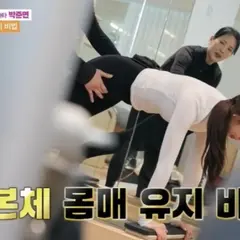
ITZY member Yuna recently offered a glimpse into the dedication behind her celebrated hourglass silhouette.
Yuna recently posted photos on social media enjoying time at a pool with her fellow group members. Posing in a swimsuit at an indoor pool, she highlighted her standout hip line, reigniting public admiration for her structural proportions.
When previously asked about the secret behind her exceptionally lean waist and sculpted hip line, Yuna pointed to the "plank twist" as her daily go-to movement, noting that she performs the exercise consistently in structured sets. Discussing her everyday habits for maintaining a slim midsection, she added, “In daily life, I try to maintain good posture by consciously engaging my lower abdomen and breathing in a way that draws my ribs inward.”
The Anatomy of an S-Curve: Muscle Development vs. Genetics
The defining feature of Yuna's figure is the distinct S-curve running from her waist through her hips and glutes. Achieving this silhouette relies heavily on a narrow waist paired with firm, well-developed gluteal muscles. However, targeted exercise cannot alter the underlying shape of the pelvic bones themselves. An individual's innate skeletal frame and genetic body-fat distribution establish the baseline silhouette; building abdominal and gluteal muscles on top of this framework is what sharpens and defines the body's ultimate contours.
The muscle responsible for creating the greatest physical volume in the buttocks is the gluteus maximus. According to clinical data from the U.S. National Center for Biotechnology Information (NCBI), the gluteus maximus is the largest muscle shaping the posterior and pelvic regions. Equally important for the lateral hip profile is the gluteus medius, which stabilizes the side of the pelvis and prevents the torso from tilting when standing on a single leg.
To effectively develop these muscle groups, trainers recommend exercises such as hip bridges, hip thrusts, squats, lunges, clamshells, and side leg raises. To carve out a more defined waistline, these movements are best paired with nutritional habits that minimize abdominal fat alongside core-stability exercises that brace the torso, such as standard planks, dead bugs, and bird dogs.
How the Plank Twist Targets the Midsection
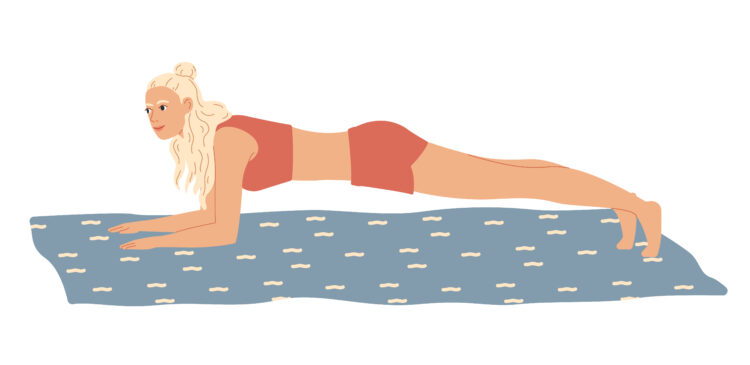
The plank twist highlighted by Yuna is a dynamic variation of the traditional plank that involves slowly rotating the pelvis from side to side. To execute the movement properly, begin in a forearm plank position with your elbows directly beneath your shoulders, maintaining a straight line from your head to your toes. After engaging the core, slowly rotate the hips to lower the pelvis toward the floor on the right side, return to the center, and repeat the motion on the left. Practitioners must ensure their shoulders remain stable and prevent the lower back from sagging.
This exercise directly targets the obliques—the muscles running along the sides of the waist—as well as the deep stabilizing muscles of the abdomen, effectively tightening the midsection. However, it is a medical misconception that the plank twist alone can widen the pelvic bones or significantly increase gluteal mass; achieving a balanced hip line requires combining core work with targeted glute resistance training.
Conscious breathing habits, like the method Yuna described, also offer functional benefits. Drawing the ribs inward and engaging the lower abdomen prevents postural faults such as an excessively arched lower back or a protruding abdomen. When the rib cage and pelvis are properly aligned, the visual transition between the waist and hips appears cleaner and more refined. Harvard Medical School notes that core exercises provide the foundational support necessary for proper posture, balance, and daily physical movement. However, health experts warn against bracing the abdomen or holding one's breath tightly all day. Instead, it is best to breathe naturally while maintaining a gentle, upward contraction of the lower abdomen to keep the ribs from flaring forward.