When asked how to improve their diet, most Koreans immediately think of cutting back on sodium or sugary foods. However, a comprehensive dietary assessment released by the Korea Disease Control and Prevention Agency (KDCA) reveals that the primary nutritional issue facing Korean adults is not overindulgence, but a persistent lack of essential food groups—namely whole grains, fruit, and dairy products.
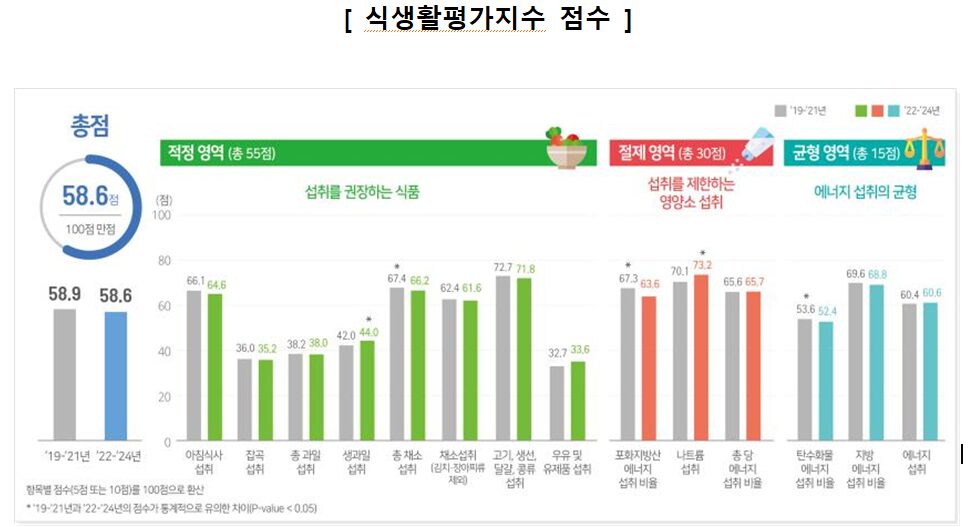
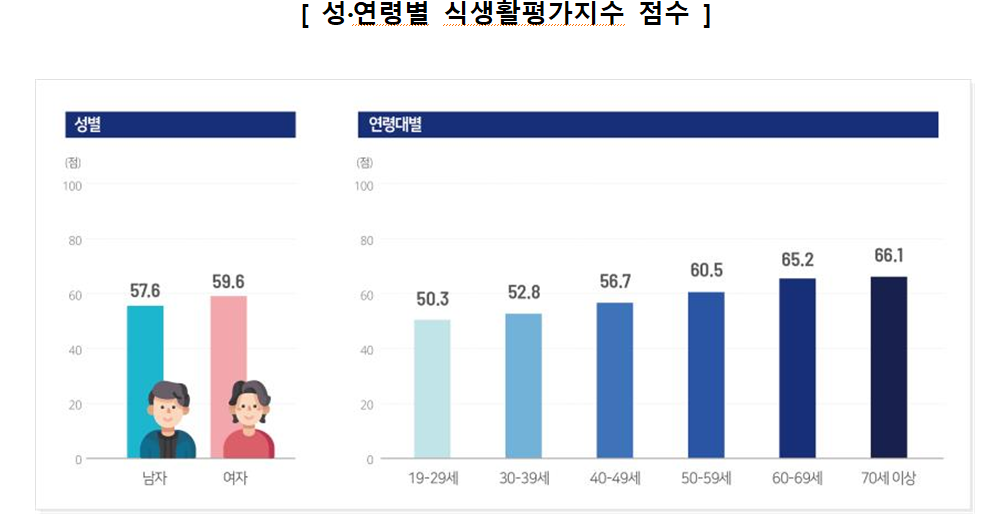
According to the "Dietary Habits Evaluation Index for Korean Adults" released on August 4, Korean adults scored an average of 58.6 out of 100 for their overall dietary health. Based on data from the 9th Korea National Health and Nutrition Examination Survey (2022–2024), the report showed that scores for whole grains, fruit, and milk and dairy products all fell below 50. Young adults in their 20s recorded the lowest overall score of any age group at 50.3.
The evaluation index measures how closely adults aged 19 and older adhere to national healthy eating guidelines across 14 categories. These include meal regularity (such as eating breakfast), intake of major food groups, moderation regarding sodium, sugar, and saturated fat, and overall energy balance from carbohydrates, fat, and calories.
The overall average of 58.6 remained virtually unchanged from the 58.9 recorded during the 2019–2021 period. While scores for sodium moderation and fresh fruit intake improved, scores for total vegetable consumption declined, and calorie balance from saturated fat and carbohydrates deteriorated slightly. (In the sodium category, lower consumption yields a higher score, indicating progress in sodium reduction efforts.)
When converting category scores to a 100-point scale, items such as meat, fish, eggs, legumes, and sodium scored 70 or higher. Conversely, whole grains, total fruit (excluding fruit-flavored beverages), and milk and dairy products repeatedly failed to reach 50 points, identifying them as the most consistent nutritional gaps on Korean tables.
Younger Adults Lag Across Nearly All Categories
Gender and age disparities were pronounced. Women scored slightly higher (59.6) than men (57.6), but age gaps were far more significant. Scores increased steadily with age: adults in their 20s scored 50.3, those in their 30s scored 52.8, while adults aged 70 and older recorded the highest average at 66.1.
Younger adults in their 20s and 30s struggled across most metrics, particularly in whole grain and fruit intake, breakfast consumption, and limiting saturated fats. This aligns with broader trend data from the 2023 survey, which showed that dietary quality, physical activity, drinking habits, and obesity indicators among young Koreans have collectively worsened over the past decade.
Targeted Adjustments Needed Across Age Groups
Health authorities emphasize that individuals do not need to overhaul their entire diet overnight. Instead, the most practical approach is identifying missing food groups and making gradual adjustments—such as replacing white rice with whole grains or adding a serving of fruit or dairy to daily meals.
While adults in their 40s and 50s scored better than younger cohorts, they also failed to reach 50 points in whole grain, fruit, and dairy intake. Meanwhile, adults aged 60 and older scored highest overall but showed a marked deficit in milk and dairy consumption, relying too heavily on carbohydrate-dense, grain-centered meals. The KDCA advised older adults to move away from grain-heavy diets and increase their intake of protein-rich foods, including dairy, meat, fish, eggs, and legumes.
The KDCA noted that the index represents pooled population averages rather than individual diagnoses. Nevertheless, the findings clearly indicate that filling empty spots on the plate—rather than solely focusing on dietary restrictions—is the key to improving dietary health in South Korea.