Many patients with severe aortic valve stenosis delay treatment out of fear of open-heart surgery. Some attempt to endure severe symptoms, believing advanced age precludes medical intervention, only to arrive at the emergency room so short of breath that walking becomes impossible. Historically, these individuals often abandoned treatment or hesitated because open-chest procedures presented too great a physical toll.
Upon receiving a diagnosis of severe aortic valve disease, patients and their families frequently share the same pressing questions: "Can this be treated without opening my chest?", "Is it safe at an advanced age?", "How much will it cost?", and "Will I feel better immediately after the procedure?"
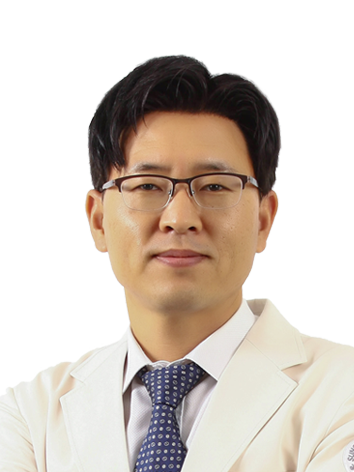
Park Yong-hwan, head of the Cardiovascular Center at Samsung Changwon Hospital, Sungkyunkwan University, describes TAVI (transcatheter aortic valve implantation) as a critical treatment that significantly expands patient choice. He notes that the procedure provides an excellent alternative, particularly for elderly individuals facing high surgical risk and patients with multiple complex cardiac or vascular comorbidities.
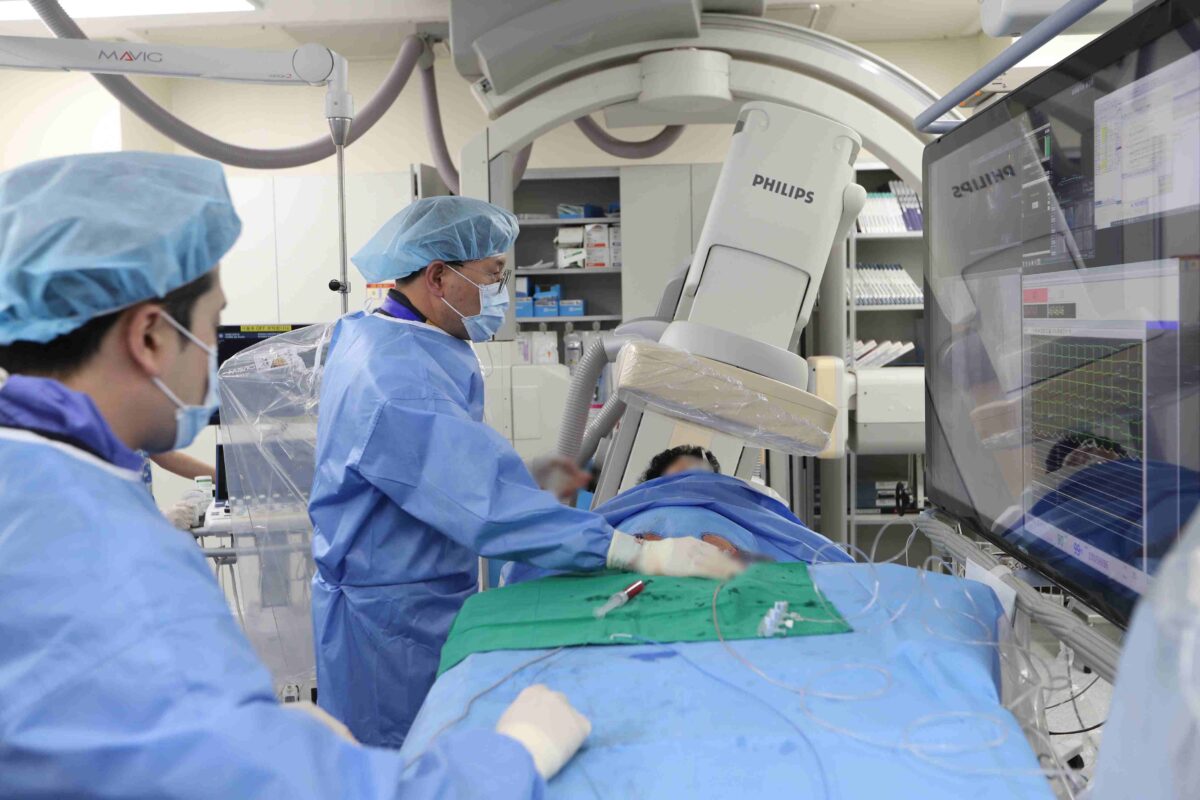
Starting July 6, revised National Health Insurance coverage guidelines have made it far more accessible for patients under 80—including those in their 60s and 70s—to receive TAVI with a 5% copayment. This policy shift represents a crucial development for individuals who previously hesitated due to financial burdens.
TAVI, however, is not a universal solution. Clinicians must meticulously weigh a range of factors, including patient age, coexisting conditions, surgical risk, valve anatomy, vascular structure, and overall life expectancy.
Samsung Changwon Hospital operates a multidisciplinary TAVI team led by cardiology specialists alongside experts in echocardiography, specialized CT imaging, thoracic surgery, cardiac anesthesia, and emergency response. Although the hospital formally introduced TAVI in 2023, the program builds upon nearly four decades of cardiovascular intervention experience since establishing the first regional heart center in South Gyeongsang Province in 1986.
Below, Park answers 11 fundamental questions regarding the TAVI procedure.
Q1. What kind of treatment is TAVI?
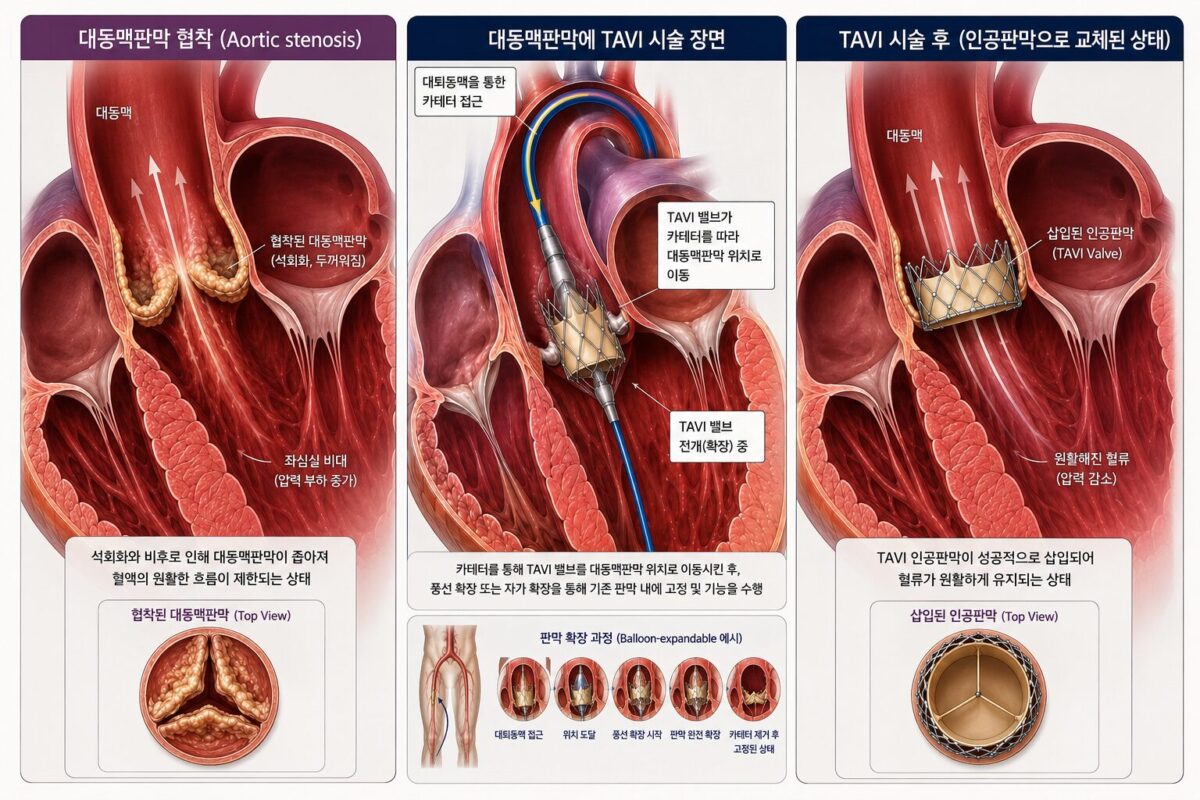
Transcatheter aortic valve implantation (TAVI) places a new artificial valve using a catheter without opening the chest. When severe aortic valve stenosis restricts blood flow from the heart to the rest of the body, TAVI restores circulation by expanding a replacement valve inside the narrowed native valve.
Conventional surgical valve replacement requires opening the chest, stopping the heart, removing the diseased valve, and sewing in a replacement. In contrast, TAVI advances a replacement valve to the heart through the femoral artery in the thigh. Because it minimizes physical trauma, TAVI serves as a vital option for elderly patients and those at high surgical risk.
Q2. Which patients are good candidates for TAVI?
The primary consideration is whether a patient can safely tolerate open surgery. Advanced age, impaired lung or kidney function, a history of cerebral infarction or myocardial infarction, and multiple coexisting conditions increase the risks associated with open surgery and general anesthesia.
For these high-risk patients, TAVI substantially reduces physical stress. However, fear of open surgery alone is not a sufficient clinical reason to select TAVI.
Q3. Is TAVI always advantageous for elderly patients?
While often beneficial for older adults, TAVI is not universally superior, and decisions are never made based on age alone. Clinicians must evaluate valve anatomy, vascular health, the presence of coronary artery disease, and overall physical condition.
For patients in their 80s, the priority is securing safe treatment and achieving rapid recovery. For patients in their 60s and 70s, however, care plans must account for potential structural valve deterioration 10 to 20 years down the line. Treatment should be tailored to the patient, rather than forcing the patient to fit a specific treatment.
Q4. Can younger patients also receive TAVI?
They can, but candidates require a far more rigorous evaluation. Younger patients have longer life expectancies, and artificial valves eventually wear out over time.
For a patient in their 60s, there is a strong possibility that secondary intervention will be required 10 or 20 years later. If open surgery is performed first, a secondary TAVI procedure can often be inserted inside the old surgical valve later in life (a valve-in-valve procedure). Conversely, performing TAVI first complicates future options, as secondary TAVI may not be anatomically feasible and open surgery at an advanced age carries substantial risk. Therefore, younger patients with low surgical risk are generally advised to undergo surgical valve replacement first.
Q5. Why are both echocardiography and CT scans necessary before TAVI?
Echocardiography evaluates how severely the valve has narrowed and measures the resulting strain on the heart. TAVI CT imaging, meanwhile, provides precise structural data, including access route viability, accurate valve sizing, and calcification patterns.
Specifically, TAVI CT verifies whether the femoral arteries are sufficiently wide and free of severe tortuosity, maps calcium deposits around the valve, and pinpoints the origin of the coronary arteries. Combining both tests allows clinicians to confirm procedural feasibility, select the proper artificial valve, and determine the optimal delivery route.
Q6. Is TAVI really a simple procedure?
While avoiding a chest incision reduces physical stress for the patient, TAVI is a highly intricate, technically demanding procedure from a surgical perspective.
The artificial valve must be deployed with absolute precision, and the medical team must be prepared to manage severe unexpected complications, including cerebral infarction, bradycardia, cardiac perforation, aortic damage, valve displacement, or coronary artery occlusion. For this reason, procedures require an integrated multidisciplinary team comprising cardiologists, thoracic surgeons, radiologists, anesthesiologists, specialized nurses, radiologic technologists, and perfusionists. TAVI is never a decision to be made lightly.
Q7. How long do the procedure and hospital stay take?
While duration varies by patient condition, the procedure itself typically takes 1 to 2 hours. For stable patients, the overall hospital stay is brief.
At Samsung Changwon Hospital, a typical timeline for a Wednesday procedure involves admission on Monday for preliminary testing and coronary evaluation, the TAVI procedure on Wednesday, and discharge on Friday if recovery is uneventful. However, schedules vary for patients requiring secondary coronary interventions, extended testing, or close postoperative monitoring. Patients should not assume their course will match an average timeline.
Q8. Can patients under 80 receive TAVI with a 5% copayment?
Yes, expanded eligibility has made this more achievable. Under revised National Health Insurance coverage criteria, patients under 80—including those in their 60s and 70s—can qualify for a 5% copayment if a multidisciplinary heart team unanimously agrees on the necessity of TAVI.
Previously, patients under 80 who were not classified as high surgical risk faced copayments of 50% to 80%, leading many to delay necessary care due to financial strain. However, the 5% rate is not automatic. The multidisciplinary team must thoroughly review surgical risk, coexisting diseases, valve anatomy, vascular status, and future retreatment needs before determining that TAVI is more appropriate than open surgery. Out-of-pocket costs also vary depending on non-covered items and individual insurance coverage.
Q9. Do patients experience immediate relief after TAVI?
Recovery rates differ, but many patients experience dramatic functional improvement. For example, an 80-year-old female patient recently arrived at the emergency room with severe pulmonary edema caused by advanced aortic stenosis and heart failure. After her condition was stabilized, she underwent TAVI, resulting in rapid relief from shortness of breath and restored physical mobility.
Patients struggling with severe dyspnea often report immediate lifestyle transformation once normal cardiac output is restored. Nevertheless, recovery speeds vary, and post-procedural care remains essential to monitor for arrhythmias, bleeding, valve durability, and medication adjustments. TAVI is an ongoing management process, not a one-time event.
Q10. What criteria should be used to choose a TAVI hospital?
First, patients should verify whether the hospital is officially certified as a TAVI-performing institution. Certification requires dedicated cardiac surgery facilities, qualified staff in cardiology and thoracic surgery, emergency surgical conversion protocols, and a verified volume of cardiovascular procedures.
Second, the facility must demonstrate advanced expertise in interpreting echocardiography and specialized TAVI CT scans. Third, the hospital should offer comprehensive post-procedural management, including arrhythmia tracking, bleeding control, valve assessment, and ongoing pharmacological adjustment. Patients can check whether a center meets Ministry of Health and Welfare standards and holds independent operator certification from major valve manufacturers such as Edwards Lifesciences or Medtronic.
Q11. Could retreatment be necessary after TAVI?
It is possible, as bioprosthetic valves naturally degrade over time. In such cases, clinicians may consider a "valve-in-valve" procedure, inserting a new artificial valve inside the deteriorated one. However, this approach is not anatomically suitable for every patient.
For this reason, medical teams evaluate valve selection, sizing, patient age, and long-term re-intervention strategies prior to the initial procedure. While TAVI reduces physical trauma, it requires complex long-term clinical planning. The goal is always to establish the safest, most durable therapeutic path tailored to a patient's entire lifespan. Severe aortic valve stenosis poses life-threatening risks if left untreated, but timely diagnosis allows patients and clinicians to select the optimal treatment—whether open surgery or TAVI.
Contributed by Park Yong-hwan, chief of internal medicine and head of the Cardiovascular Center at Samsung Changwon Hospital. He earned his medical degree from Dongguk University and his Ph.D. from Dong-A University. Following training at Samsung Medical Center, he served as a cardiology fellow and holds certification as a cardiovascular interventional specialist. He currently serves as a professor in the Department of Internal Medicine at Sungkyunkwan University School of Medicine.