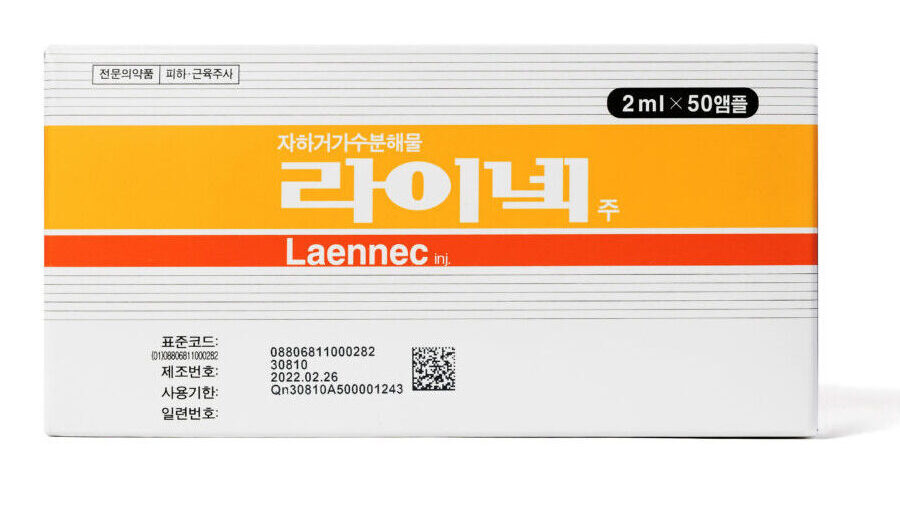
An animal study has revealed that combining GC Green Cross Wellbeing’s human placental hydrolysate treatment, Laennec Injection, with a low-dose corticosteroid produces pain relief comparable to a high-dose steroid regimen alone.
Corticosteroids are highly effective at suppressing inflammation and pain, but long-term or high-dose administration carries a substantial risk of adverse side effects. The study is notable because it highlights a potential pathway to maintain therapeutic efficacy while significantly reducing steroid exposure. However, researchers stress that because this was a preclinical mouse study, human clinical trials are necessary to confirm whether these dose-sparing benefits translate to clinical care.
GC Green Cross Wellbeing announced on August 14 that the research, conducted jointly with investigators from Yonsei University College of Medicine and other institutions, was published in Scientific Reports, an open-access journal from Nature Portfolio.
In South Korea, Laennec Injection is currently approved strictly for improving liver function in patients with chronic liver disease. Its application for pain management or combination therapy with corticosteroids remains an unapproved, off-label use.
Mitigating Pain Signals at the Spinal Level
To evaluate Laennec's analgesic effects, researchers induced acute pain by injecting capsaicin—the active heat compound in chili peppers that strongly stimulates pain receptors—into the hind paws of male mice. Capsaicin administration induces local and surrounding hypersensitivity to minor tactile stimuli.
Mice received intraperitoneal doses of Laennec at 1.8 mL/kg and 3.6 mL/kg (preclinical dosages that cannot be directly applied to humans). Results demonstrated a dose-dependent reduction in pain sensitivity, dampening hypersensitivity reactions both at the injection site and in adjacent tissues.
At the neural level, Laennec attenuated the hyperactivation of spinal cord neurons responsible for transmitting pain signals. Specifically, the treatment suppressed the expression of c-Fos, a biomarker of neuronal activation, and p-PKCε, a key protein involved in amplifying central pain signaling. These molecular findings suggest that Laennec helps interrupt the spinal amplification of acute pain signals.
Achieving High-Dose Efficacy with Low-Dose Dexamethasone
The study's most significant outcome appeared when Laennec was co-administered with dexamethasone, a widely used corticosteroid.
When administered alone at a low dose of 1 mg/kg, dexamethasone produced minimal pain relief. However, when 1 mg/kg of dexamethasone was combined with 3.6 mL/kg of Laennec, the overall analgesic effect matched that of a high-dose dexamethasone regimen (5 mg/kg) administered alone. In effect, adding Laennec allowed for an 80% reduction in steroid dosage while preserving equivalent therapeutic efficacy.
This synergistic effect was particularly pronounced during the early analgesic phase, between 30 and 60 minutes post-administration. Over time, the gap in efficacy between the Laennec-only group and the combination group narrowed.
Researchers emphasized that Laennec does not replace corticosteroids, but rather enhances sub-therapeutic steroid doses to achieve full analgesia.
Attenuating Steroid-Induced Weight Loss
The research team also tracked systemic side effects, focusing on weight loss associated with repeated steroid administration. Mice received daily treatments for five days, followed by a two-day observation period.
Mice treated with high-dose dexamethasone alone lost significant weight, dropping to approximately 88% of their baseline body weight and showing slow recovery after treatment ceased. Conversely, mice receiving low-dose dexamethasone paired with Laennec experienced less severe weight loss and recovered rapidly, reaching 95% of their initial body weight by day seven.
While Laennec did not eliminate steroid-related weight loss entirely, it significantly softened the trajectory of weight decline and accelerated recovery. However, the authors noted that long-term steroid usage causes various systemic complications—including hyperglycemia, osteoporosis, and immunosuppression—and body weight was the sole safety parameter evaluated in this preclinical model.

Clinical Translation and Regulatory Outlook
Steroids remain indispensable in managing acute and chronic inflammatory pain, making strategies that minimize required dosages clinically valuable. If validated in human subjects, Laennec combination therapy could offer a viable steroid-sparing strategy.
Nonetheless, important limitations remain. The findings are restricted to an acute capsaicin-induced pain model in mice and cannot be generalized to chronic or neuropathic pain conditions. Patients should not alter prescribed steroid regimens or seek off-label Laennec injections for pain management without regulatory approval and clinical guidance.
"This study scientifically demonstrates Laennec's mechanism in pain modulation and validates its potential in combination therapy with steroids," said Jung Si-young, head of R&D at GC Green Cross Wellbeing. "Laennec Injection could eventually offer a novel therapeutic alternative for patients concerned about steroid side effects."
Separately, GC Green Cross Wellbeing reported positive Phase 3 clinical trial results evaluating a high-dose intravenous administration regimen of Laennec for chronic liver disease. Based on these data, the company plans to submit a label expansion application to the Ministry of Food and Drug Safety (MFDS) within the year.