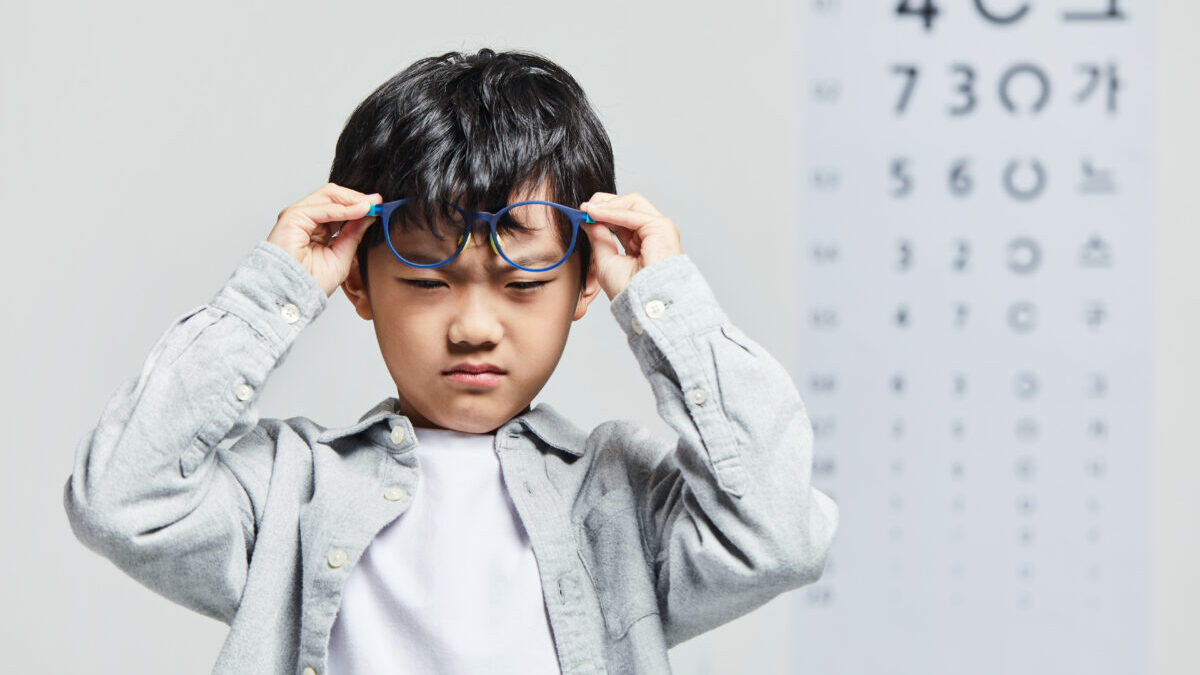
When a child suddenly complains that distant letters look blurry, many parents assume myopia has set in. It is common to skip the medical clinic and head straight to an optical shop for glasses—or even request specialized myopia-progression control lenses. However, ophthalmologists strongly advise against this approach, emphasizing that a child's declining vision requires a comprehensive medical evaluation first. The underlying issue may not be simple myopia, but rather "pseudomyopia," amblyopia, or a serious ocular condition.
Comedydotcom compiled a Q&A with three leading experts: Kim Chan-yoon, chair of the Korean Ophthalmological Society and professor at Yonsei University Severance Hospital; Jung Hye-wook, president of the Korean Ophthalmologists Association; and Choi Mi-young, president of the Korean Association for Strabismus and Pediatric Ophthalmology and professor at Chungbuk National University Hospital. They explained why parents must look beyond quick corrective options.
Q: Why should parents visit an eye clinic before an optical shop when a child's vision declines?
A: The cause of reduced vision is not always straightforward myopia. Choi Mi-young stressed that while less common, underlying conditions such as pediatric cataracts, retinal disorders, or optic nerve abnormalities can be present. Furthermore, amblyopia—a condition where visual acuity fails to develop properly even without structural abnormalities—can easily be overlooked. "Because these conditions stem from causes entirely different from myopia, early detection and intervention are critical," Choi said. Standard tests at optical shops focus primarily on measuring visual acuity, which cannot detect underlying eye diseases or distinguish true myopia from pseudomyopia.
Q: What exactly is "pseudomyopia"?
A: Pseudomyopia refers to temporary, false nearsightedness. Inside the eye, the ciliary muscle contracts and relaxes to alter the thickness of the crystalline lens for focusing. Prolonged near-work—such as reading books or using smartphones—can cause this muscle to over-contract and spasm. If vision is tested while the muscle is locked, the examination may falsely indicate myopia or overestimate its severity. "In these cases, prescribing glasses immediately is incorrect; the eyes must first be relaxed before retesting," Choi explained. Ophthalmologists identify pseudomyopia using a "cycloplegic refraction test," administering eye drops that temporarily relax the ciliary muscle to measure the eye's true refractive state. Opticians cannot perform this diagnostic procedure.
Q: How do clinicians define true myopia?
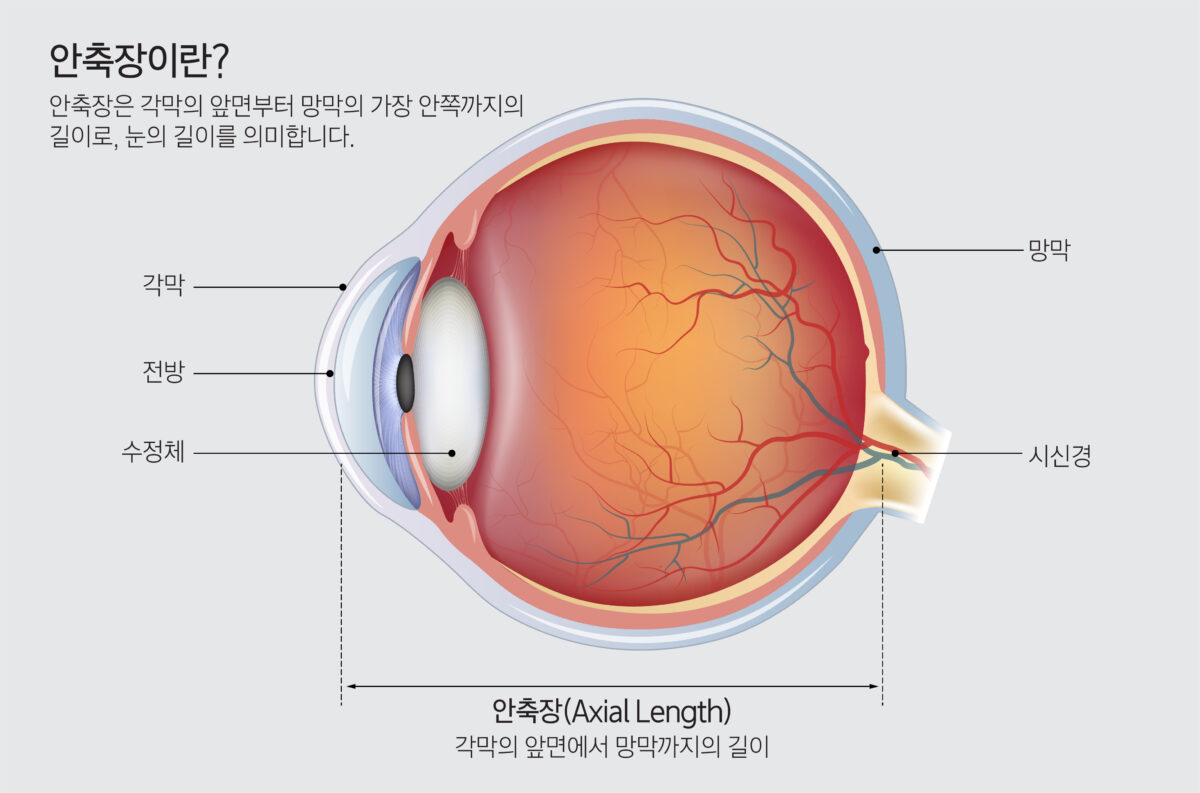
A: The key benchmark for evaluating true myopia progression is "axial length"—the physical distance from the cornea to the retina at the back of the eye. In true myopia, the eyeball undergoes excessive structural elongation along this axis. "Just as a child grows taller, the eyeball grows during development, but in myopia, axial length expands abnormally," Kim Chan-yoon explained. As the eyeball stretches, the retina and optic nerve tissues become thinner and weaker. "In adulthood, this structural change increases the risk of sight-threatening conditions—including retinal detachment, glaucoma, and macular degeneration—by three times to several dozen times," Kim warned.
Q: What medical treatments exist to control myopia progression?
A: Pediatric myopia requires continuous clinical management throughout a child's growth years. Ophthalmologists monitor axial length every 6 to 12 months using objective diagnostic tools to measure the pace of elongation and tailor treatment accordingly. Current evidence-based interventions include pharmaceutical therapy and specialized optical lenses. Pharmacological treatment typically involves instilling low-concentration atropine eye drops nightly, a method proven in clinical studies to suppress axial elongation.
Q: How do specialized medical lenses work?
A: Medical-grade myopia-control lenses—such as MiSight or MyoSmart—utilize a optical mechanism known as "peripheral defocus." These lenses maintain clear central vision while focusing peripheral light rays slightly in front of the retina, sending a biological signal that inhibits further eyeball elongation. However, these specialized lenses must be prescribed after evaluating the child's corneal curvature, ocular anatomy, astigmatism, and daily visual habits. If amblyopia is present, it must be treated prior to initiating myopia control.
Jung Hye-wook emphasized that managing myopia extends beyond selecting a single lens or medication. "Accurate diagnosis and regular follow-up evaluations must be carried out together," Jung said.