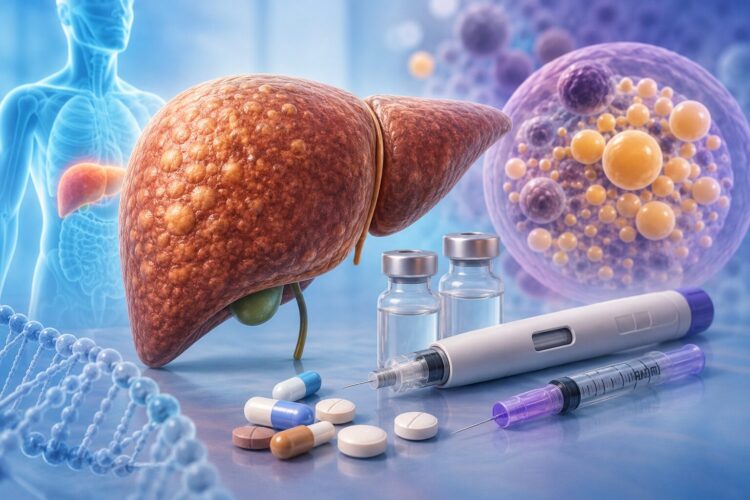
Fat accumulation in the liver can trigger severe inflammation even in individuals who completely abstain from alcohol. This condition, known as metabolic dysfunction-associated steatohepatitis (MASH), is a chronic liver disease closely tied to worsening metabolic health, including obesity and diabetes. Left untreated, MASH can progress to fibrosis—the buildup of hardened, scar-like tissue in the liver—and ultimately escalate to cirrhosis or liver cancer.
Despite a global patient population estimated in the hundreds of millions, the medical community faces a critical shortage of interventions, with only two therapies currently approved by the U.S. Food and Drug Administration (FDA). Seizing this massive market gap, South Korean pharmaceutical and biotech companies are aggressively accelerating their clinical pipelines to deliver next-generation MASH treatments.
A Multi-Billion Dollar Market with Scarce Treatment Options
India-based market research firm DataM Intelligence values the global MASH therapeutics market at approximately $7.9 billion (around 11 trillion won) as of 2024, with projection models showing an average annual growth rate exceeding 17%.
The current competitive landscape remains exceptionally sparse. Madrigal Pharmaceuticals’ Rezdiffra became the first FDA-approved MASH treatment to hit the market in March 2024. This was followed by Novo Nordisk’s blockbuster drug Wegovy, which expanded its regulatory indications to include MASH in August 2025. While these two options represent historic milestones, they fulfill only a fraction of the immense global demand, leaving the door wide open for new therapeutic contenders.
D&D Pharmatech Delivers Competitive Clinical Data
The company drawing the most significant attention in South Korea's biotech landscape is D&D Pharmatech. Listed on the KOSDAQ, the firm was founded in 2014 by CEO Lee Seul-gi, a former associate professor at the Johns Hopkins School of Medicine. The company specializes in developing innovative GLP-1-class therapeutics.
D&D Pharmatech’s flagship candidate, DD01, is a dual agonist that simultaneously activates the GLP-1 receptor—which regulates blood sugar and weight—and the glucagon receptor, which drives fat burning directly within the liver. This dual-targeting mechanism is engineered to maximize the reduction of hepatic fat.
The company recently turned heads at the European Association for the Study of the Liver (EASL 2026) congress, unveiling promising data from a Phase 2 clinical trial that utilized direct liver biopsy assessments over a 48-week period.
The trial results demonstrated that, compared to the placebo group, DD01 achieved a 57.2 percentage point higher rate in steatohepatitis resolution and a 34.2 percentage point higher rate in liver fibrosis improvement. Furthermore, the proportion of patients achieving both primary endpoints simultaneously outperformed the placebo by 32.2 percentage points. Following the presentation, a report by Shinhan Investment Corp. evaluated DD01’s efficacy as best-in-class among competing MASH candidates within the same therapeutic category.
While direct cross-trial comparisons are challenging due to variations in patient demographics, study durations, and evaluation metrics, DD01’s disclosed figures notably outpaced several high-profile rivals. Its steatohepatitis resolution rate improvement exceeded those reported for Boehringer Ingelheim’s survodutide (47.7 percentage points), Eli Lilly’s Zepbound (53.0 percentage points), Novo Nordisk’s Wegovy (28.6 percentage points), and Madrigal’s Rezdiffra (20.2 percentage points).
However, analysts note that the trial's cohort was relatively small, numbering just 67 patients. The critical test for D&D Pharmatech will be whether these robust efficacy signals can be successfully reproduced in an upcoming, large-scale Phase 3 trial.
Hanmi, Yuhan, and Dong-A Build a Deep Pipeline
Other prominent South Korean players are advancing their own sophisticated MASH candidates. Hanmi Pharmaceutical is developing efinopegdutide, which shares the same dual-agonist mechanism as DD01. Initially licensed to Janssen in 2015 and later returned, the candidate was strategically pivoted toward MASH and licensed to U.S. pharma giant Merck (MSD) in 2020. With late-stage Phase 2 data anticipated in the second half of this year, local brokerages value the underlying technology at over 1 trillion won. The drug has also received an FDA priority review designation.
Meanwhile, Yuhan Corp. has secured approval for a domestic Phase 1 clinical trial of YH25724, a long-acting, once-weekly candidate that has demonstrated a 46% reduction in liver fat. Kim Yeol-hong, Yuhan's president and head of R&D, has tapped the asset as the company's next core pipeline driver.
Rounding out the domestic landscape, Dong-A ST is advancing banoglipfel (DA-1241) through its U.S. affiliate Metavia, while SK Chemicals has partnered with J2H Biotech to enter the field.
As new contenders enter this drastically underserved market and robust clinical data continues to accumulate, the stage is set for an acceleration of high-value global technology licensing negotiations across the South Korean biotech sector.