Every period came with severe abdominal pain. She managed with painkillers, telling herself she was simply someone with unusually bad cramps. Then, an ultrasound revealed a lump on her ovary.
Worry set in immediately. Could it be cancer? Do I need surgery? If I have surgery, will my ovary be okay, and will it affect my ability to get pregnant later?
The diagnosis was endometriosis, a condition where tissue similar to the endometrium lining the inside of the uterus grows outside it, triggering chronic inflammation, adhesions, and pelvic pain. When these lesions develop on an ovary and form a fluid-filled, saclike cyst, it is known as an ovarian endometrioma. Because blood and tissue accumulate inside over time with repeated menstrual cycles, the contents often turn a deep brown color, giving rise to the common term "chocolate cyst."
Medication First or Straight to Surgery? “Decisions Are Not Based on Size Alone”
Many conditions can cause ovarian lumps, and imaging tests must evaluate and distinguish other benign or malignant tumors. Even so, finding a lump does not automatically dictate surgery.
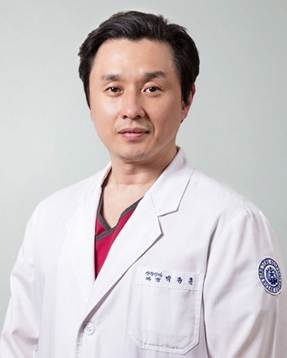
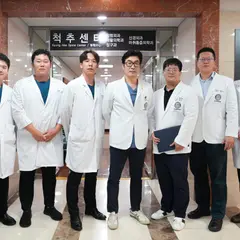
Park Jong-hoon, department chief of obstetrics and gynecology at Bongsaeng Memorial Hospital in Busan, explained that if symptoms are not severe, pelvic exams and ultrasounds do not suggest deep lesions or invasion into nearby organs, and there are no features suspicious for malignancy, doctors can try medication first.
In the past, clinicians often relied on laparoscopy to inspect lesions directly, remove them, and confirm a diagnosis through biopsy. Today, physicians frequently establish a clinical diagnosis by synthesizing symptoms, physical exams, and imaging modalities like ultrasound and MRI, allowing patients to start medication first depending on the clinical indications.
What matters most is monitoring progress after medication begins. If pain subsides and lesions improve, treatment continues. If symptoms persist or lesions progress despite medication, surgical options must be considered. Conversely, if deep pelvic involvement or invasion into nearby organs such as the bowel or urinary tract is suspected from the outset—and related symptoms are severe or organ function could be compromised—surgery may be prioritized to define the extent of the disease and treat it.
Park noted that choosing between starting with medication or surgery depends on weighing the pros and cons of each approach alongside each patient’s physical condition.
Surgery, however, is not necessarily the end of treatment. Because endometriosis commonly recurs and can progress during the reproductive years before menopause, many patients require medication again after surgery to suppress recurrence or control remaining deep lesions.
An Ovarian Lump—Could It Be Cancer? Typical Endometriomas Can Be Identified on Imaging
For many patients, hearing that there is a lump on their ovary immediately raises fears of cancer.
Ovarian endometriomas typically present with characteristic findings on ultrasound and MRI. MRI, in particular, is effective at distinguishing typical endometriomas and defining the scope of the lesions.
By contrast, if the cyst wall appears thick and irregular, or if there are multiple internal septations, solid components, or enlarged nearby lymph nodes, clinicians must evaluate for other tumor possibilities. Even during medical treatment, if a lesion continues to grow or changes in appearance, it requires immediate reassessment.
“It Is Not Enough to Preserve the Ovary’s Outer Shape”—Reducing Thermal Injury Is Key
Once cancer has been ruled out, a critical dilemma in endometriosis surgery comes into focus: how much of the lesion should be removed, and how much normal ovarian tissue can be preserved?
The goal of endometrioma surgery is straightforward: identify the boundary between the lesion and healthy tissue, remove as much of the lesion as possible, and minimize damage to the normal ovary. In practice, this can be challenging. When endometriosis has progressed over a long period, the boundary between the lesion and normal ovarian tissue often becomes blurred, and some patients may already have substantial pre-existing damage to healthy tissue.
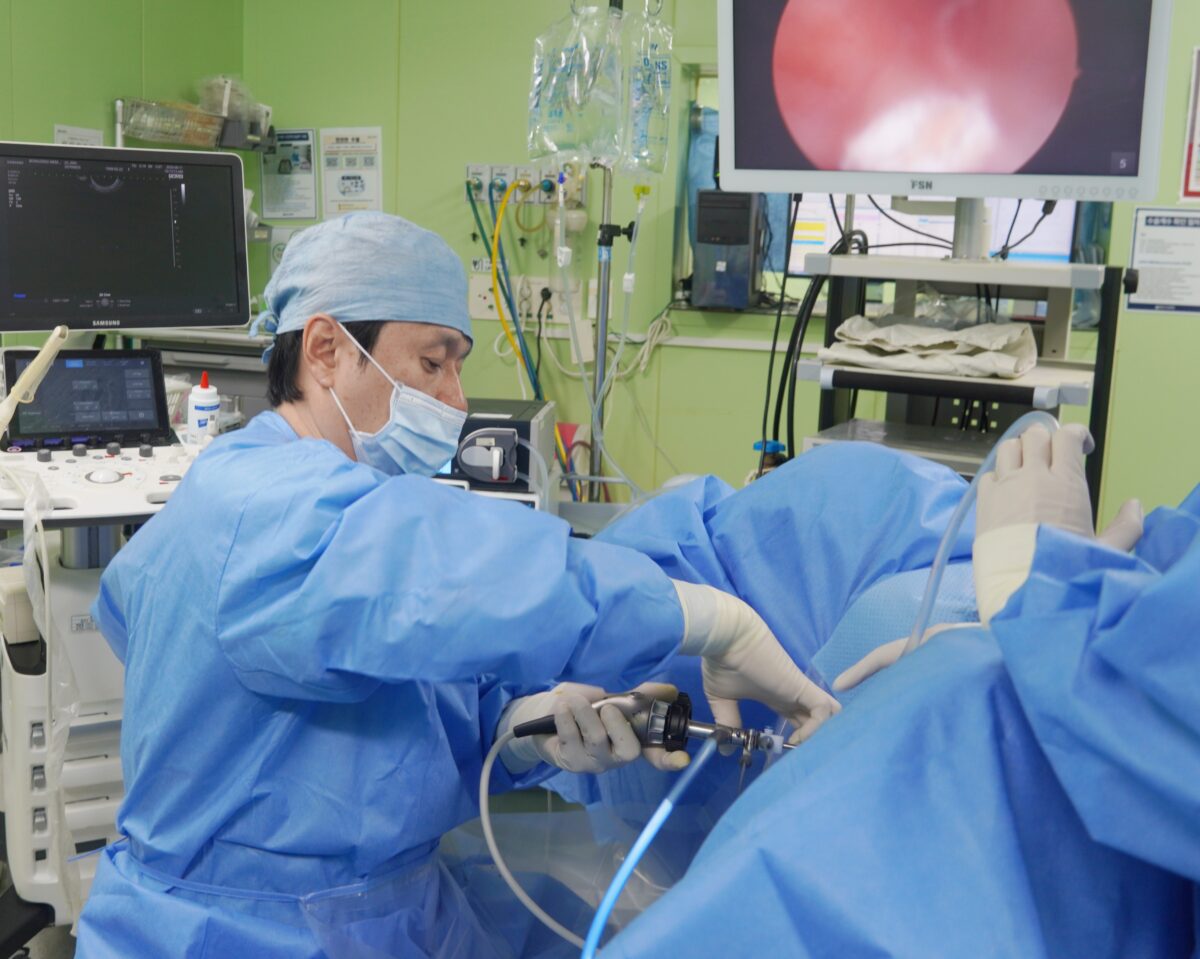
What Park emphasizes above all is minimizing "thermal injury." During surgery, surgeons use energy devices such as electrocautery alongside suturing to cut tissue and control bleeding. Limiting the heat transmitted to surrounding tissue is just as crucial as preserving visible normal ovarian tissue.
Park compares the ovary to a raw egg. "If you apply heat to an egg, the outside may look unchanged, but the inside transforms completely," he noted. "We should not look only at how much ovarian tissue appears to remain on the surface. We must actively minimize thermal injury transmitted to normal tissue."
Single-Incision Surgery: Park Jong-hoon Surpasses 1,220 Gynecologic Operations
Avoiding necessary surgery at all costs out of concern for ovarian function is also problematic. Severe endometriosis exposes the ovaries to chronic inflammation and fibrotic adhesions over long periods, which can impair ovarian function and severely affect adjacent organs.
When surgery is required, the choice of surgical technique becomes paramount. Park most frequently performs single-port access (SPA) laparoscopic surgery. In this approach, surgeons make an incision of about 2 centimeters at the navel—a natural scar present from birth—and insert surgical instruments through that single opening. Having only one incision site can mean less postoperative pain, faster recovery, and minimal cosmetic scarring.
However, minimizing incisions is not the sole objective. Park emphasized that while fewer incisions are preferable, surgical thoroughness must never be compromised for cosmetic reasons or pain management alone. The technique chosen must allow the surgeon to fully accomplish the operational goals.
As of late July 2026, Park has performed a cumulative total of 1,220 gynecologic surgeries. Single-port laparoscopic surgery accounts for the largest share, followed by hysteroscopic surgery. A high proportion of his patients visit the hospital through referrals from other medical professionals or introductions from former patients.
What a Comprehensive Secondary General Hospital Can Achieve: “Handling Most Advanced Endometriosis Surgeries In-House”
Park’s surgical principles for endometriosis are clear: remove as many lesions as possible, restore anatomical structures, and minimize damage to surrounding organs.
Executing these principles can be highly complex. Advanced endometriosis often adheres firmly not only to the ovaries but also to tissues surrounding the uterus, bowel, and bladder. Park stressed that while endometriosis is a benign disease, operating on advanced cases can actually be more complex and time-consuming than cancer surgery.
Bongsaeng Memorial Hospital is a comprehensive secondary general hospital designated by the Ministry of Health and Welfare. Most cases of endometriosis that have invaded nearby pelvic organs can be operated on directly at the hospital. However, if an ovarian lump carries a high likelihood of malignancy or requires specialized gynecologic oncology care, the patient is promptly referred to a tertiary hospital or specialized center. Actively treating complex cases locally while referring patients who require higher-level care without delay represents a core function of comprehensive secondary general hospitals.
[Table] If an ovarian cyst is malignant, does the ovary have to be removed?

[FAQ]: Common Questions Before and After Endometriosis Surgery
At what size (cm) does an endometrioma require surgery?
There is no absolute cutoff size for deciding whether surgery is needed. Clinicians evaluate pain severity, response to medication, whether the lesion is growing, deep tissue or nearby organ involvement, malignancy risk, patient age, and pregnancy plans.
If I have endometriosis surgery, can I stop taking medication afterward?
Not necessarily. Endometriosis has a high recurrence rate, and microscopic or deep lesions may remain. Depending on the patient's condition, clinicians often prescribe post-surgery medication up until menopause to suppress recurrence and manage residual disease.
Can endometriosis occur outside the ovaries or pelvis?
While it most commonly occurs within the abdominal and pelvic cavities, endometriosis can rarely develop in distant organs. For instance, pulmonary endometriosis affects the lungs. Patients with pulmonary lesions often respond well to medical therapy alone, allowing them to manage the condition without requiring lung surgery.
Expert Source: Park Jong-hoon, department chief of obstetrics and gynecology at Bongsaeng Memorial Hospital in Busan. He graduated from Pusan National University College of Medicine and completed his training and fellowship at Pusan National University Hospital. Holding a Master of Medical Science, he specializes in gynecologic laparoscopic and hysteroscopic surgery and has performed over 1,220 cumulative gynecologic operations as of late July 2026.