A widespread misconception—frequently amplified by aggressive marketing from the protein industry—holds that consuming massive amounts of protein is the key to building larger muscles. While protein provides the essential amino acid building blocks for muscle tissue, simply eating more of it does not trigger growth. Muscles adapt and enlarge through regeneration following repeated stimulation or mechanical stress. Without physical exercise, extra protein will not build muscle mass.
Muscles consist of thousands of individual fibers made of smaller strands known as myofibrils [1].
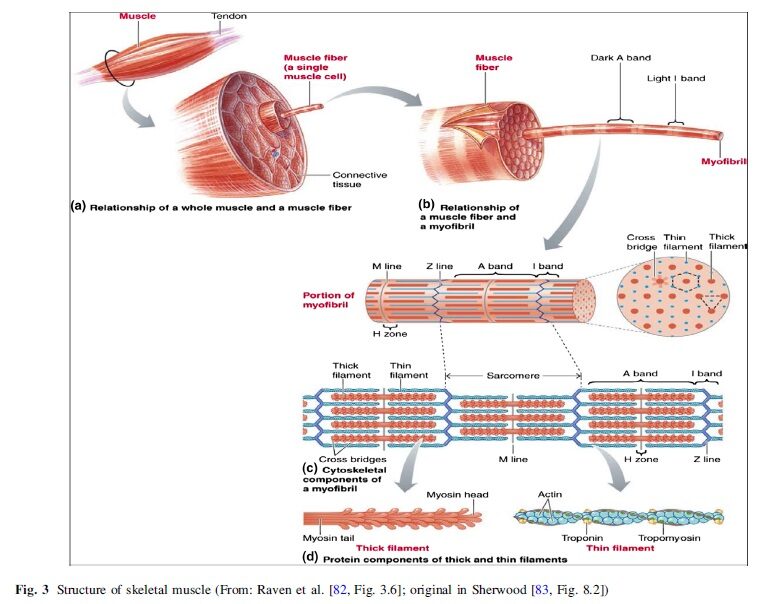
When muscles perform strenuous work during intense exercise, myofibrils sustain microscopic tears. Rather than growing during the workout itself, muscle tissue repairs during rest. Satellite cells—specialized muscle stem cells—gather at the damaged sites, fusing with myofibrils to rebuild stronger and thicker muscle fibers. This repair process increases overall myofibril volume beyond its previous level, causing the muscle to expand [2, 3].
The stiffness and pain experienced a day or two after an unaccustomed workout, known as delayed onset muscle soreness (DOMS), stems from these microscopic tears and the accompanying inflammatory response. During a two- to three-day recovery period, the body heals this micro-damage and reinforces the tissue [4].
Mechanical Tension Triggers Growth Without Soreness
For decades, fitness culture maintained that post-workout soreness was required for muscle growth. However, modern exercise physiology demonstrates that muscles synthesize new protein whenever they experience sufficient "mechanical tension"—the strain of supporting a heavier-than-usual load under force—even without causing micro-tears. Mechanical stress activates an intracellular signaling path known as mTOR, flipping the muscle-building switch and promoting growth without requiring soreness [5].
This mechanism explains the efficacy of isometric exercises like planks or wall sits. In isometric training, muscles exert force against a fixed position without changing length or moving joints. By contrast, isotonic exercises—such as lifting and lowering dumbbells—involve active joint movement as muscles contract and elongate. While isotonic training remains the most efficient method for hypertrophic growth, isometric resistance can also stimulate muscle synthesis if the mechanical tension is high enough. Muscles do not expand from movement alone; if tension is sufficient, the muscle recognizes that it is being used and initiates muscle protein synthesis [6].
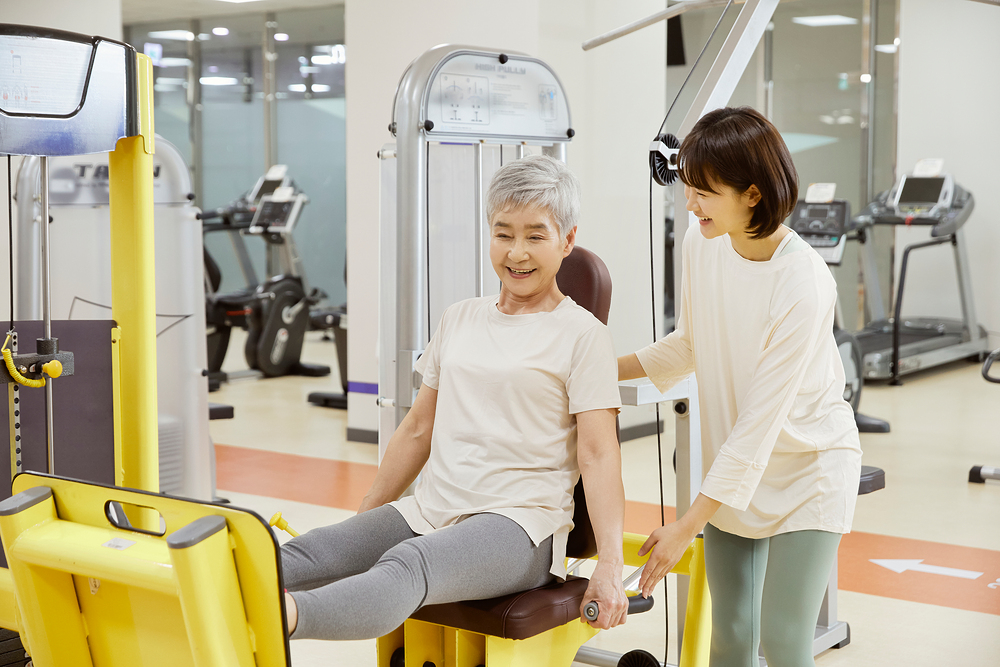
For older adults, pushing to the point of acute muscle pain risks joint injury. Exercises should instead aim for a dull sense of muscular fatigue. Although age-related "anabolic resistance" reduces the efficiency of muscle protein synthesis in older individuals, progressive resistance training remains undisputed in its ability to preserve and build muscle mass [7, 8].
Unused Muscle Atrophies Rapidly
Muscle tissue is metabolically costly to maintain. Because energy expenditure is high, the human body allocates resources rationally, refusing to synthesize excess muscle unless it receives a consistent signal that the tissue is necessary. When muscles go unused, they rapidly atrophy.
In orthopedic practice, this decline is frequently observed in patients requiring joint immobilization. Placing a limb in a cast for just two to three weeks results in visible muscle wasting. In intensive care unit (ICU) patients unable to move, quadriceps muscle mass can decrease by up to 30% within 10 days [9].
This rapid decline in ICU patients is not caused by nutritional deficiency. ICU protocols routinely provide high-protein nutrition—typically 1.2 to 1.5 grams of protein per kilogram of body weight daily compared to the standard recommendation of 0.8 g/kg/day for the general public. For some critically ill patients, recommendations go as high as 1.5 to 2.0 g/kg/day, confirming that bedridden ICU patients do not lack protein intake [10].
The reason ICU patients lose thigh muscle is not a lack of protein, but the fact that they are not moving. Protein provides the raw material, but without physical mechanical strain, the body cannot convert that material into functional muscle. The claim that "you have to eat a lot of protein to build more muscle" is nothing more than an evidence-free myth.
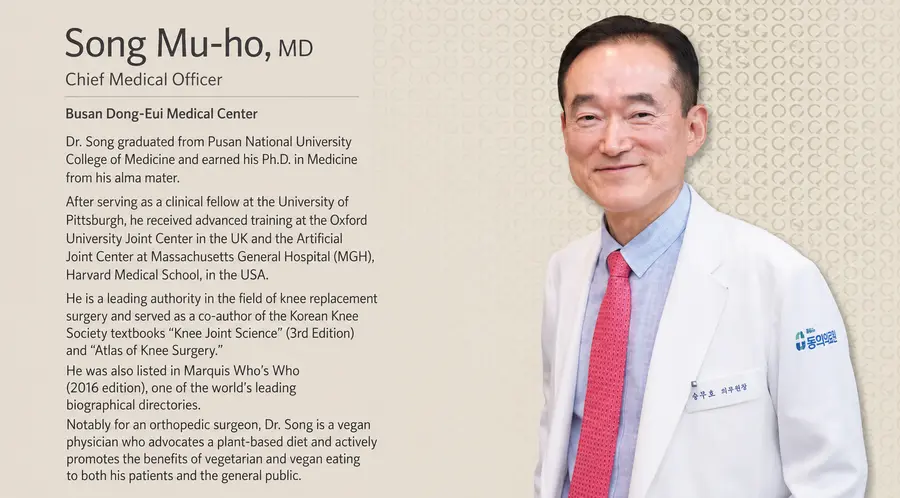
Song Moo-ho, MD, orthopedic surgery and lifestyle medicine specialist
References
1. WR Frontera, J Ochala. Skeletal muscle: a brief review of structure and function. Calcified tissue international 2015;96(3):183-195.
2. P Sousa-Victor, L García-Prat, P Muñoz-Cánoves. Control of satellite cell function in muscle regeneration and its disruption in ageing. Nature Reviews Molecular Cell Biology 2022;23(3):204-226.
3. A Stožer, P Vodopivc, LK Bombek. Pathophysiology of exercise-induced muscle damage and its structural, functional, metabolic, and clinical consequences. Physiological research 2020;69(4):565.
4. Wikipedia https://en.wikipedia.org/wiki/Delayed_onset_muscle_soreness
5. MD Roberts, JJ McCarthy, TA Hornberger, et al. Mechanisms of mechanical overload-induced skeletal muscle hypertrophy: current understanding and future directions. Physiological reviews 2023;103(4):2679–2757.
6. C Lim, EA Nunes, BS Currier, et al. An Evidence-Based Narrative Review of Mechanisms of Resistance Exercise-Induced Human Skeletal Muscle Hypertrophy. Med Sci Sports Exerc 2022;54(9):1546-1559.
7. MS Fragala, EL Cadore, S Dorgo, et al. Resistance training for older adults: position statement from the National Strength and Conditioning Association. J Strength Cond Res 2019;33:2019–2052.
8. P Lopez, RS Pinto, R Radaelli, et al. Benefits of resistance training in physically frail elderly: a systematic review. Aging Clin Exp Res 2018;30:889–899.
9. SM Parry, D El-Ansary, MS Cartwright, et al. Ultrasonography in the intensive care setting can be used to detect changes in the quality and quantity of muscle and is related to muscle strength and function. Journal of Critical Care 2015;30(5):1151.e9-14.
10. D Qinyuan, Q Congcong, L Guochen, et al. Protein nutritional support in critically ill patients: pathophysiological basis, clinical evidence, and areas of uncertainty - a narrative review. Front Med (Lausanne) 2026;13:1770345.