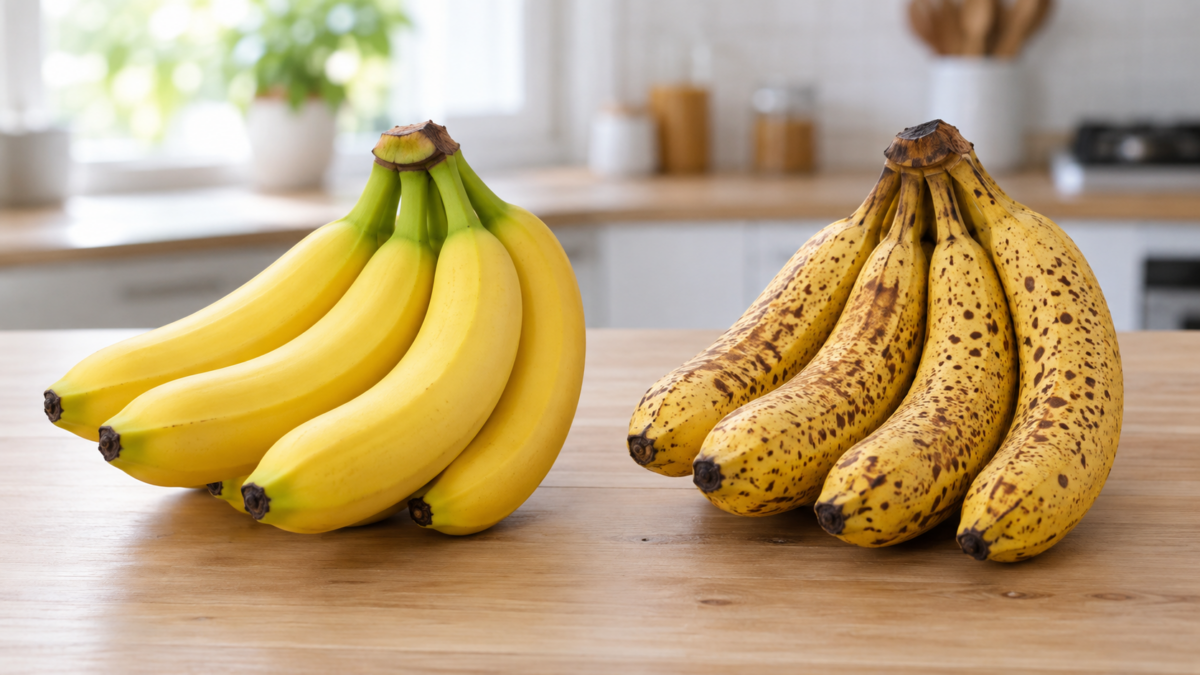
You bring home bright yellow bananas, only to watch dark spots spread within a day or two as the flesh softens. Bananas continue to ripen post-harvest because they naturally produce ethylene, a plant hormone that accelerates ripening.
To extend their shelf life, avoid putting green-tinted bananas straight into the refrigerator. Underripe bananas should be stored at room temperature in a cool spot; they can be transferred to the refrigerator once they turn fully yellow.
Managing Ethylene Gas and Surrounding Produce
Storing bananas in sealed plastic bags traps ethylene gas inside, accelerating peel browning and flesh softening. After purchasing, remove bananas from plastic packaging immediately and store them in a well-ventilated area.
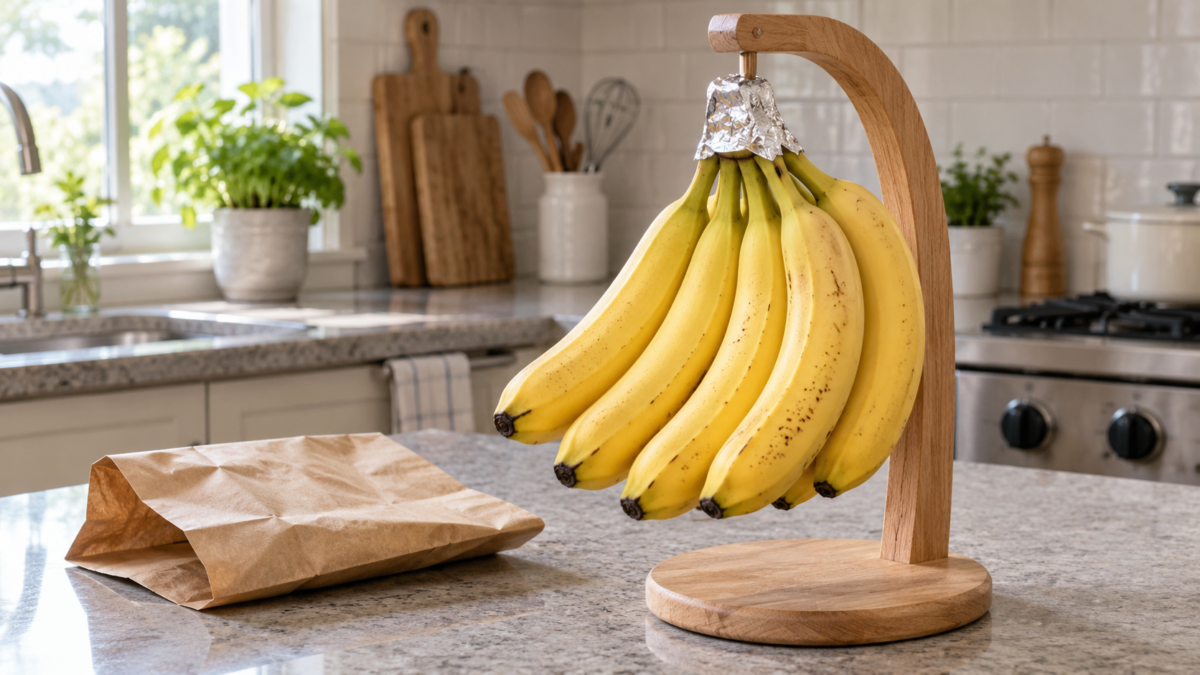
Produce such as apples, pears, avocados, and tomatoes also release significant amounts of ethylene. Storing bananas alongside these fruits will speed up ripening. Conversely, if you want to ripen firm, green bananas quickly, placing them in a paper bag with an apple concentrates ethylene gas to speed up the process naturally.
Stem Wrapping and Pressure Relief at Room Temperature
Wrapping banana stems in plastic wrap or aluminum foil limits moisture loss and slows the diffusion of ethylene gas from the crown. Rather than wrapping an entire cluster, separate the bananas by cutting the stems with scissors—taking care not to tear the flesh—and wrap each stem individually.
Placing a cluster flat on a hard surface creates pressure points that bruise the fruit and trigger localized browning. Hanging bananas on a dedicated hook or placing them loosely in a wide basket prevents pressure damage. Bananas should also be kept away from direct sunlight, windowsills, and heat-generating kitchen appliances.
When to Refrigerate and How to Identify Spoilage
Bananas with a green tint require room-temperature storage for their sweetness and aroma to develop properly. Subjecting underripe bananas to cold temperatures causes chilling injury, which darkens the peel while halting the internal ripening process permanently. Move bananas to the refrigerator only after the peel has turned completely yellow and small brown sugar spots begin to appear.
A blackened peel in the refrigerator does not automatically indicate that the fruit inside has spoiled. Cold temperatures darken outer skin cells while the underlying flesh often remains firm and sweet. However, bananas should be discarded if there is visible mold, liquid leakage, a sour or alcoholic odor, or if the internal flesh has turned dark brown and mushy.
Freezing Overripe Bananas for Later Use
If ripe bananas cannot be consumed within a few days, peel and freeze them before they spoil. Slice the flesh into 2- to 3-centimeter pieces, arrange them in a single layer on a tray so they do not stick together, and freeze until firm. Once solid, transfer the pieces into an airtight container or freezer bag, pressing out excess air to prevent freezer burn and odor absorption.
Because thawed bananas lose their structural firmness, frozen banana slices are best utilized in smoothies, yogurt, oatmeal, or baking recipes like banana bread. Portioning them into single servings provides an easy way to reduce food waste while extending their usability for months.