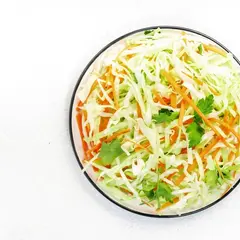
Actress Han Go-eun, 51, recently shared the unique salad dressing recipe she has been enjoying.
Before trying a convenience-store chicken breast salad on her YouTube channel, Han noted, “Dressing accounts for 90% of a salad’s calories,” adding, “But dressing has to taste good for you to eat it. How could anyone eat this plain?”
She recommended a dressing made by combining safflower oil with mustard, honey, and lemon juice. “There’s nothing quite like this golden color. The oil is light with a nutty aroma, and it has an incredible floral fragrance—almost like drinking tea,” Han explained. “I’ve been using it to make dressing lately.” She also noted that safflower oil contains more bone-supportive oleic acid than olive oil, along with antioxidants and phytoestrogens that can benefit menopausal women.
Standing 174 cm tall, Han is well known for maintaining a weight of 52 kg for roughly 30 years. Here is a closer look at the nutritional science behind safflower oil and how to prepare dressings in a healthy, balanced way.

Safflower vs. Olive Oil: Oleic Acid Content Depends on the Variety
Safflower oil is extracted from safflower seeds and is rich in unsaturated fatty acids. Based on its fatty acid profile, it is categorized into two main types: conventional safflower oil (high in linoleic acid) and high-oleic safflower oil (high in oleic acid). Linoleic acid is an essential omega-6 polyunsaturated fatty acid that the human body cannot synthesize on its own. Oleic acid is a monounsaturated fatty acid also found abundantly in olive oil.
According to fatty acid composition standards from the Codex Alimentarius Commission, oleic acid makes up about 8% to 21% of total fatty acids in conventional safflower oil and 70% to 84% in high-oleic safflower oil. By comparison, olive oil contains between 55% and 83% oleic acid. While high-oleic safflower oil can contain more oleic acid than certain olive oils, fatty acid percentages alone do not make one oil inherently healthier than the other.
When substituted for saturated fats, both oleic acid and linoleic acid can help manage LDL cholesterol and support cardiovascular health. Linoleic acid is essential for cell function and maintaining the skin barrier, whereas oleic acid is relatively resistant to oxidation. Rather than choosing an oil based solely on oleic acid levels, it is best to select one appropriate for your intended culinary use. However, current scientific evidence is insufficient to conclude that either oil directly strengthens bones or prevents osteoporosis.

Rich in Vitamin E, with Plant Compounds Under Investigation
Safflower oil is a rich source of vitamin E, an essential antioxidant. According to the U.S. National Institutes of Health (NIH), one tablespoon of safflower oil provides approximately 4.6 mg of vitamin E. Vitamin E helps protect cells from oxidative damage and supports normal immune function. Using safflower oil in moderation adds flavor while supplying beneficial antioxidants.
Plant compounds in safflower seeds, including lignans, are also the subject of scientific research. Some of these compounds act as phytoestrogens, which mimic female hormones. In a small clinical study, 40 postmenopausal women consumed granulated tea made from safflower seed extract for six months. Researchers observed favorable shifts in certain antioxidant and bone metabolism markers, providing a rationale for further research into bone health benefits.
However, that study utilized defatted seed extract rather than pressed culinary oil. Further clinical research is required to verify whether consuming edible safflower oil yields identical physiological effects. For now, safflower oil is best viewed as a wholesome food ingredient that delivers unsaturated fats and vitamin E, rather than an explicit treatment for menopausal symptoms or estrogen deficiency.

Portion Control and Smart Choices for Healthy Dressings
Blending safflower oil with mustard, lemon juice, and honey creates a balanced flavor profile by combining the oil’s mildness with mustard's sharp bite, lemon’s acidity, and honey’s natural sweetness. Nevertheless, safflower oil provides about 9 kcal per gram of fat, meaning just 10 grams adds roughly 90 kcal to a meal. Honey also contributes to daily added sugar intake. Using generous amounts under the assumption that the oil is "healthy" and the sweetener is "natural" can hinder weight management efforts; it is best to add small amounts and adjust to taste. For a creamy texture, consider using unsweetened low-fat plain yogurt seasoned with vinegar, black pepper, minced garlic, or fresh herbs, and check commercial mustard labels for added sugar and sodium.
What goes into the salad itself is just as critical as the dressing. Pairing fresh greens with lean protein sources such as tofu, beans, or skinless chicken breast creates a balanced, nutritious meal. Conversely, heavy toppings like bacon bits, fried croutons, or processed cheeses significantly increase overall calories, saturated fat, and sodium. While nuts provide healthy unsaturated fats, they are energy-dense and should be added in moderation. Serving dressing on the side allows for precise portion control, supporting both general health and weight management goals.