A 31-year-old woman became pregnant nine times but never gave birth. Six pregnancies ended in early miscarriage, and three were terminated after serious fetal abnormalities developed. Neither she nor her husband had any known health problems, but chromosome testing uncovered an unexpected clue.
Tingting Ge and fellow researchers at the Prenatal Diagnosis Center of Gansu Provincial Maternity and Child-care Hospital in China published the case Oct. 21 in the international journal 《Frontiers in Genetics》.
Six miscarriages, three pregnancies with fetal abnormalities
The woman conceived naturally all nine times. Her first four pregnancies ended in miscarriage after fetal development stopped before 10 weeks.
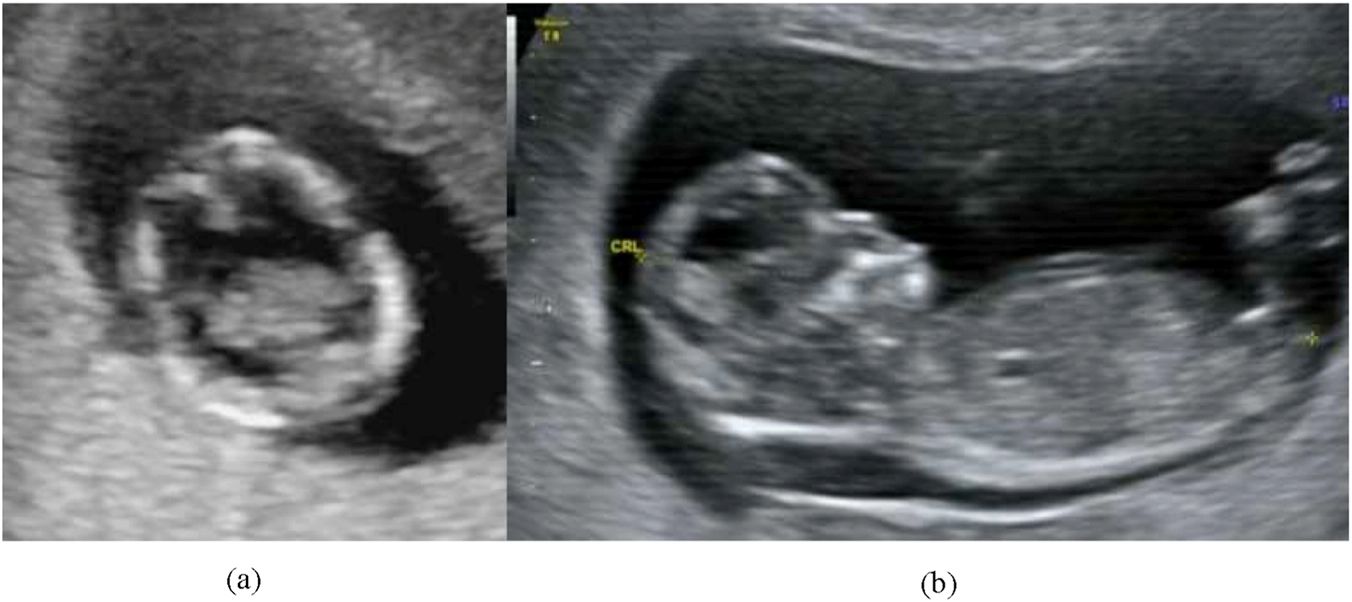
During her fifth pregnancy, in 2021, an ultrasound at 12 weeks revealed serious fetal malformations. Doctors found holoprosencephaly, a condition in which the front of the brain does not divide normally into left and right sides, and a cystic hygroma, a fluid-filled swelling caused by lymphatic fluid collecting around the neck. The fetus’s entire body was also swollen. The woman ultimately terminated the pregnancy.
Her sixth and seventh pregnancies also ended in miscarriage before 10 weeks.
During her eighth pregnancy, in 2023, a fluid-filled swelling developed on the fetus’s neck, and an abnormality appeared in the structure of its heart. By 15 weeks, doctors had also detected a pleural effusion, or fluid in the chest cavity.
Chromosome testing of the fetus showed extra material from chromosome 3 and missing material from chromosome 13.
Doctors then tested the parents’ chromosomes. They found no abnormality in the husband, but parts of the woman’s chromosomes 3 and 13 had swapped places.
Something similar happened during her ninth pregnancy, in 2024. At 12 weeks, doctors found abnormal brain development, a fluid-filled swelling around the fetus’s neck and swelling throughout its body. Genetic testing after the pregnancy was terminated showed chromosomal abnormalities similar to those found in the eighth fetus.
Why did the fetuses develop problems when the mother was healthy?
The chromosomal change found in the woman is called a balanced translocation.
People typically have 23 pairs of chromosomes, 46 in all. A balanced translocation occurs when pieces of different chromosomes swap places without substantially changing the total amount of genetic material.
People with such a translocation can be healthy and have no symptoms. But the situation can change when eggs form. As chromosomes separate, some eggs may end up with too much or too little of certain genetic material. If one of those eggs is fertilized, the fetus may develop problems.
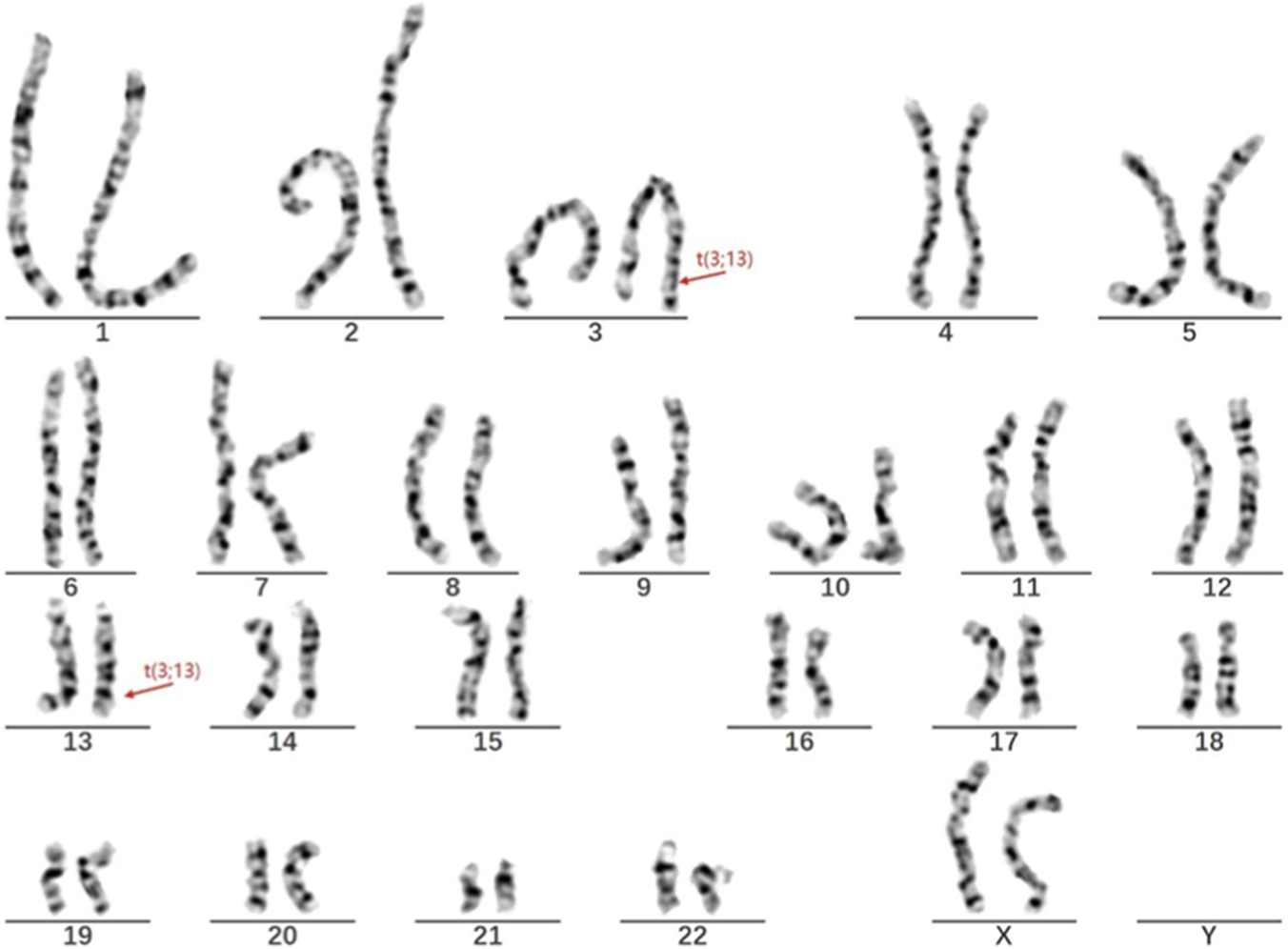
In the last two pregnancies, the fetuses had duplicated material from chromosome 3 and missing material from chromosome 13.
The missing section of chromosome 13 included ZIC2, a gene important to early fetal brain development. Insufficient function of this gene can cause holoprosencephaly, in which the front of the brain does not divide normally.
The researchers concluded that these chromosomal abnormalities explained the serious developmental problems that repeatedly appeared in the fetuses. But the fetuses from the six earlier miscarriages were not genetically tested, so they could not say with certainty that all the miscarriages had the same cause.
Consider chromosome testing after recurrent miscarriages
Not everyone who has repeated miscarriages has a chromosomal abnormality.
Miscarriages have many causes. But after multiple miscarriages or the discovery of serious fetal malformations, it may be worth investigating a genetic cause.
If a balanced translocation is found in either parent, genetic counseling can help assess the risks in a future pregnancy. Couples may also consider testing the chromosomal structure of embryos created through in vitro fertilization before transferring them to the uterus. Such testing and procedures, however, cannot necessarily prevent miscarriage or guarantee the birth of a healthy child.
The researchers said identifying the cause of recurrent miscarriages early and obtaining genetic counseling can help couples understand the risks of another pregnancy and make appropriate plans.