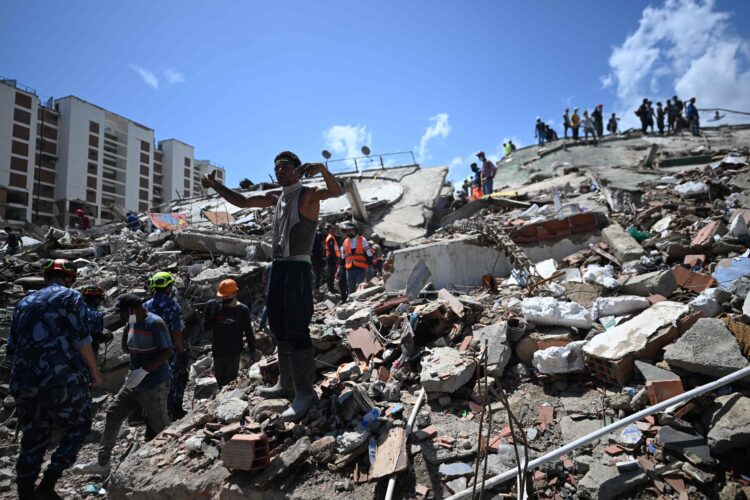
Venezuela is facing a deepening humanitarian crisis after a powerful earthquake struck at approximately 6 p.m. local time on June 24. Beyond the staggering toll of deaths and injuries, the nation is struggling to manage the immediate aftermath, and disruptions across its disaster-response and healthcare networks are expected to persist indefinitely. A severe shortage of healthcare professionals, particularly doctors, is now fueling fears of a broader medical emergency.
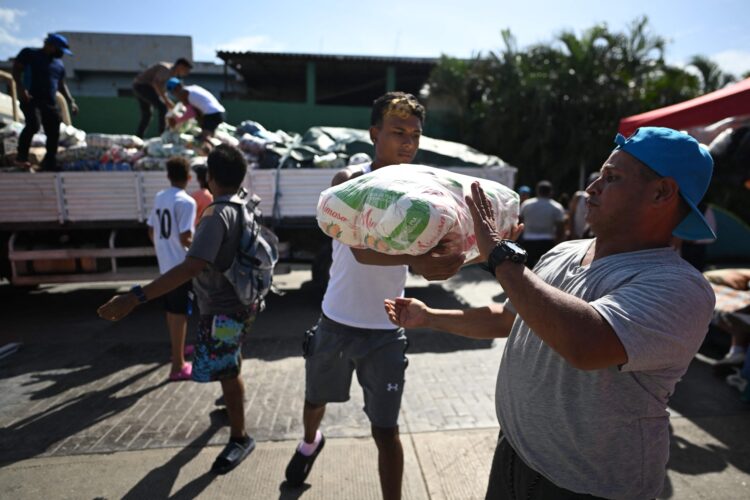
According to the U.S. public radio network NPR, at least 2,295 people have been confirmed dead and 11,267 injured as of July 2, with those casualties continuing to rise. More than 64,662 people were reported missing on the first day alone. The BBC reported that local residents and international teams are conducting urgent searches across roughly 58,000 collapsed buildings, continuing their efforts long after the critical 72-hour rescue window has closed. Twenty-four nations—including the United States, Mexico, Spain, Colombia, Germany, and Switzerland—have dispatched approximately 1,000 specialized search-and-rescue personnel alongside a similarly sized contingent of medical support to assist the affected population.
The Venezuelan government's severely limited operational capacity has drastically compounded the crisis. Outlets including CNN reported that authorities failed to declare a seven-day period of national mourning until July 1, a full week after the initial shock. Although a state of emergency was declared on June 24, acute fuel shortages have prevented heavy machinery from operating effectively in search zones. As a result, rescue crews have been forced to dig through debris by hand using pickaxes and shovels, according to Al Jazeera. Given that Venezuela's territory is 4.8 times larger than the Korean Peninsula but possesses a rail network totaling just 682 kilometers, logistics experts are increasingly worried about delivering essential relief supplies to rural and remote regions far from the capital and major ports. In effect, core state functions have completely paralyzed.
Medical infrastructure is an area of profound concern. Even prior to the earthquake, Venezuela was grappling with severe deficits in healthcare services driven by decades of crumbling infrastructure and systemic staffing shortages. Following a period of hyperinflation that peaked at an astronomical 1,000,000% in 2018, failures in basic public utilities left the national power grid unstable and water outages frequent. Medical facilities consistently lacked not only essential trauma supplies for emergency patients but also the basic reagents required for diagnostic testing, leaving the healthcare system fundamentally incapable of functioning.
The country's medical workforce has also been hollowed out by mass emigration and career abandonment. According to World Bank data, Venezuela possessed a mere 1.8 doctors per 1,000 people as of 2017. While survey timelines vary, this figure sits far below the Latin America and Caribbean average of 2.6 doctors per 1,000 people recorded in 2022. For context, South Korea maintains a ratio of 3.8.
Under the populist administrations of President Hugo Chavez (who took office in 1999) and President Nicolas Maduro (who succeeded him in 2013), Venezuela sought to supplement its depleted medical workforce through an unconventional "oil-for-doctors" bilateral exchange program. Because local physicians consistently avoided assignments in impoverished neighborhoods, rural sectors, and remote territories—exacerbating deep regional disparities in medical access—Chavez turned abroad for a solution. In 2000, he forged a formal agreement with the one-party state of Cuba. Under this arrangement, Venezuela provided subsidized crude oil to Cuba at rates well below market value, and in return, Cuba dispatched thousands of its state-trained doctors to staff primary care centers in Venezuela's rural and marginalized areas.
The initiative was launched dynamically in 2003 by the Chavez-aligned mayor of Caracas under the banner of "Mision Barrio Adentro" (Mission Into the Neighborhood). At its peak, the program saw as many as 32,000 Cuban medical professionals working within Venezuela annually, with the cumulative headcount over the years reaching into the hundreds of thousands. While Cuban doctors trained via their home country's free education system earned a meager $16 a month domestically in the early 2000s (with current estimates ranging from $40 to $70), their deployment to Venezuela allowed them to earn between $200 and $300 per month.
However, this alternative medical network began to unravel rapidly alongside the broader economic destabilization that followed the 2018 hyperinflation crisis. More than 3 million citizens fled the country during the height of the economic collapse, including a substantial proportion of the domestic medical workforce. The Venezuelan Medical Federation and allied professional groups estimate that nearly half of all local doctors—approximately 47,000 professionals—have emigrated over the last decade, leaving only 15,000 to 20,000 Venezuelan physicians active nationwide.
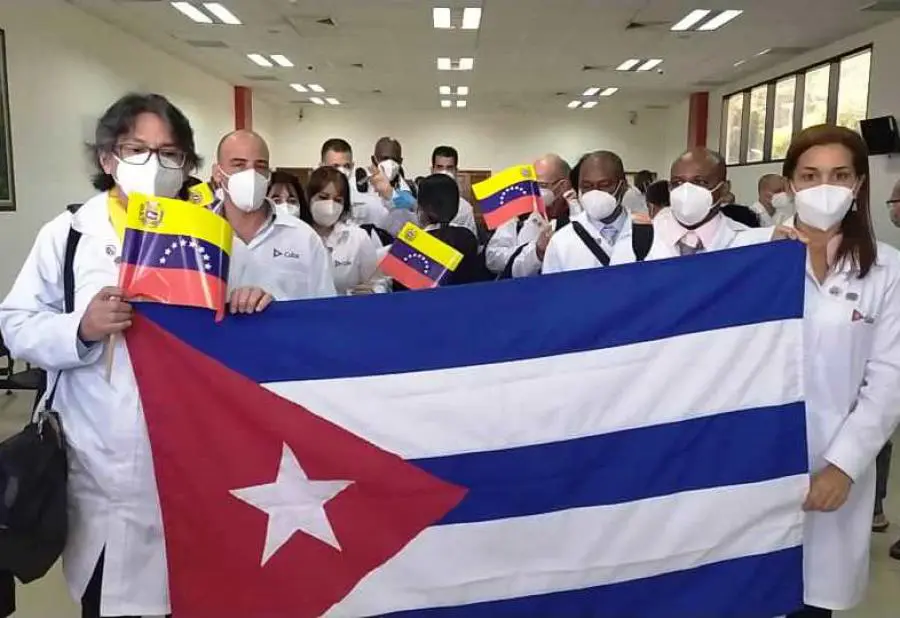
The contingent of dispatched Cuban doctors also shrank dramatically as the Venezuelan state failed to maintain payments amid its compounding fiscal crisis. The program dissolved completely early this year when Venezuela halted all remaining oil shipments to Cuba. This sudden cessation followed the dramatic events of January 3, when President Nicolas Maduro was kidnapped by the United States, prompting an interim Venezuelan government to shift to a staunchly pro-U.S. foreign policy stance.
Even before the cataclysmic earthquake, Venezuela was already failing to meet the basic criteria of a functioning state. In its "Global Humanitarian Overview 2026," the United Nations Office for the Coordination of Humanitarian Affairs (OCHA) noted that frequent localized natural disasters, such as torrential rains and severe flooding, coupled with chronic political and economic instability, had already left over 25% of the population—7.9 million individuals—in critical need of humanitarian assistance.
The earthquake has pushed these precarious conditions past the breaking point. While international aid continues to arrive from foreign governments, multilateral organizations, and global charities—including a $5 million (approximately 7.7 billion won) humanitarian aid package pledged by South Korea's Foreign Ministry—severe human resource deficits cast doubt on the country's long-term endurance.
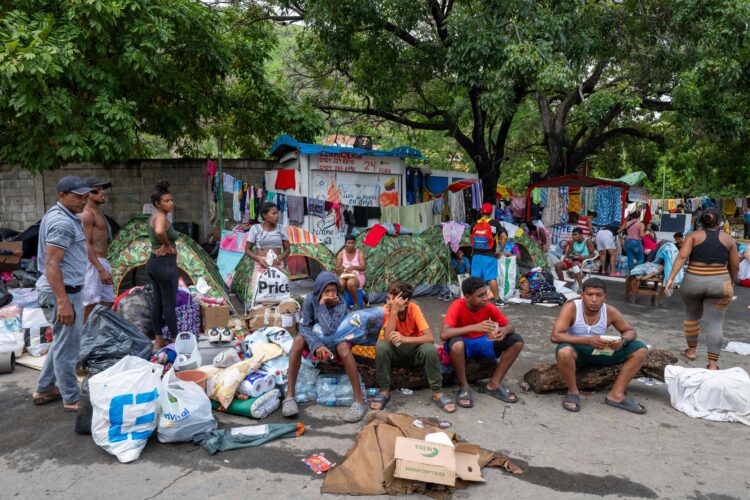
The United Nations High Commissioner for Refugees (UNHCR) has warned that Venezuela's basic disease-prevention systems, including routine childhood immunizations, are entirely non-functional due to obsolete facilities and vaccine supply chain failures. Consequently, the state's capacity to contain communicable disease outbreaks has deteriorated significantly, leaving even easily preventable illnesses unmanaged. This systemic failure has raised urgent international alarms regarding widespread post-earthquake epidemics.
Paradoxically, Venezuela remains an oil-producing giant holding the planet's largest proven petroleum reserves. Data from the Organization of the Petroleum Exporting Countries (OPEC) indicates that Venezuela's proven crude reserves stood at a world-leading 303.2 billion barrels as of 2025. Yet, according to the U.S. Energy Information Administration (EIA), the country's 2025 production plummeted to just 968,000 barrels per day, ranking it 20th globally, while its total export value in 2024 sat at a modest $9.845 billion, ranking 23rd.
Without the institutional stability required to efficiently extract and market its natural resources, the nation and its populace have remained mired in systemic poverty. The International Monetary Fund (IMF) projects Venezuela's 2026 gross domestic product (GDP) at $111.3 billion (74th globally) and its per-capita GDP at $4,140 (131st globally). Under the World Bank's economic classification thresholds—which define high-income economies at $14,375 or more and upper-middle-income brackets between $4,636 and $14,375—Venezuela sits firmly in the lower-middle-income tier ($1,176 to $4,636).

Economic analysts attribute this severe paradox of resource wealth and structural poverty to multiple overlapping factors. Many point toward an extreme manifestation of the "resource curse," arguing that as national investment, strategic assets, and labor pools were funneled exclusively into the state-dominated oil sector, vital secondary industries like domestic agriculture and manufacturing completely stagnated or collapsed.
Other analysts focus heavily on the legacy of left-wing populist policies financed by oil revenues and aggressively maintained by the political elite. Under President Hugo Chavez and his successor Nicolas Maduro, the ruling administration pursued aggressive populist initiatives for more than two decades, relying entirely on liquid oil wealth. This economic model, globally studied under the term "Chavismo," focused on a mix of anti-imperialist rhetoric, anti-capitalism, and Bolivarian regional integration, funded by state-mandated free education, healthcare, and sweeping public subsidies.
Leveraging the fierce political loyalty generated by these oil-funded subsidies, Chavez systematically consolidated executive authority by weakening independent judicial and media institutions, framing critics as enemies of the state or agents of foreign imperialism. Under the banner of "oil socialism," the administration redirected billions in petroleum wealth to subsidize ideological allies across Latin America. Ultimately, this flashy geopolitical idealism effectively masked the steady decay of the country's domestic healthcare infrastructure and economic diversification. The recent, devastating earthquake has stripped away those ideological illusions, bringing Venezuela's systemic internal collapse into sharp, undeniable relief.