"What else should I add to my checkup this year?"
It is a question clinicians hear continuously as patients schedule their annual health screenings. In your 40s, routine screenings for stomach and breast cancer begin in earnest, while colorectal cancer screening is added in your 50s. Past age 60, evaluations expand to track bone density, cognitive health, and physical function.
However, the goal of a health screening is not simply to collect as many tests as possible. Rather than opting for an exhaustive panel, the priority should be ensuring you do not miss the essential screenings designated for your age, sex, family history, smoking background, and existing medical conditions.
Tailoring Tests by Decade: From the 40s to the 50s
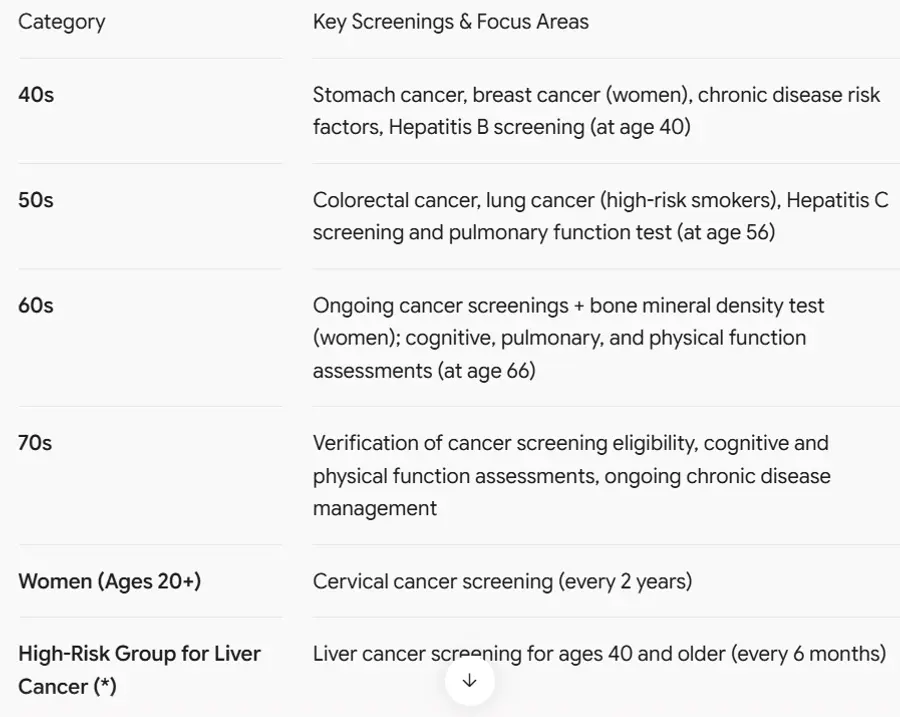
Under South Korea's national health screening program, stomach cancer screening begins at age 40 and is conducted every two years. Women also become eligible for biennial breast cancer screenings starting at age 40, while cervical cancer screening begins at age 20.
The 40s also mark the time for a mandatory Hepatitis B screening and a heightened focus on chronic disease risk factors, including hypertension, diabetes, and dyslipidemia.
In your 50s, colorectal cancer screening is added to the regimen. The national program provides an annual fecal occult blood test for men and women aged 50 and older, with a follow-up colonoscopy provided if the initial result is positive.
For current or former smokers, lung health requires extra scrutiny. National lung cancer screening targets high-risk individuals aged 54 to 74 with a smoking history of at least 30 pack-years (calculated as one pack per day for 30 years). Additionally, a Hepatitis C antibody test is administered at age 56, alongside pulmonary function tests at ages 56 and 66.
Crucially, reaching a new decade does not mean patients should indiscriminately add low-dose CT scans or ultrasounds without clinical cause. Screening lists should be carefully tailored based on family history, past diagnostic results, and lifestyle habits.
"Because the risk of cancer and chronic conditions escalates in your 40s and 50s, selecting the tests you truly need is paramount," said Kim In-a, head of the Department of Family Medicine at Dongnae Bongsaeng Hospital. "The smartest approach is to consult with a physician to design a personalized screening panel that reflects your unique risk factors."
Blindly adding screening items while ignoring individual risk profiles can cause patients to overlook critical underlying conditions. Over-testing can also lead to overdiagnosis, unnecessary medical expenses, and physical strain from invasive procedures. Simply put, more tests do not automatically equate to better health.
Beyond Cancer: Cognitive Function and Bone Health in Your 60s and 70s
From your 60s onward, health management must expand beyond cancer detection to evaluate bone density, cognitive health, and fall risk. Women are eligible for national bone density screenings at ages 54, 60, and 66.
Starting at age 66, cognitive function testing is conducted biennially. Elderly physical function assessments—evaluating balance and mobility—are performed at ages 66, 70, and 80. For this age group, clinicians emphasize looking beyond isolated conditions like high blood pressure or diabetes to comprehensively review liver and kidney function, current medications, and existing comorbidities.
The same principle applies throughout your 70s. Rather than continually adding diagnostic tests simply due to advancing age, screenings should remain targeted based on active medical conditions and baseline health status.
Essential Health Screenings by Age Group
The True Differentiator: Follow-Up Care and Beating the Year-End Rush
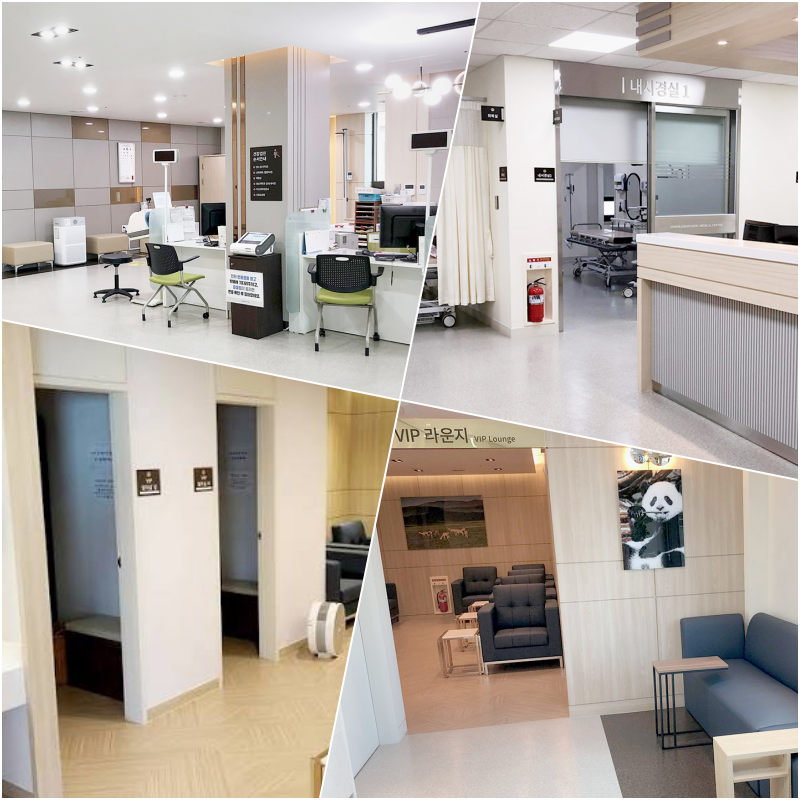
The basic diagnostic framework of routine health checkups varies little from one designated screening center to another. The true difference lies in how a facility manages abnormal findings.
When a report indicates a lesion on a mammogram, a tissue biopsy following an upper endoscopy, an abnormal electrocardiogram (ECG), or elevated liver and kidney enzymes, a single sheet of paper is not enough. Patients need immediate clarity on which specialist to see, whether secondary imaging is required, and how quickly follow-up interventions can begin.
This is where integrated screening centers affiliated with general hospitals offer a distinct advantage. Within a general hospital system, abnormal screening results are immediately connected to specialized departments—such as breast surgery, gastroenterology, or cardiology—for prompt secondary testing like ultrasound, CT, MRI, or advanced endoscopy.
"Unfamiliar medical terminology on a screening report often causes severe anxiety, leading patients to immediately fear the worst," explained Kim In-a. "Many feel overwhelmed simply trying to figure out which hospital department they need to visit."
"When a screening center is directly integrated with specialist departments, necessary follow-up care and secondary testing can proceed without delay," Kim added. "Sharing existing diagnostic data within the same system also eliminates redundant testing and reduces patient costs."
Finally, experts urge eligible individuals not to delay their checkups until the final months of the year. Every autumn and winter, medical centers face severe overcrowding as patients rush to complete their annual checkups before the deadline, making appointments difficult to secure.
If a checkup reveals abnormal findings, booking follow-up evaluations requires additional time. Scheduling screenings well in advance ensures ample time for comprehensive care.
Health screening is not a competition over how many tests one can complete. The true measure of a checkup lies in selecting the right age-appropriate tests—and ensuring that an abnormal finding leads directly to timely, specialized care rather than an inconclusive piece of paper.