Northern Gyeonggi Province and Jeju—currently the only medical service regions in South Korea without a single top-tier general hospital—could soon see local institutions elevated to the country's highest medical designation.
The Ministry of Health and Welfare announced Sept. 3 that it will issue an administrative notice through Sept. 22 on a proposed revision to the "Regulations on the Designation and Evaluation of Top-Tier General Hospitals." Under the proposed rule, the government will designate at least one top-tier general hospital in each of the nation’s 14 medical service regions, provided an applicant institution meets the required clinical standards.
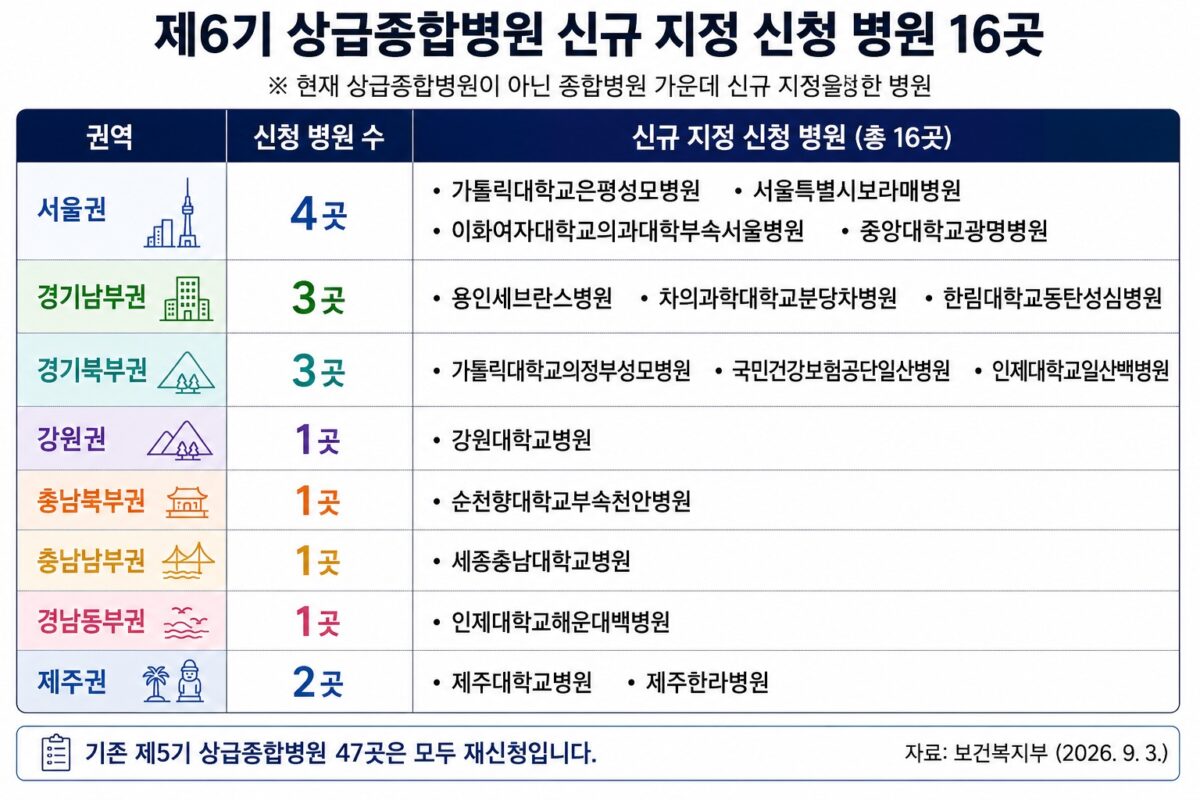
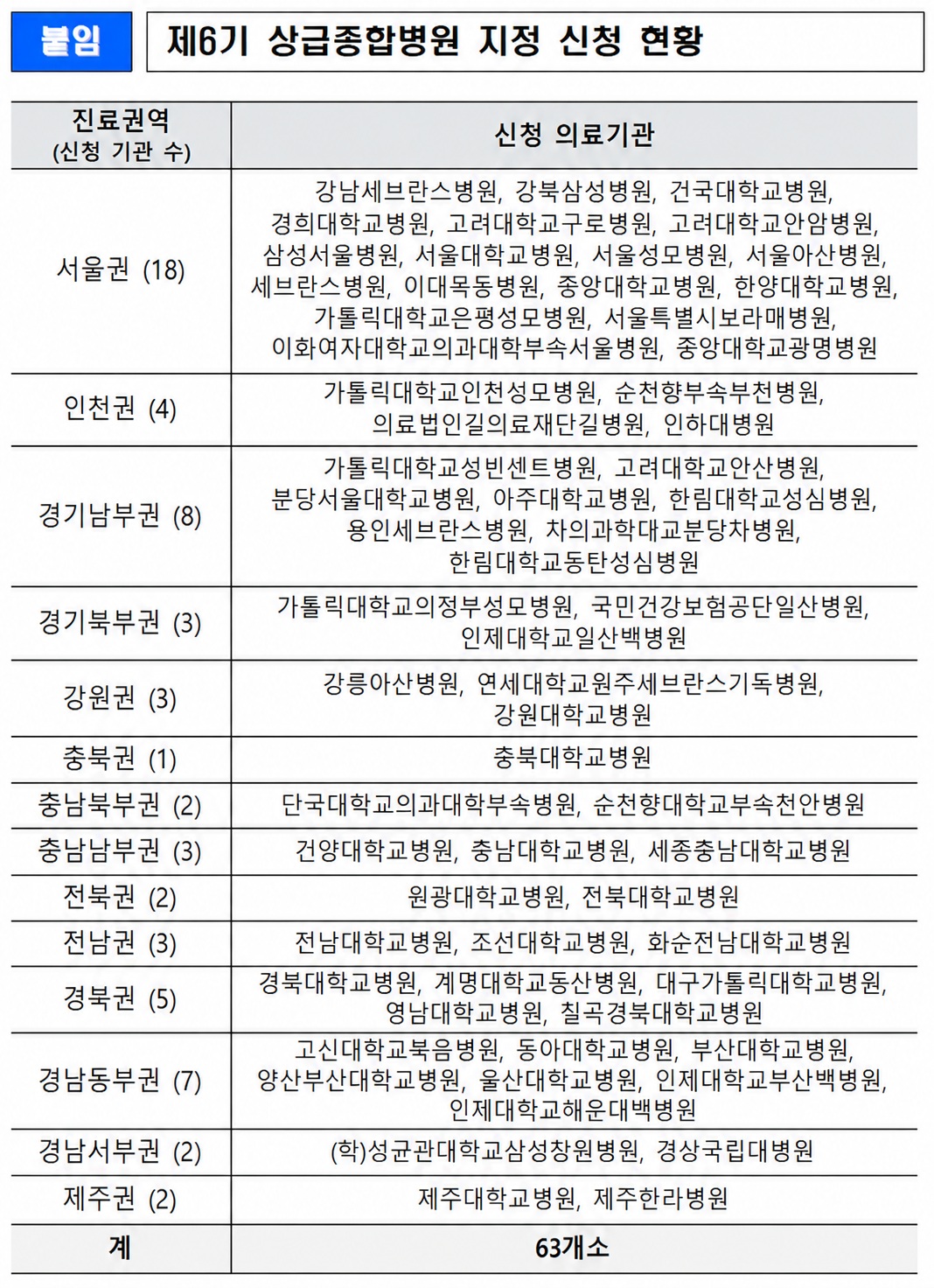
A total of 63 general hospitals have applied for the sixth-term designation period, which spans 2027 through 2029. All 47 current top-tier general hospitals have reapplied, while 16 non-top-tier general hospitals are seeking new designation.
Sixteen Contenders Seek Elevation Across Reorganized Regions
The 16 new applicant institutions represent major regional centers across the country:
Seoul Region: The Catholic University of Korea Eunpyeong St. Mary’s Hospital, Seoul Metropolitan Government–Seoul National University Boramae Medical Center, Ewha Womans University Seoul Hospital, and Chung-Ang University Gwangmyeong Hospital.
Southern Gyeonggi Region: Yongin Severance Hospital, Bundang CHA Hospital, and Hallym University Dongtan Sacred Heart Hospital.
Northern Gyeonggi Region: The Catholic University of Korea Uijeongbu St. Mary’s Hospital, National Health Insurance Service Ilsan Hospital, and Inje University Ilsan Paik Hospital.
Gangwon Region: Kangwon National University Hospital.
South Chungcheong North Subregion: Soonchunhyang University Cheonan Hospital.
South Chungcheong South Subregion: Sejong Chungnam National University Hospital.
South Gyeongsang East Subregion: Inje University Haeundae Paik Hospital.
Jeju Region: Jeju National University Hospital and Jeju Halla Hospital.
The surge in applicants follows the government’s reorganization of medical service regions in April, which expanded the classification framework from 11 to 14 regions to reflect actual patient travel and healthcare utilization patterns.
As part of that redistricting, the government separated Jeju from the Seoul region and split the former Gyeonggi Northwest region into Incheon and Northern Gyeonggi. Previously, grouping Jeju with Seoul meant island facilities had to compete directly against Seoul's massive tertiary medical centers—even though Jeju residents frequently fly to Seoul for acute care due to convenient flight connections compared to mainland transit to South Jeolla Province.
Stricter Criteria Focus on High-Acuity Care and Financial Stakes
Top-tier general hospital status is not granted simply based on facility size or university affiliation. Instead, the government evaluates specialized clinical capabilities, staffing, equipment, resident training programs, and medical quality every three years.
For the upcoming sixth term, the threshold for treating complex conditions has been raised significantly. To qualify, at least 38% of a hospital's inpatients must belong to "specialized care disease groups" requiring high-acuity medical management—up from 34% in the fifth term. Conversely, inpatients with mild conditions must be capped at 12% or less (down from 12%), and clinic-level outpatients must be maintained at 5% or less (down from 7%).
Qualifying institutions must maintain at least 20 specialty departments, including nine essential care specialties, staffed by dedicated medical specialists. They must also operate adult, pediatric, and neonatal intensive care units while serving as certified teaching hospitals for medical residents. Except for emergency cases, patients access these centers primarily through physician referrals.
The designation carries substantial financial and institutional implications. In 2026, the National Health Insurance reimbursement add-on rate for covered medical services is set at 15% for top-tier general hospitals, compared to 10% for standard general hospitals and 5% for smaller hospitals. Beyond increased reimbursement rates, the title offers immense prestige, establishing an institution as the regional authority for complex, life-saving care.
"This revision is designed to ensure top-tier general hospitals are appropriately distributed across all medical service regions so that high-acuity care is supplied in a balanced manner nationwide," said Lee Hyung-hoon, Second Vice Minister of Health and Welfare. "We will move swiftly to build a locally complete healthcare system where citizens can receive timely, advanced medical care regardless of where they reside."