For a year and a half, 13-year-old Torrado Maria Claudia lived with a visibly swollen left cheek. When a mass that had been previously removed returned and began spreading across her face, the local clinic she visited in the Philippines offered a blunt response: "Go to a larger hospital."
For Maria, a Kopino (Korean-Filipino) girl living in an impoverished neighborhood in Angeles, Philippines, that advice was an impossible hurdle. Her father, a South Korean national, had departed years earlier without providing financial support or taking parental responsibility. With her family unable to afford steep medical bills, specialized care remained entirely out of reach.
A Recurrent Mass and a Path to Korea
The tumor on Maria’s left jaw was first noticed in 2024 and initially removed at a local Philippine hospital in April 2025. However, roughly 18 months later, the lump returned and spread to surrounding tissue. Facing a lack of resources, her 35-year-old mother—a factory worker raising four children alone, all fathered by different Korean men who abandoned them—could not afford secondary treatment.
A path to care opened through a network of religious organizers and donors. Missionary Kim Se-jeong in the Philippines and Rev. Lim Young-moon, senior pastor of Busan Peace Church, joined supporters including donor Lee Su-gwang to share Maria’s story in South Korea. Their outreach ultimately connected the family with On Hospital in Busan.
Diagnosis, Reconstructive Surgery, and Recovery
Maria was admitted to On Hospital on October 1. Based on facial MRI results, medical teams diagnosed her with an odontogenic cutaneous fistula accompanied by an abscess and a benign skin tumor on her left jaw. An odontogenic cutaneous fistula occurs when chronic inflammation at a tooth root extends through the jawbone, forming a tract that drains pus through the facial skin. Because it closely resembles a common facial boil, it is frequently misdiagnosed and prone to recurrence unless the underlying dental pathology is addressed.
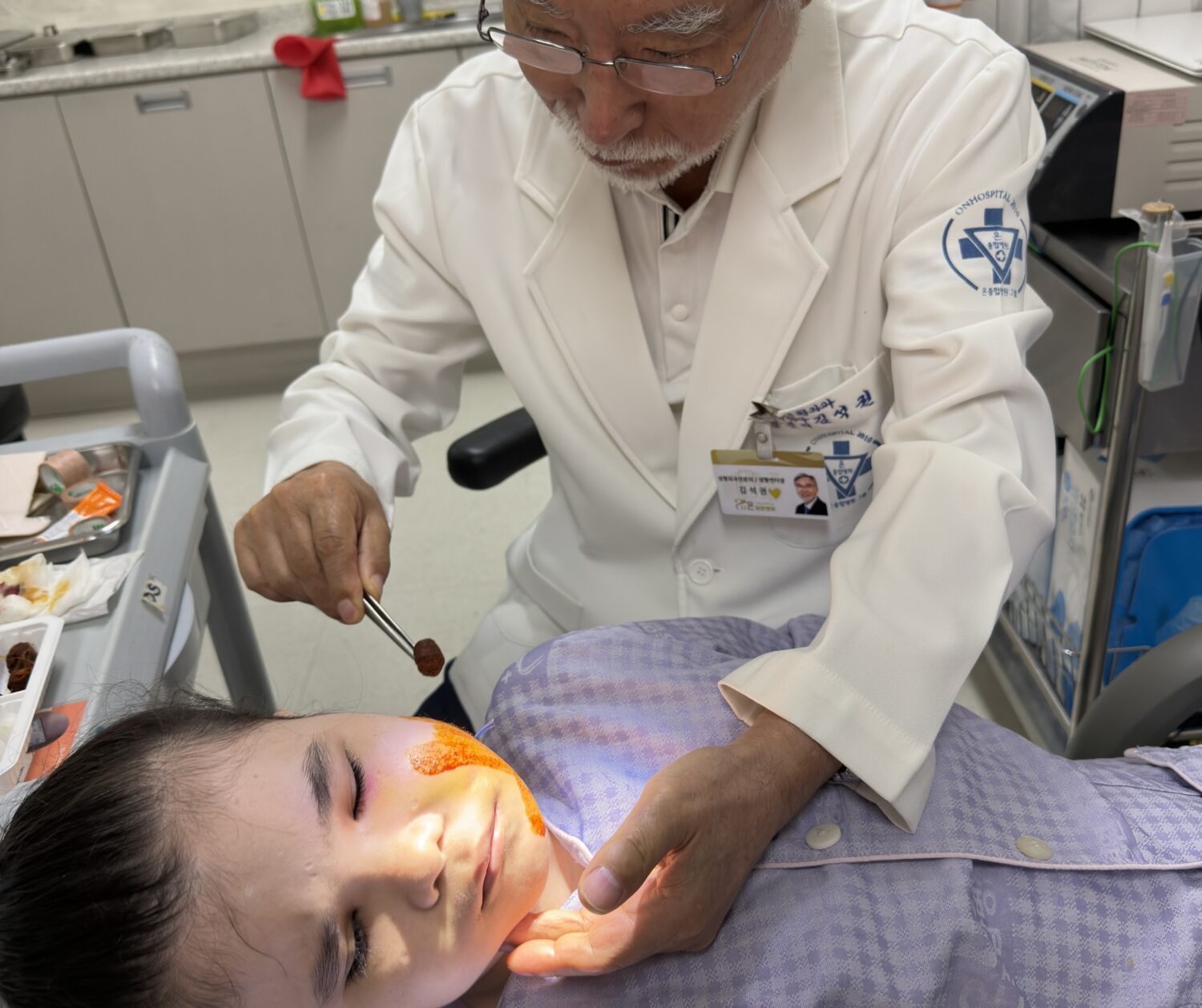
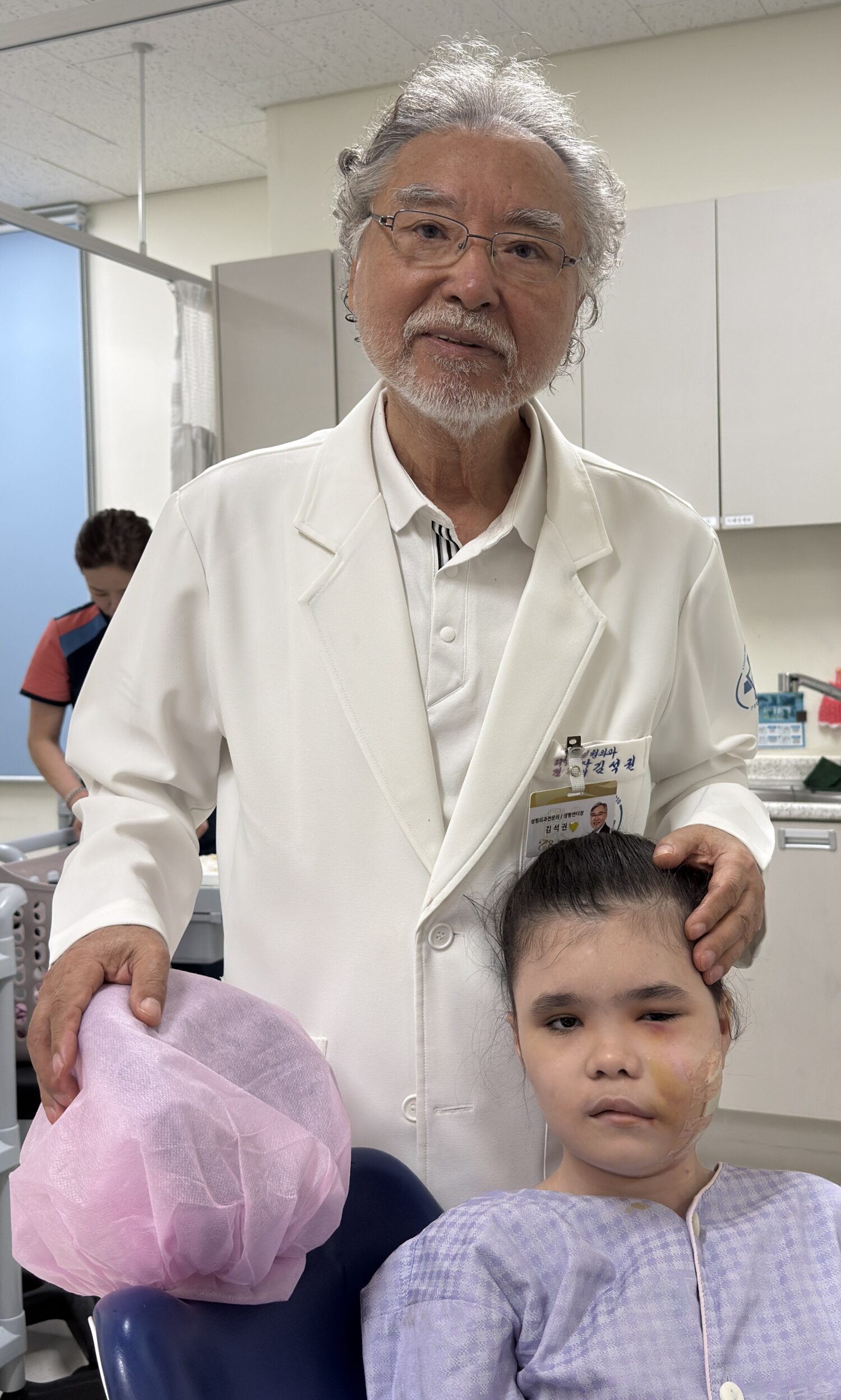
The following afternoon, Dr. Kim Seok-kwon, head of the Plastic Surgery Center at On Hospital and a former professor at Dong-A University Hospital, performed the operation. Dr. Kim excised the soft-tissue tumor and performed a local flap reconstruction, transferring adjacent skin and tissue to cover the facial defect while matching skin color and texture.
With her condition stabilized, Maria is expected to be discharged around October 10. "I was so worried because my left cheek was protruding for a year and a half," Maria said. "I am deeply grateful to have met such wonderful sponsors, doctors, and hospital staff." Her mother added, "I express my sincere thanks to the Christians, missionaries, and medical personnel who helped my daughter without hesitation."
Funding the Procedure and the Broader Kopino Reality
The total cost of Maria's treatment reached approximately 20 million KRW—a sum impossible for an uninsured foreign national family to pay. To cover the expenses, the On Group Social Contribution Foundation, chaired by Jung Geun, paid two-thirds of the surgical bill. Korean missionaries and private donors raised the remaining third, alongside Maria’s airfare and living expenses.
The term Kopino refers to children born to Korean fathers and Filipino mothers. An estimated 30,000 to 50,000 Kopino children currently live in the Philippines, many abandoned by their fathers and living without financial or parental support. Neither the South Korean nor the Philippine government has conducted an official census or established formal social support systems, leaving many vulnerable children in impoverished communities without access to basic medical care.