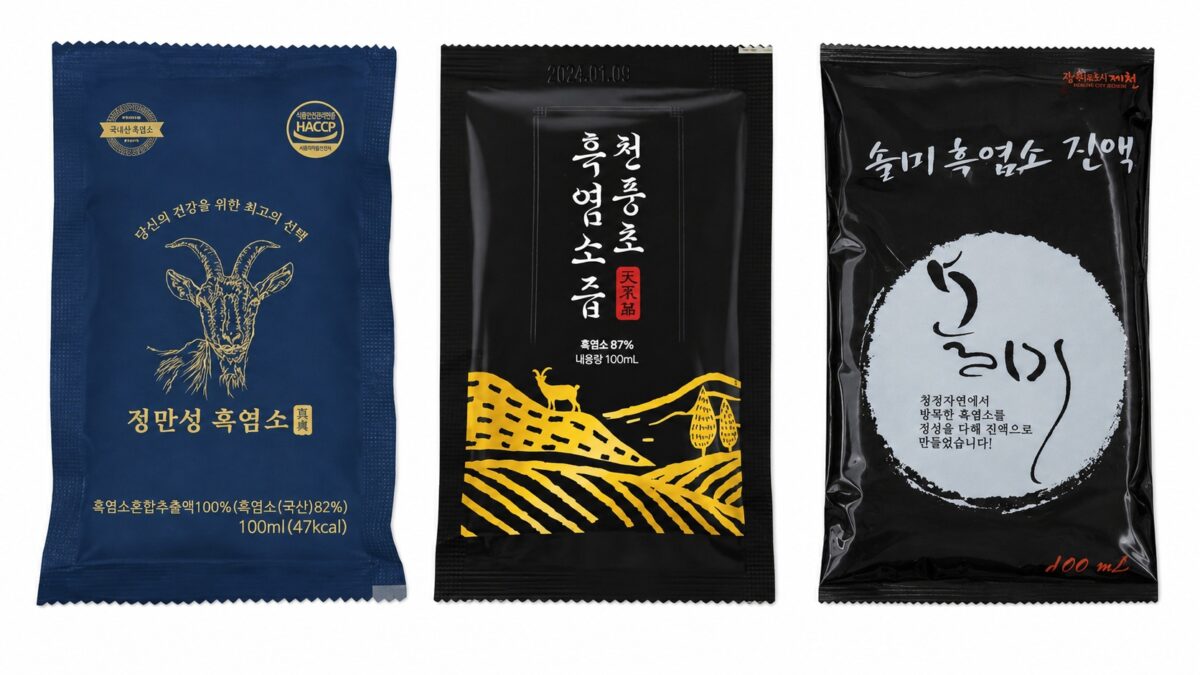
Authorities have found that some black goat extract products—marketed as health tonics—labeled and advertised far higher black goat content than testing showed. In one case, the actual black goat blend ratio was 14.1%, but the product was labeled as 82%.
The Ministry of Food and Drug Safety said on the 2nd that it identified 15 manufacturers that violated food-related laws, including false labeling and advertising of black goat content in black goat extract products. The ministry asked the relevant local governments to impose administrative penalties and filed complaints with investigative authorities.
The companies manufactured and sold 58,183 violating products, with sales totaling 3.63 billion won.
82% label on an actual 14.1%⋯21.6%→87%, 38.7%→80% as well
Of the 15 companies cited, 12 labeled or advertised black goat content higher than the actual amount, the ministry said.
In examples released by the ministry, “Jeong Man-seong Premium Black Goat Extract” tested at an actual black goat blend ratio of 14.1% but was labeled as 82%—about 5.8 times the actual blend ratio.
“Cheonpungcho Black Goat Extract” labeled an actual blend ratio of 21.6% as 87%, about four times higher.
“Solmi Black Goat Extract” tested at an actual blend ratio of 38.7%, but the labeled blend ratio was 80%, about 2.1 times higher.
The ministry said some companies excluded purified water—water used in making the product—from their blend-ratio calculations, making the products appear to contain more black goat than they actually did.
‘81% black goat extract’⋯but black goat in the extract is 1%
In some cases, the large number printed on the package did not refer to the amount of black goat itself.
The ministry said a company in Geochang, South Gyeongsang Province, labeled its product as containing “81% black goat extract,” but did not separately state the black goat content within the extract. The investigation found that the black goat content of the extract was only 1%, with the rest being purified water. In other words, “81%” referred not to the amount of black goat itself, but to the share of the product made up of an extract produced from black goat and purified water.
Consumers should pay close attention to that distinction. Rather than relying only on the large-number claim on the front of the package, consumers should check the ingredient name and content labeling together to confirm whether the figure refers to the proportion of “black goat” itself or the proportion of “black goat extract,” which may include water and other components.
False paperwork on ingredient use⋯cases also found with no in-house quality testing
The ministry said it also confirmed violations beyond content labeling.
Key violations included failing to label black goat content; falsifying, failing to prepare, or otherwise improperly handling documents related to the receipt, shipment, and use of ingredients such as black goat; and failing to conduct in-house quality tests.
The ministry urged consumers not to judge quality based solely on labeling or advertising that emphasizes content when purchasing black goat extract products, and to check product labeling information such as ingredient names and content as well.
It said it plans to continue inspections of labeling and advertising that present food ingredients and their content in ways that differ from the facts.
However, the announcement is limited to the 15 manufacturers and related products cited in this inspection.