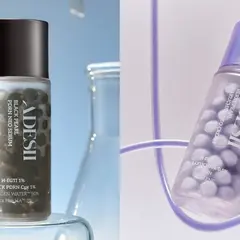
Singer Chae-yeon, 47, recently shared her personal anti-aging routine on her YouTube channel. Despite being in her late 40s, the pop star continues to draw admiration for her smooth, radiant complexion and youthful appearance.
In her video, Chae-yeon outlined three core habits: using a facial mist for dry skin, taking antioxidant supplements, and strictly avoiding facial contact. "This is my own personal habit, but I don't touch my face much," Chae-yeon explained. "Whether I'm resting my chin or sleeping, I try to keep my face from coming into heavy contact with my hand or pillow. I wonder if repeating this small habit day after day has helped over time."

Pairing Facial Mists with Moisturizers
For individuals with dry skin like Chae-yeon, facial mists offer immediate hydration and relieve tightness. However, spraying a mist and allowing it to evaporate naturally can backfire by drawing moisture out of the skin. Products containing added fragrances or alcohol may also irritate sensitive skin.
To retain moisture, dermatologists recommend applying a cream or lotion while the skin remains damp from the mist. The American Academy of Dermatology (AAD) notes that cream- or ointment-based moisturizers containing ceramides or hyaluronic acid are particularly effective at reinforcing the skin barrier and slowing water loss. Experts also emphasize that daily broad-spectrum sunscreen application plays a far more pivotal role in preventing skin aging than facial mists alone. For oily skin types experiencing inner dryness, lightweight gel moisturizers can lock in moisture without clogging pores.
Evaluating CoQ10 Supplements for Skin Health
Chae-yeon also highlighted her use of supplements containing coenzyme Q10 (CoQ10), a naturally occurring antioxidant that aids cellular energy production and neutralizes free radicals. Because natural CoQ10 synthesis declines with age, the compound is widely used in skincare topicals and oral supplements.
Some clinical evidence suggests CoQ10 may support skin health. In a 12-week study of 33 healthy adults, daily oral supplementation of 50 to 150 milligrams produced modest improvements in fine lines and skin texture. However, the study recorded no significant changes in dermal thickness or moisture levels. Given the small sample size, experts caution against viewing CoQ10 as a definitive anti-aging solution. While generally well-tolerated, CoQ10 can cause mild digestive upset or insomnia and may interact with medications such as insulin or the blood thinner warfarin.

Minimizing Facial Contact to Reduce Irritation
Chae-yeon’s focus on avoiding facial contact aligns well with dermatological advice. Frequently touching the face or picking at blemishes transfers bacteria, aggravates inflammation, and increases the risk of scarring or hyperpigmentation.
Similarly, resting one's chin on a hand subjects facial skin to repeated pressure and friction. Pressing the face into a pillow while sleeping on one's side or stomach creates shear forces that can contribute to the formation of "sleep wrinkles" over time. While altering sleep posture alone will not reverse skin aging, minimizing daily mechanical friction helps protect skin elasticity. Ultimately, health experts note that while Chae-yeon's routine effectively reduces dryness and friction, foundational skin care still rests on daily sunscreen use, proper hydration, adequate sleep, and avoiding smoking.