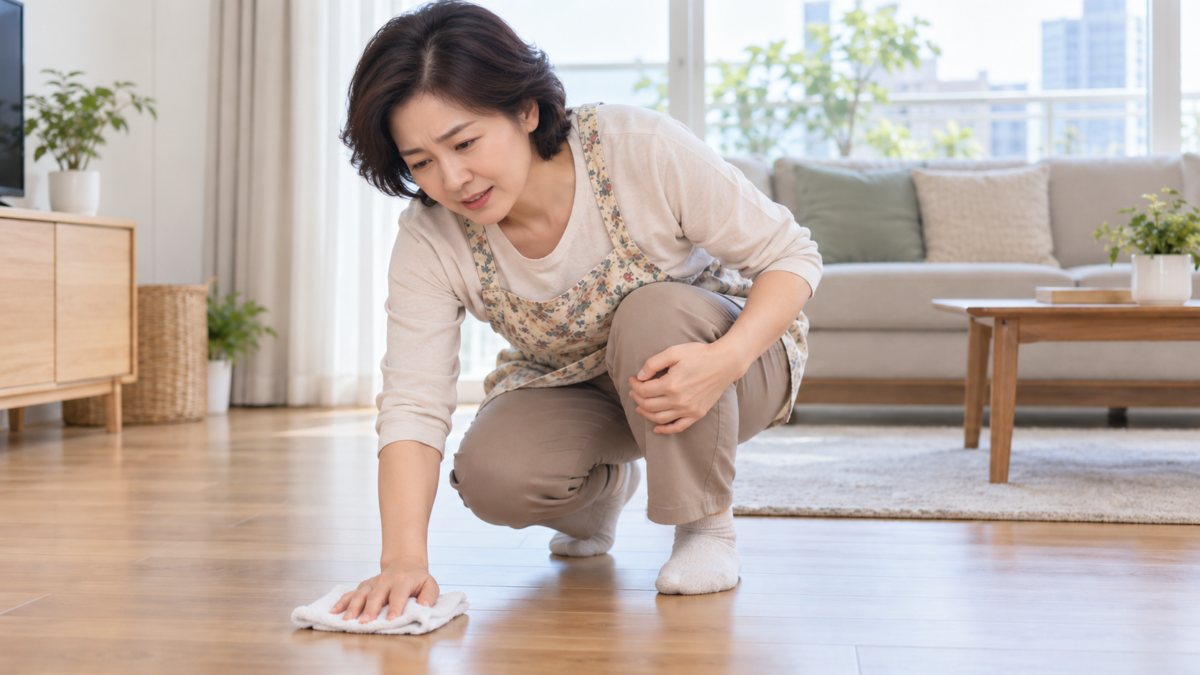
Squatting to wipe the floor, kneeling to organize low cabinets, lifting heavy laundry baskets—these repetitive household chores are a primary culprit behind post-cleaning knee pain. Because these routine movements subject the knees to high loads, simply adjusting daily postures during housework can significantly reduce joint stress and help prevent long-term damage.
Squatting to Scrub Floors
Squatting causes the knee to bend deeply, sharply increasing friction and pressure between the femur (thighbone) and patella (kneecap). Repeatedly shifting weight back and forth in a squatting position concentrates body weight onto the meniscus and the front of the joint, leading to anterior knee pain and stiffness.
To protect the joints, replace hand rags with long-handled mops or cleaning brushes that allow cleaning from an upright position. When reaching low areas, avoid maintaining a squat; sit on a low, sturdy stool instead. When standing up, engage the glutes and thighs to rise slowly rather than pulling up on nearby furniture.
Kneeling Directly on Hard Surfaces
Kneeling on hard bathroom or balcony floors directly compresses the prepatellar bursa—the fluid-filled sac in front of the kneecap—and surrounding soft tissues. Sustained pressure on hard surfaces can trigger bursitis, causing localized swelling and tenderness, while exacerbating underlying osteoarthritis.
If kneeling is unavoidable, cushion the joints with thick knee pads or a folded towel. Adopt a half-kneeling position with only one knee on the floor, switching legs frequently. Avoid staying in the same posture for more than 10 minutes, standing up periodically to fully extend the legs.
Twisting the Torso with Planted Feet
Rotating the upper body while keeping the feet planted—such as when maneuvering a vacuum cleaner or moving laundry to the side—applies damaging torsional force to the meniscus and ligaments, particularly when the weight-bearing knee is bent. This rotational stress often manifests as a sharp twinge along the inner knee during sudden directional changes.
Instead of twisting at the knee, pivot from the feet so the pelvis and torso move in unison. Take small steps and move alongside cleaning tools rather than overreaching. Wearing non-slip, rubber-soled slippers in wet environments like bathrooms can also prevent accidental slipping and joint twisting.
Sitting on the Floor to Fold Laundry
Sitting cross-legged or kneeling on the floor to fold laundry holds the knees in prolonged flexion, creating sustained intra-articular pressure that causes stiffness and difficulty straightening the legs upon standing. Sitting with one leg tucked to the side is equally harmful, as it tilts the pelvis and creates uneven stress across both knees.
Fold laundry at a dining table or waist-high counter, placing the laundry basket on a chair rather than the floor. If sitting on the floor is necessary, alternate between extending both legs forward and taking frequent breaks. Standing up every 20 to 30 minutes to walk and gently stretch the legs helps restore joint mobility.
Lifting Heavy Loads While Rising
Rising from a low position while carrying heavy items—such as wet laundry or cases of bottled water—forces the knees to bear body weight and external load simultaneously. If the knees collapse inward or the lower back twists during the lift, joint instability increases dramatically, compounding stress on cartilage.
Divide heavy loads into smaller trips or utilize a wheeled utility cart. When lifting, hold items close to the torso, step one foot forward, and push up gradually using the hips and thighs. If joint pain and swelling persist, or if the knee locks or gives way, consult a healthcare provider rather than dismissing the symptoms as ordinary housework fatigue.