“The moment I tell them to study, they lock their bedroom door.” “I honestly don’t know what I did wrong.”
When a child enters adolescence, suddenly grows hypersensitive, and pulls away from family interactions, parents are often left feeling bewildered and defeated. However, Professor Hong Soon-beom of the Department of Pediatric Psychiatry at Seoul National University Hospital urges parents not to dismiss these behavioral shifts as simple rebellion. Instead, he frames them as natural developmental milestones that occur as a child’s brain and mind mature into adulthood.
Seoul National University Hospital announced on September 8 that Professor Hong has published a new book, There Is a Different Way to Talk to Teens, outlining evidence-based strategies for communicating with adolescent children.
Understanding the Adolescent Brain
To effectively communicate with a teenager, parents must first understand the neurological transformations taking place beneath the surface. According to the book, the prefrontal cortex—the region responsible for regulating emotions, weighing consequences, and controlling impulses—remains under construction during adolescence. Conversely, brain regions that process emotional responses react with heightened sensitivity. As a result, a casual remark from a parent that previously caused no friction can easily ignite irritation, causing emotional reactions to flare up long before rational thought can intervene.
Rather than pressing a child with frustration—asking "Why won’t you listen?"—Professor Hong advises parents to pause and evaluate what triggered the underlying emotional response.

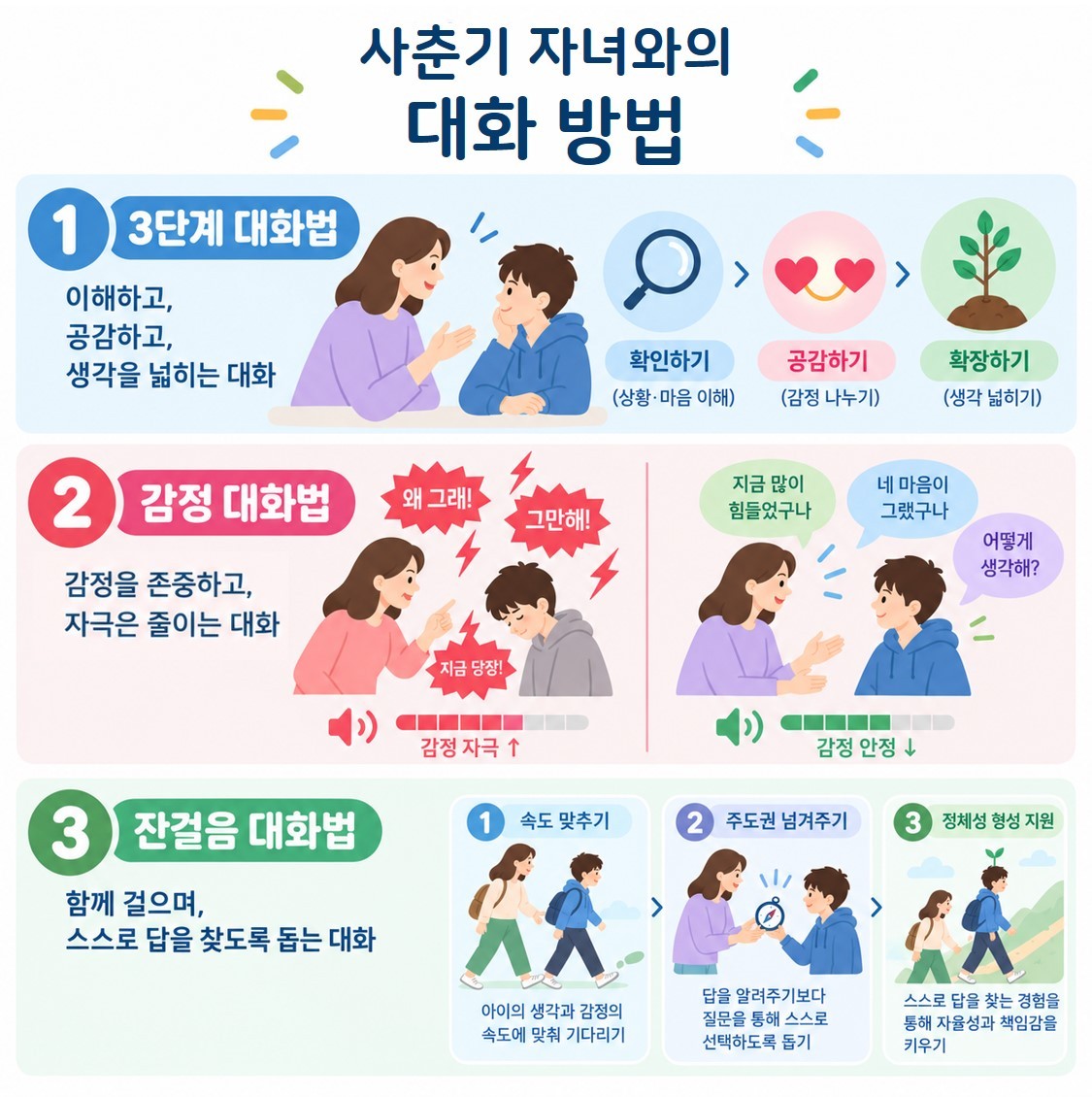
The book is structured into five distinct chapters: "Teenagers: Why Does It Suddenly Feel Impossible to Communicate?"; "A Three-Step Conversation Method for Understanding the Adolescent Brain"; "An Emotion-Focused Conversation Method That Respects Adolescent Sensitivity"; "A 'Small Steps' Conversation Method That Helps Them Find Their Identity on Their Own"; and "A Parent’s Mindset for Navigating Adolescence."
Guiding Teens to Find Their Own Answers
The book offers actionable communication techniques designed for immediate application at home. These include a "three-step conversation method" that begins by validating a child's logic before gradually broadening their perspective, an "emotion-focused method" aimed at diffusing emotional triggers, and a "small steps method" that encourages teenagers to arrive at solutions independently rather than having parents dictate answers for them.
Central to Professor Hong’s approach is the recommendation that parents speak less and wait more, creating a safe and comfortable environment where teenagers feel empowered to open up.
The book also addresses specific, high-frequency concerns gathered directly from clinical consultations. In a dedicated section titled "Adolescence SOS Prescription," Professor Hong presents real-world scenarios—such as teens slamming doors at the mention of schoolwork or parents feeling alienated—and provides concrete dialogue scripts to initiate and sustain constructive conversations.
Evolving Parent Communication for Growing Minds
Professor Hong emphasizes that instead of trying to eliminate conflict entirely, parents should adapt their communication style to mirror their child’s changing developmental needs.
"Adolescence is not a phase where children push parents away out of malice; it is a vital process through which a child's brain and mind mature into adulthood," Professor Hong stated. "I hope this book helps parents view adolescence as a meaningful journey of growth and serves as a tool to rebuild healthy, connected conversations."
Published by Forest Books, There Is a Different Way to Talk to Teens runs 252 pages.