
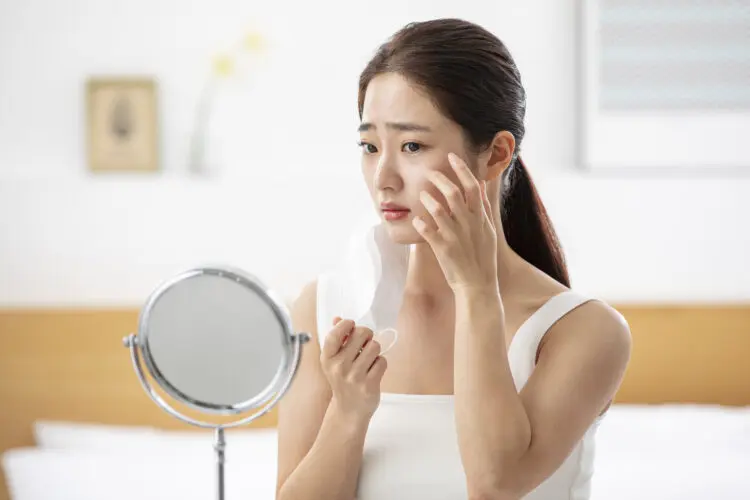
If your facial fat in the mirror looks particularly saggy, it’s not just a simple aging issue. The drooping of the lower cheeks, commonly referred to as 'bulldog cheeks', is the result of a combination of factors including loss of elasticity, muscle imbalance, posture habits, and decreased circulation. In particular, smartphone use and incorrect facial expression habits can tense the fascia around the jaw, accelerating sagging. Here are five bad lifestyle habits that cause bulldog cheeks.
Turtle Neck and Head Down Posture
Maintaining a downward position while looking at a smartphone for long periods pulls the jawline and compresses the cheek fat, creating 'gravity wrinkles'. If the turtle neck persists, the center of the facial muscles shifts downward, causing the fat below the cheekbones to sag. If you look down at your smartphone for more than two hours a day, your facial line can become distorted. Especially if the tension in the neck muscles continues during this time, lymphatic circulation is hindered, accelerating skin aging. Simply stretching by frequently lifting your head and tilting your neck back can be effective in preventing sagging and improving circulation.
Jaw Muscle Tension and One-Sided Chewing Habit
If you chew food using only one side of your jaw or frequently clench your teeth due to stress, the jaw muscles develop on one side. This can lead to facial asymmetry and sagging of the cheek fat on one side. People who grind their teeth at night tend to have excessive tension in their jaw muscles, making the area below the cheeks sag. Experts recommend a 'masseter relaxation exercise' where you lightly open your mouth and move your jaw side to side for about three minutes a day. Wearing a mouthguard can reduce jaw pressure at night, alleviating muscle fatigue.
Neglecting Persistent Facial Swelling
If facial swelling does not easily subside, it is a sign that lymphatic circulation is not smooth. When waste accumulates, the tissue below the cheeks swells and droops due to its weight, leading to bulldog cheeks. Lightly sweeping from below the ear towards the jawline and collarbone with lymphatic massage is effective in improving circulation and reducing swelling. In the morning, using a cold compress and in the evening, alternating with a warm towel can improve blood flow, effectively reducing facial swelling and enhancing circulation.
Skipping Sunscreen Because of a Busy Schedule
Collagen and elastin, which maintain the skin's structure, decrease by about 1% each year after the age of 25. UV rays and reactive oxygen species damage this structure, causing the skin to sag further. Regular intake of Vitamin C, E, omega-3, and antioxidant-rich fruits, along with daily application of sunscreen, is fundamental to maintaining skin elasticity. Additionally, since skin regeneration enzymes are actively secreted during sleep, applying moisturizer sufficiently before bed helps prevent moisture loss in the skin.
Rapid Weight Loss from Short-Term Dieting
Rapid weight loss due to dieting can lead to a decrease in facial volume, resulting in loss of elasticity. If cheek fat decreases rapidly, the skin remains in a stretched state, losing its elasticity. Especially after the age of 30, collagen production decreases, making recovery slower. When losing weight, a gradual reduction of about 0.5 to 1 kg per week is ideal. Sufficient intake of protein and Vitamin C, along with maintaining a balanced diet instead of excessive salt restriction, can minimize sagging.