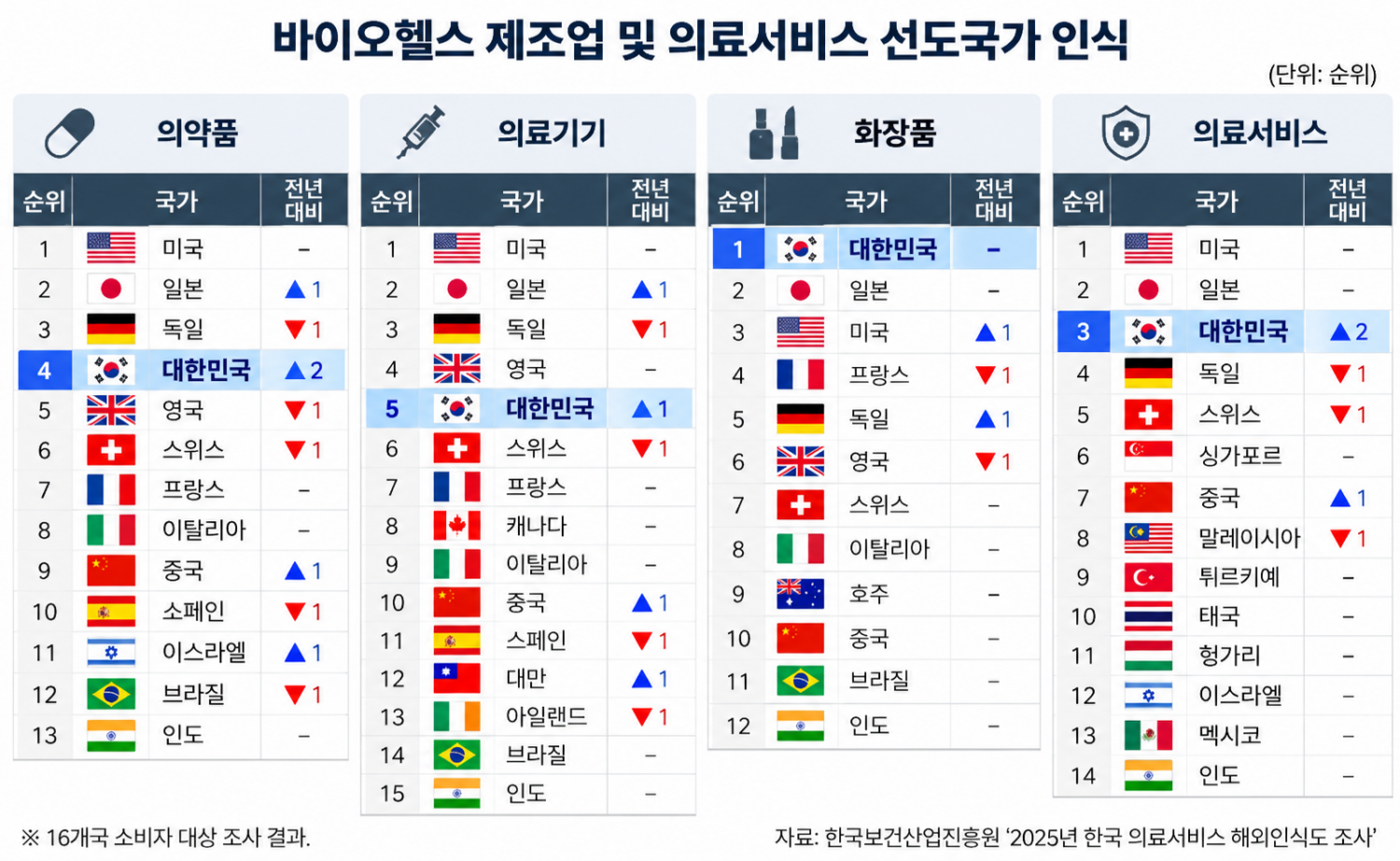
When international consumers consider traveling abroad for medical care, a larger share selects South Korea over traditional healthcare powerhouses like the United States and Japan. However, a significant gap remains between favorable brand perception and actual travel, as high medical costs and long travel distances continue to deter potential patients from making the journey.
The Korea Health Industry Development Institute (KHIDI) released these findings on Sept. 17 in its “2025 Survey on Overseas Perceptions of South Korean Medical Services.” Conducted annually since 2021 to measure the global competitiveness of South Korea’s biohealth sector, the online survey evaluated 7,100 adults ages 18 and older across 25 major cities in 16 nations—including the U.S., China, Japan, and Vietnam—from Nov. 28 to Dec. 23 last year. The latest iteration added Canada, Mongolia, Russia, and the United Kingdom to the survey pool while removing India, Uzbekistan, and Germany.
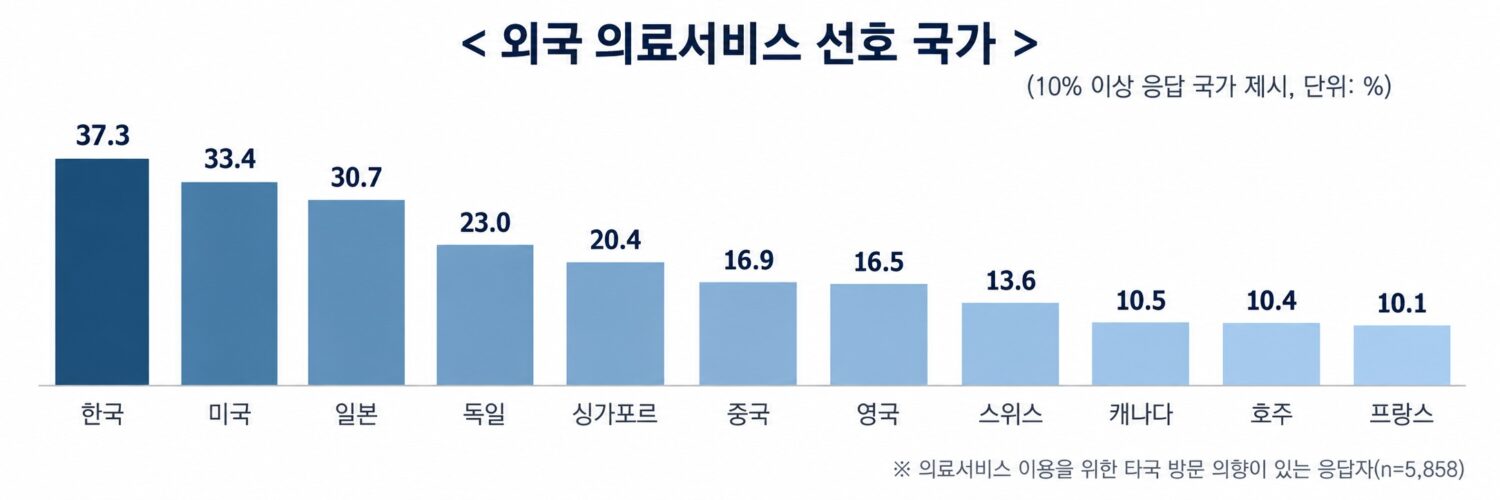
South Korea Outpaces Global Rivals in Consumer Preference
Among the 5,858 survey respondents who indicated a willingness to receive medical care overseas, South Korea emerged as the top choice at 37.3%, outranking the United States (33.4%) and Japan (30.7%).
Preference for South Korean healthcare was overwhelmingly strong in specific regions, led by Mongolia at 78.8%, Vietnam at 58.3%, and Russia at 53.3%.
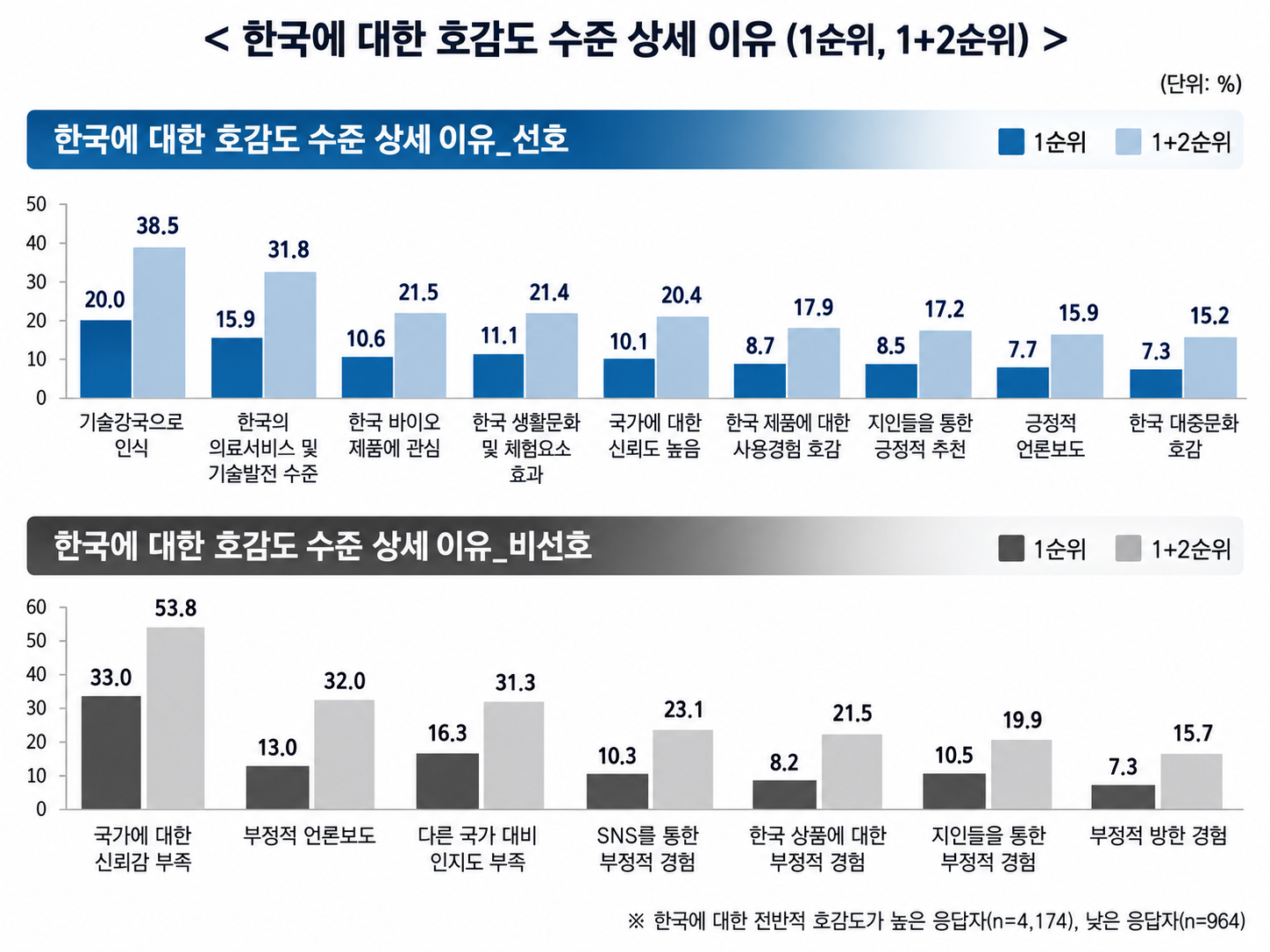
Among the 2,187 respondents who listed South Korea as one of their top three preferred destinations, 41.2% attributed their choice to superior medical standards compared to their home countries. Additionally, 35.4% cited general trust in South Korea’s hospital system, while 27.0% were influenced by personal recommendations and positive word-of-mouth.
This preference aligns with an elevated global perception of South Korea’s biohealth capabilities. Surveyed consumers ranked South Korea No. 1 internationally in cosmetics, No. 3 in medical services (up two positions from fifth the previous year), No. 4 in pharmaceuticals, and No. 5 in medical devices. KHIDI noted that these figures reflect consumer perceptions of industry leadership rather than objective global rankings that directly compare treatment outcomes.
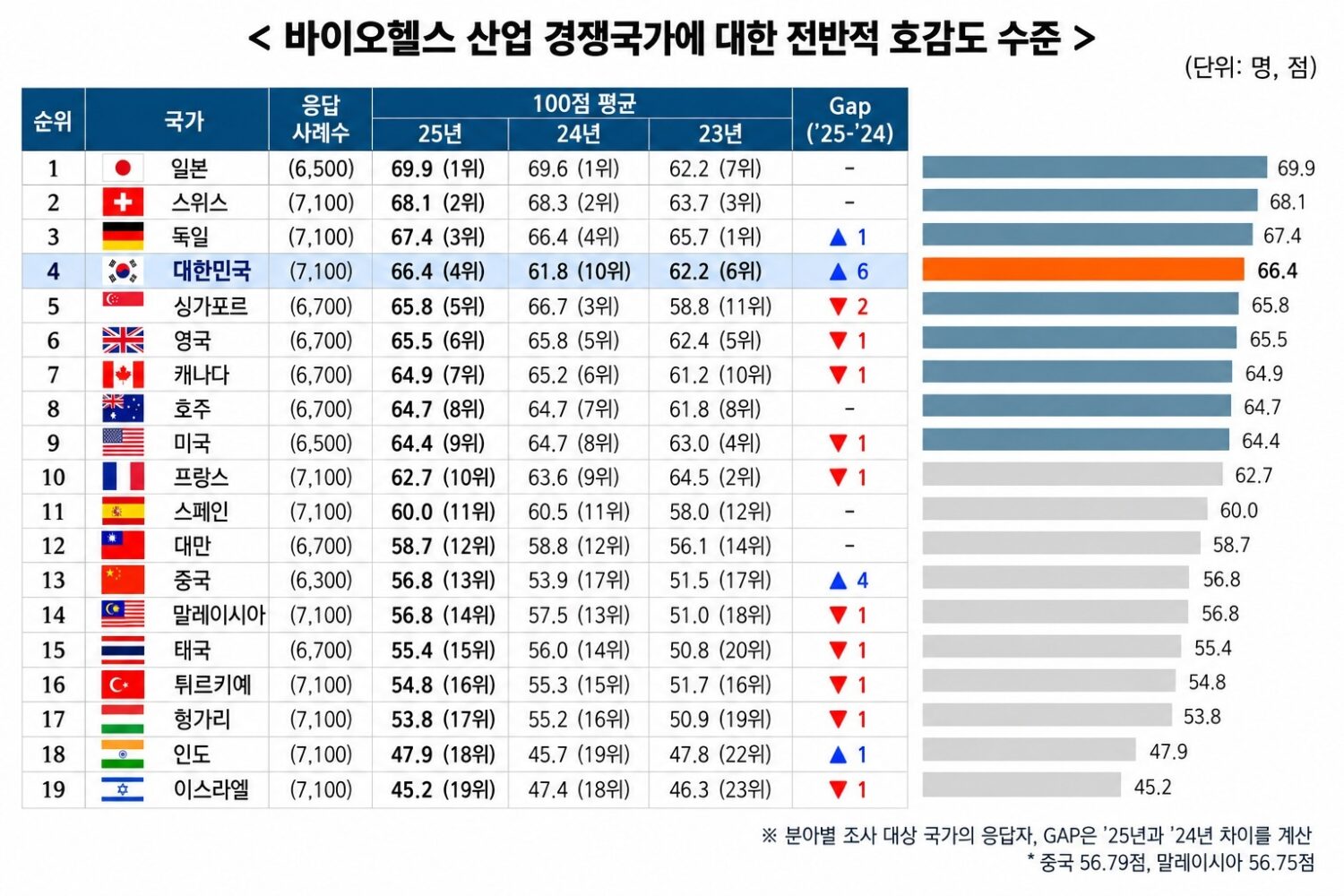
Overall awareness of South Korean healthcare rose 2.0 percentage points year-over-year to 70.1%, peaking in Indonesia (90.3%), Vietnam (88.3%), China (85.3%), and Saudi Arabia (84.5%). South Korea’s national favorability score also rose 4.6 points to 66.4 out of 100, placing fourth among 19 evaluated nations. The report noted, however, that the score gap among the top nine countries was only about 5 points, meaning minor score fluctuations can easily alter national rankings.
Growing Intent Countered by Financial and Travel Barriers
Overall intent to travel to South Korea for medical care or health tourism reached 61.2%, maintaining a steady upward trajectory from 51.0% in 2022, 54.2% in 2023, and 59.8% in 2024. Travel intent surged most notably among respondents in the United States, jumping 19.0 percentage points in a single year, followed by Saudi Arabia (up 12.5 percentage points) and Thailand (up 12.0 percentage points). Cultural affinity also proved influential, with 62.9% of total respondents stating that South Korean pop culture positively impacts their healthcare decisions—a metric that reached 85.3% in Kazakhstan, 80.3% in Saudi Arabia, 79.8% in Vietnam, and 79.5% in the United Arab Emirates (UAE).
Conversely, among the 2,755 respondents who expressed no intention of visiting South Korea for care, financial burdens (60.9%) and excessive travel distance (57.2%) were cited as the dominant obstacles. General disinterest in overseas care (49.2%) and satisfaction with domestic healthcare options (47.3%) were secondary factors. Only a minority cited skepticism regarding South Korea's medical technology (25.9%) or the clinical expertise of its medical staff (22.2%).
When asked which areas require the most improvement to encourage foreign patient visits, respondents prioritized lower treatment pricing (48.2%) well ahead of medical technology enhancements (29.4%) or travel accessibility (27.8%).
High Satisfaction vs. Low Recognition of Specific Hospitals
For international patients who have utilized South Korean medical institutions operating locally in their home countries, satisfaction levels were markedly high.
Among 1,921 foreign patients treated at overseas South Korean clinics, overall satisfaction averaged 75.3 points out of 100—5.8 points higher than domestic healthcare facilities in those same countries (69.5 points). South Korean institutions scored particularly well in administrative efficiency, outperforming domestic alternatives by 14.7 points in waiting times (75.2 points) and 10.0 points in cost structure transparency.
Despite these positive clinical experiences, a pronounced disconnect persists between general brand awareness and recognition of specific medical providers. While 70.1% of global consumers were aware of South Korean healthcare services broadly, and 59.0% knew that South Korean hospitals operated branch clinics abroad, only 28.8% could name a specific hospital institution, and only 32.6% had actively used a local branch facility.
Surpassing 2 Million Foreign Patients Amid Market Mismatches
According to Ministry of Health and Welfare data, South Korea welcomed a record 2,011,822 foreign patients in 2025, topping the 2 million mark for the first time since establishing its official medical tourism framework in 2009.
However, patient distribution remains heavily skewed by medical specialty and geographic location. Dermatology attracted the vast majority of international visitors, accounting for 1,312,700 patients or 62.9% of total visits. Plastic surgery followed at 11.2%, integrated internal medicine at 9.2%, and comprehensive health screenings at 3.1%. (Department totals reflect total visits and may include double-counting if a patient visited multiple specialties). Geographically, Seoul absorbed 87.2% of all foreign patients (1,755,002 visitors).
When looking strictly at the 16 nations included in the perception survey, incoming patients totaled 1,854,099. Three neighboring markets—China (618,973 patients), Japan (600,009 patients), and Taiwan (185,715 patients)—accounted for 75.8% of visitors from those surveyed countries.
Crucially, the data reveals a sharp discrepancy between markets with high travel intent and those driving actual patient inflows. High-intent nations—including Saudi Arabia (90.8%), Indonesia (89.5%), the UAE (82.5%), the United Kingdom, and Kazakhstan, all of which finished above the overall average—generated only 52,082 actual patients combined, representing just 2.8% of the total volume from the 16 surveyed countries. Conversely, mature volume markets like China, Japan, and Taiwan exhibited below-average travel intent, with China's intent falling 7.7 percentage points year-over-year to 60.1%.
Ko Sang-baek, president of KHIDI, stated that surpassing 2 million foreign patients underscores international trust in South Korean medicine. He emphasized that as artificial intelligence (AI) and digital healthcare continue to expand rapidly, the ways foreign consumers search for medical information and select hospitals are changing, necessitating continuous identification of country-specific market traits. Han Dong-woo, head of KHIDI’s International Medical Services Division, added that future promotional efforts will center on delivering concrete clinical evidence, such as verified treatment outcomes and specialty care expertise, while tailoring campaigns to country-by-country information-use patterns to convert latent global interest into direct hospital visits.