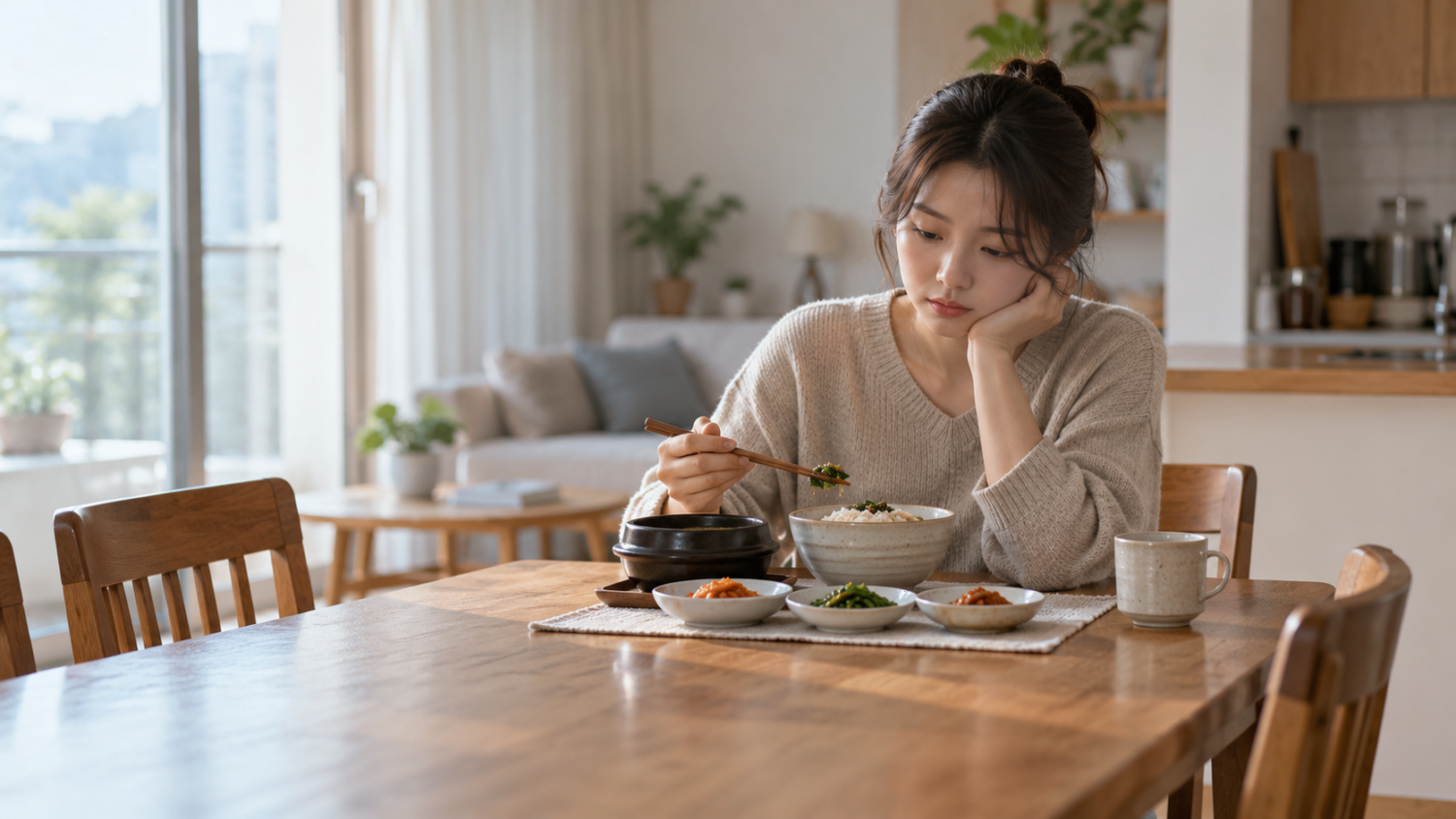
Even when people consume the exact same meal, their body's physiological response can vary depending on who is sitting at the table. A quiet meal eaten in solitude differs significantly from one shared with family or friends—from the pace of eating to the variety of food on the table. When it comes to blood sugar management, is it better to eat alone or in company?
South Korea ranks near the bottom of G20 in shared dinners
Eating alone has become a mainstream practice driven by the rise of single-person households, expanded food delivery options, and social fatigue.
As solo dining increases, shared mealtime is steadily declining. According to the World Happiness Report 2025, published by the UN Sustainable Development Solutions Network, South Koreans recorded the lowest frequency of shared dinners among Group of 20 (G20) nations.
Between 2022 and 2023, South Koreans ate dinner with others an average of just 1.6 times per week—ranking near the bottom alongside Japan (1.8 times). By contrast, social dining was far more common in Australia (4.9 times per week), Canada (4.8 times), and the United States (4.7 times).
Social dining tempers post-meal blood sugar surges
While solo dining offers convenience and personal autonomy, eating alone too frequently can reduce social interaction and heighten feelings of isolation. The report noted that 38% of individuals who ate alone throughout a week reported feeling lonely, whereas social dining consistently correlated with higher overall life satisfaction across all demographics.
Beyond psychological benefits, research suggests that sharing meals may directly improve metabolic health. Studies indicate that eating with company is associated with smaller post-meal blood sugar surges and a faster return to baseline glucose levels.
In a study published in the journal Science Advances, researchers in the Department of Psychology at the Hebrew University of Jerusalem evaluated blood sugar changes in 108 participants consuming identical 100-gram portions of white bread—once alone and once with others. Two hours after eating, participants who dined with close companions exhibited significantly lower blood sugar spikes and faster glucose clearance than those who ate alone.
Essential nutrition tips for solo diners
For many busy individuals and single-person households, solo dining is unavoidable. In these cases, maintaining nutritional balance is critical. Relying on convenient, carb-heavy options—such as eating only rice with kimchi, or replacing meals with bread or noodles—can lead to deficiencies in protein, vitamins, and minerals.
Carbohydrates like rice or potatoes should always be paired with quality protein—such as eggs, fish, meat, or beans—along with generous servings of vegetables and fruit. Middle-aged and older adults should also pay special attention to calcium intake to protect bone health.
Key Takeaways:
South Koreans eat dinner with others an average of 1.6 times per week, among the lowest rates in the G20.
Research indicates that eating meals with close companions helps moderate postprandial blood sugar spikes.
When dining alone, ensure meals remain balanced with carbohydrates, protein, healthy fats, vitamins, and minerals.