

Similar weights at the initial and final health screenings may not tell the complete story regarding an older adult's health.
An analysis of approximately 620,000 adults aged 75 and older revealed that individuals experiencing greater weight fluctuations across multiple health screenings faced a higher risk of death. A research team led by Professors Seo Ji Yeon and Choi Ji Min of the Division of Gastroenterology at SNUH Healthcare System Gangnam Center, alongside Professor Han Kyung-Do of Soongsil University, announced the findings on Oct. 22.
In later life, underlying illness or frailty can cause body weight to change. While clinical attention has largely focused on net weight loss or gain, the extent to which weight fluctuates over repeated measurements may also provide vital clues about health status. Consequently, evaluating an older adult’s health requires examining not just current weight, but its overall pattern of change over time.
The researchers analyzed National Health Insurance Service (NHIS) health screening data covering 616,696 adults aged 75 and older who underwent screenings between 2012 and 2015 and had their weight measured at least four times. The average age of participants was 78. The team tracked mortality and causes of death through the end of 2022, with a median follow-up period of 7.5 years, during which 195,585 participants died.
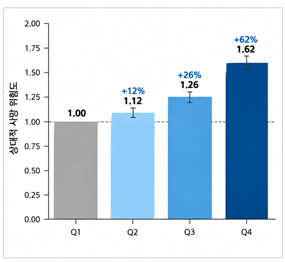
When participants were divided into four groups based on the magnitude of their weight fluctuations, mortality risk rose progressively across quartiles. Compared to the group with the smallest weight variations, the remaining three groups demonstrated 12%, 26%, and 62% higher mortality risks, respectively. These findings were adjusted for potential confounding factors, including age, sex, lifestyle habits, and underlying medical conditions.
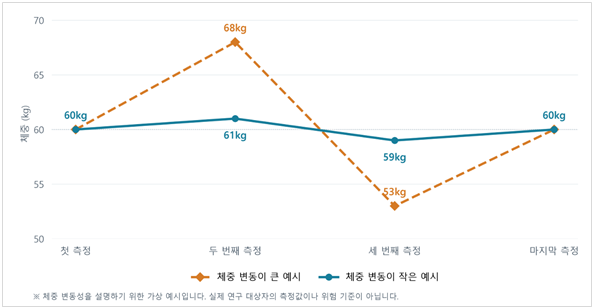
Even among individuals whose weights at the initial and final screenings remained within 5% of each other, those with substantial interim weight fluctuations exhibited a 41% higher risk of death compared to peers with stable weights in that same group. Among individuals who lost weight overall, those with large fluctuations faced a 36% higher risk; among those who gained weight, the risk was 33% higher. Large fluctuations were defined as belonging to the top 25% of participants with the highest weight variation.
However, as an observational study utilizing health screening data, the findings do not establish a direct causal link between weight fluctuations and death. Underlying illness or frailty may have contributed to both weight changes and mortality risk.

"When someone's weight is similar at the first and last measurements, it is easy to assume it has remained stable, but we must also examine what happened in between," Seo said.
"When an older adult's weight varies significantly, it is essential to consider whether an underlying illness or a shift in nutritional status might be responsible," Choi added. "Regularly measuring weight and reviewing fluctuation patterns during medical visits can significantly assist in assessing an older adult's overall health."
The study was published in May in Scientific Reports, a journal published by Nature Portfolio.