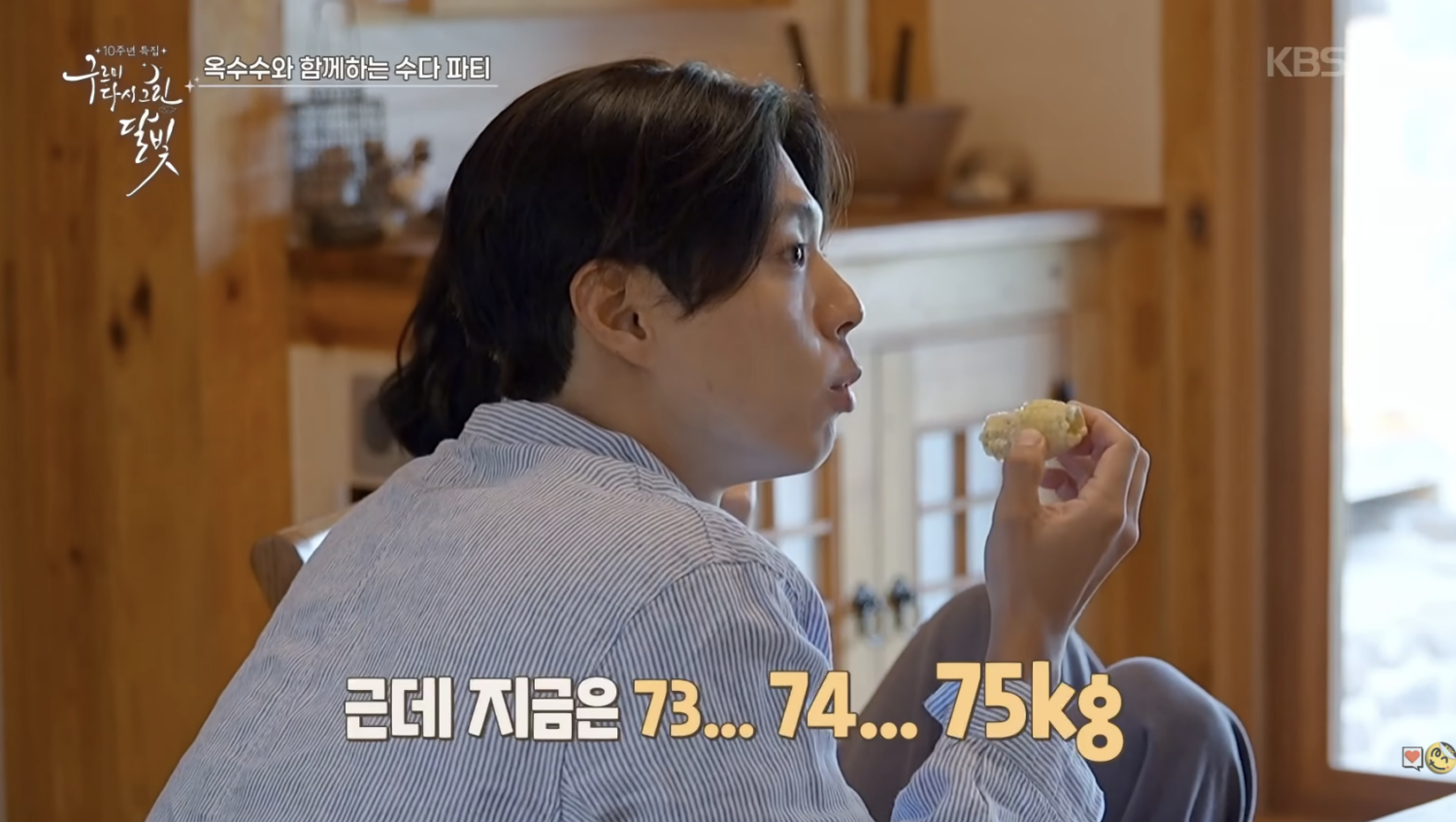
Actor Park Bo-gum revealed that he has gained 11 kg since starring in the hit drama Love in the Moonlight.
On a 10th-anniversary reunion special aired on KBS 2TV, Park joined co-stars Kim Yoo-jung, Jinyoung, Chae Soo-bin, and Kwak Dong-yeon for a two-day trip to Hongcheon, Gangwon Province. While relaxing at their lodging, the cast began discussing their fitness and body weight after Jinyoung mentioned his healthy appetite. When Jinyoung shared that he weighed 66 kg despite his tall build, the others expressed surprise. Kim Yoo-jung noted how slender he was, while Kwak Dong-yeon admitted he assumed Jinyoung was in the 70-kilogram range. Park teased Jinyoung for maintaining such a lean frame before opening up about his own weight transformation.
"I was 65 kg when we filmed Love in the Moonlight," Park shared. "Now I'm at 73, 74, 75 kg... actually, it's 76 kg."
Clean Eating and High-Intensity Training Drive 11 kg Muscle Gain
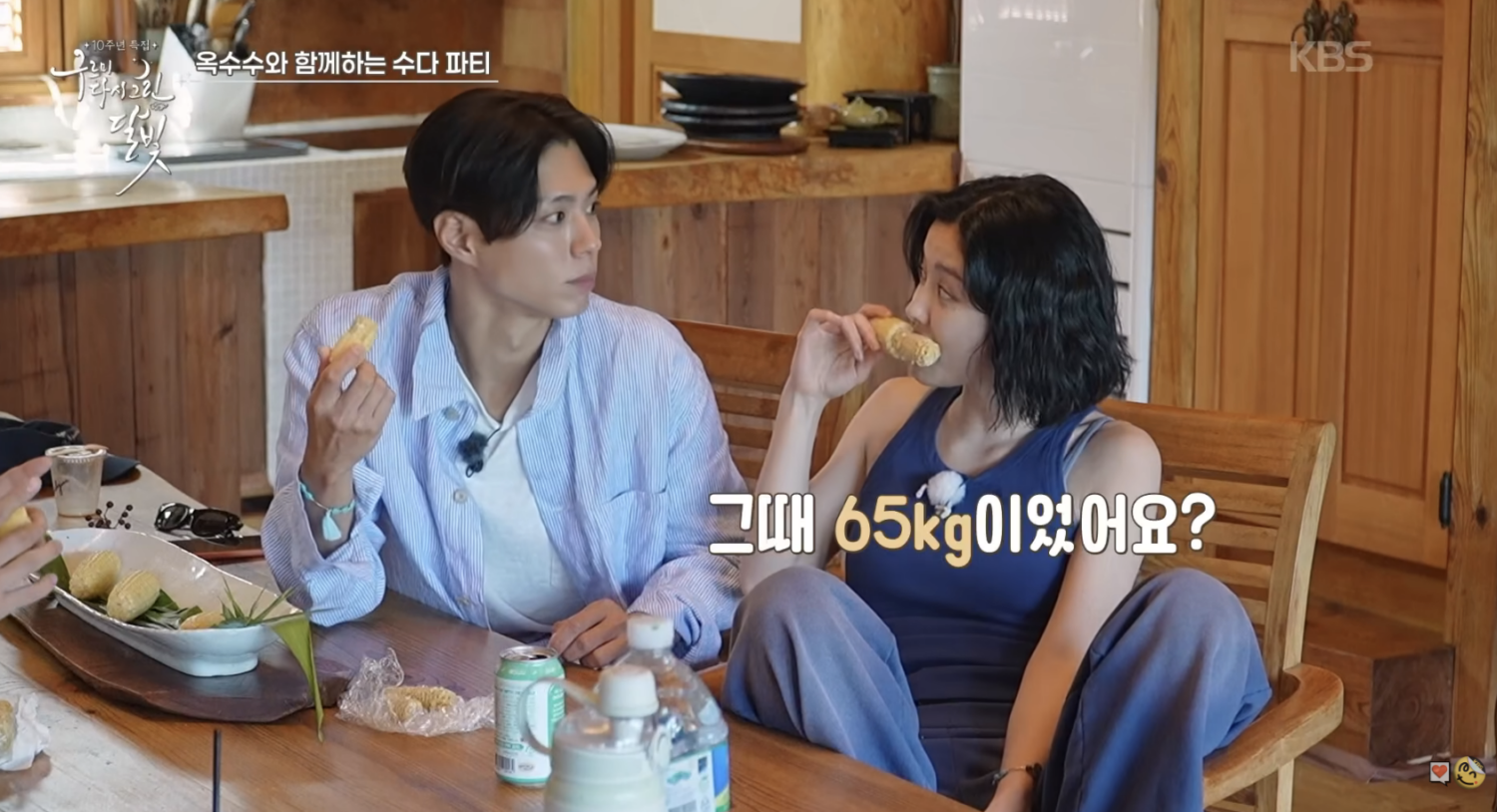
Despite the 11-kilogram increase, Park displays no visible signs of excess body fat. Instead, his weight gain is the product of dedicated muscle building.
Appearing on singer Sean's YouTube channel, Park previously detailed his strict self-care and bulking routine. "These days, I eat four meals a day, and I include two chicken breasts at every meal," he explained. "For one of those meals, I always add complex carbohydrates with brown rice."
He noted that switching to a clean diet noticeably transformed his physical frame, facial definition, and overall posture. To maximize gains, Park paired his diet with structured workouts consisting of one hour of heavy weight training followed by 10 minutes of cardio.
Physiologically, body shape at any given weight depends heavily on body composition. One kilogram of fat occupies roughly 15% to 30% more volume (1.15 to 1.3 times) than one kilogram of muscle tissue. Because muscle is far denser and more compact than fat, individuals with higher muscle mass look significantly leaner and more sculpted than those of the same weight with higher body fat.
The Science Behind a Clean Bulk-Up
A successful bulk-up requires a strategic balance of nutrition and progressive overload exercise. Park's reliance on chicken breast and brown rice represents a classic, textbook approach to clean bulking.
Chicken breast delivers lean protein essential for repairing the microscopic muscle fiber tears caused by intense weightlifting. As protein synthesizes during recovery, muscle tissue expands. Meanwhile, complex carbohydrates like brown rice replenish muscle glycogen—the primary energy fuel consumed during heavy resistance training—sustaining workout intensity while aiding recovery. Brown rice also contains higher dietary fiber than white rice, helping maintain satiety.
Adopting a consistent daily meal plan also simplifies daily calorie tracking and eliminates diet fatigue, helping maintain steady progress. However, nutrition alone cannot build muscle without physical stimulus. Effective bulking requires structured resistance training to trigger hypertrophy, complemented by appropriate cardiovascular exercise to preserve heart health and conditioning without burning away muscle mass.