Even when two eyes do not see equally well, many people navigate daily life without obvious trouble as long as one eye has clear vision. Because the stronger eye compensates, individuals often fail to realize the other eye sees poorly until a routine exam or accidental cover test reveals the imbalance.
A marked difference in refractive status between the eyes is known as "anisometropia" or "refractive anisometropia." Often viewed as a condition that arises during childhood growth, it can also affect adults.
To understand the causes, risks, and management of anisometropia, Korean media outlet Comedydotcom interviewed Baek Seung-hee, head of the Strabismus and Pediatric Ophthalmology Center at Kim’s Eye Hospital.
Q1. Does anisometropia simply mean that the two eyes have different vision?
A. More precisely, it refers to a significant difference in the refractive status between the two eyes. Rather than being a standalone disease, anisometropia describes a condition where the eyes' refractive power differs substantially.
Refraction occurs when light bends as it passes through the cornea and lens to focus on the retina. Distortions in this process lead to refractive errors such as myopia, hyperopia, and astigmatism. Normally, the brain receives signals from both optic nerves and merges them into a single coherent image. However, when anisometropia creates a large disparity in visual sharpness, the brain receives two conflicting images, making fusion difficult.
Q2. Can people easily notice if they have anisometropia?
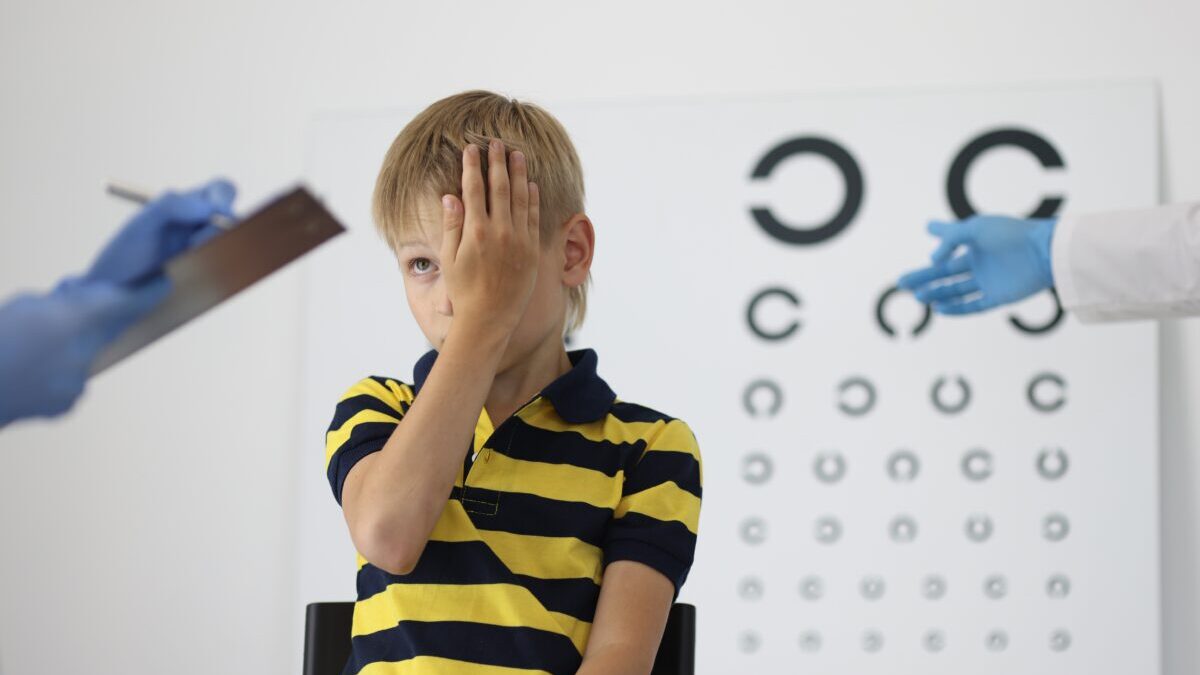
A. Many patients experience no obvious symptoms. As long as one eye functions well, individuals rely on it for daily activities and often only discover the condition when covering each eye alternately.
Children are even less likely to recognize the problem. While kids with poor vision in both eyes show clear warning signs like squinting or holding objects very close, those with one good eye rarely display these behaviors. Therefore, parents should not assume a child's vision is fine simply because daily life appears unaffected.
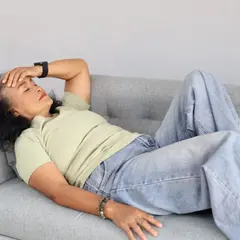
In adults who develop anisometropia suddenly, symptoms are much more apparent. The divergence between images can cause blurry or double vision, eye strain, headaches, or nausea. Conversely, those who have lived with anisometropia since childhood typically adapt and feel little discomfort.
Q3. What causes anisometropia to develop?
A. In children, the eye's refractive status changes continuously during physical growth. Just as hands or feet do not grow with perfect symmetry, the two eyes can develop at different rates. If the balance between the eye's focal power and axial length grows unevenly, a refractive gap emerges.
In adults, refractive power usually stabilizes after growth ends, but secondary factors can trigger anisometropia. Common causes include asymmetric cataracts, corneal diseases like keratoconus, physical trauma resulting in corneal scarring, or localized changes in the lens.
Q4. Why is anisometropia particularly concerning in young children?
A. A child's visual system develops through clear, continuous sensory input. If an uncorrected refractive error causes a blurred image to persist in one eye, neural development in that eye stalls, leading to amblyopia—commonly known as lazy eye.
Because children adapt easily when one eye sees well, anisometropia is easy to miss. This is why parents should never skip pediatric health checkups or school vision screenings. The earlier the condition is identified and corrected, the better the long-term visual outcome, though effective treatment remains possible even if caught later.
Q5. How is anisometropia treated once diagnosed?
A. The primary step is correcting the underlying refractive error. For most children without coexisting ocular diseases, prescription glasses effectively sharpen the blurred image and support normal visual development. If amblyopia has already set in, targeted therapies—such as occlusion therapy (patching)—are added following refractive correction.
In adults, treatment targets the underlying cause. If anisometropia stems from cataracts, keratoconus, or trauma, clinicians address the specific medical condition while prescribing corrective lenses to restore balanced vision and alleviate strain.