For patients with aggressive blood cancers that recur or fail to respond to standard chemotherapy, chimeric antigen receptor T-cell (CAR-T) therapy—which re-engineers a patient's own immune cells to combat malignancy—offers a vital treatment option. Because each dose is individually manufactured and can trigger severe immune responses post-infusion, administration requires specialized clinical staff and dedicated infrastructure.
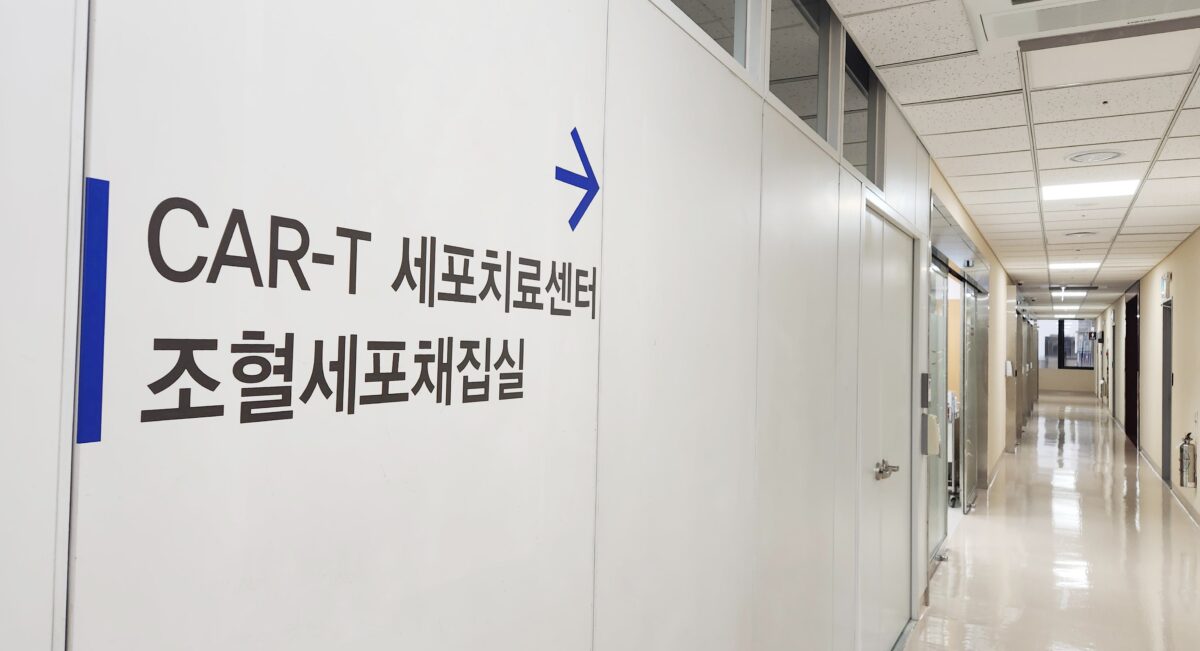
Gachon University Gil Medical Center announced Sept. 1 that its CAR-T Cell Therapy Center is expanding specialized care for relapsed and refractory blood cancers as it marks over two years of operation since its launch in April 2024.
As the first facility of its kind in the Gyeongin region (encompassing Incheon and Gyeonggi Province), the center achieved complete remission in its very first patient, confirmed via a positron emission tomography-computed tomography (PET-CT) scan taken approximately one month after infusion. The center has since continuously treated patients suffering from difficult-to-treat hematologic malignancies.
Integrated Infrastructure and Specialized Facilities
CAR-T cell therapy begins with extracting T cells from a patient's blood. These immune cells are genetically modified to recognize and destroy specific surface antigens on cancer cells, expanded in culture, and reinfused into the patient. Unlike conventional off-the-shelf pharmaceuticals, the treatment demands a complex, multi-step process involving cell harvesting, cryogenic storage, processing, targeted infusion, and intensive inpatient management. In South Korea, approved indications include diffuse large B-cell lymphoma (DLBCL), primary mediastinal large B-cell lymphoma (PMBCL), and B-cell acute lymphoblastic leukemia (B-ALL).
To streamline this complex workflow, Gil Medical Center linked its CAR-T Cell Therapy Center directly with its cell processing facility and hematopoietic stem cell transplant ward, allowing the entire therapeutic sequence to occur within a unified setting.
The specialized transplant ward features 15 sterile, single-occupancy rooms—comprising four transplant suites and 11 isolation rooms. At its opening in 2023, the facility represented South Korea's largest all-sterile single-room transplant unit. Beyond CAR-T therapy, the ward provides crucial infection control for patients experiencing severe immunosuppression during stem cell transplantation or intensive chemotherapy.
Multidisciplinary Care and Expanding Treatment Landscape
A primary reason CAR-T therapy is restricted to certified medical centers is the need to manage acute, specialized adverse reactions. Chief among these is cytokine release syndrome (CRS), an intense systemic inflammatory response triggered by proliferating CAR-T cells that can cause high fevers and severe hypotension. Patients may also develop immune effector cell-associated neurotoxicity syndrome (ICANS), manifested by confusion, speech impairment, or altered consciousness, alongside risks of cytopenia and secondary infections.
To ensure patient safety, Gil Medical Center operates an integrated care protocol involving hematology, laboratory medicine, infectious diseases, neurology, and critical care medicine to detect and treat complications early.
Hospital leadership expects this integrated framework to improve treatment access for residents across Incheon, western Gyeonggi Province, the Chungcheong region, and the West Coast, while its proximity to Incheon International Airport positions the facility to serve international patients.
The broader domestic treatment landscape is also evolving. On April 29, South Korea’s Ministry of Food and Drug Safety approved Curocell’s Rimkato Injection (anbalcaptagen autoleucel)—the nation’s first domestically developed CAR-T gene therapy—for adult patients with DLBCL and PMBCL whose disease relapsed or proved refractory after two or more systemic therapies.
As new therapeutic options emerge, the administrative and monitoring responsibilities of specialized centers continue to grow.
"CAR-T cell therapy is an innovative treatment offering renewed hope for blood cancer patients who have exhausted standard options," said Yoon Byung-woo, a professor of hematology at Gachon University Gil Medical Center. "We will continue to strengthen our clinical capabilities so patients across the Seoul metropolitan area and central regions can receive advanced, safe CAR-T therapy locally."
Park Jin-hee, head of the CAR-T Cell Therapy Center, added, "Since opening the center, we have steadily built our expertise in advanced cell therapies. We aim to foster a medical environment where patients with severe blood disorders receive top-tier care in their region while developing into the premier hub for blood cancer treatment in the Gyeongin area."