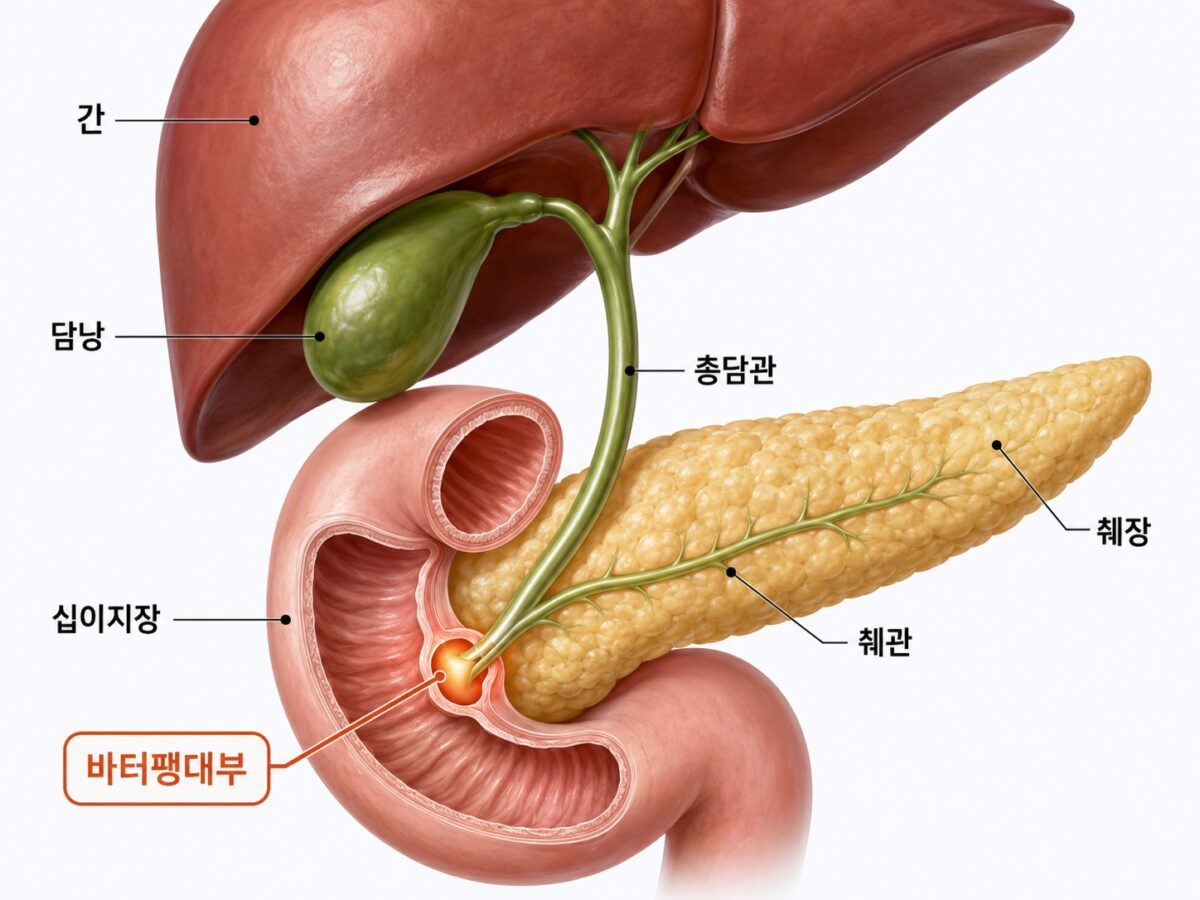
Where the bile duct and pancreatic duct meet to drain digestive juices into the duodenum, a rare and elusive malignancy can develop: ampullary cancer, or cancer of the ampulla of Vater.
Because it affects fewer than 900 people in South Korea each year—accounting for just 864 new cases or roughly 0.3% of all cancer diagnoses, according to 2026 Korea Central Cancer Registry data—large-scale clinical studies have historically proved challenging. Even among patients given the same diagnosis, clinicians have struggled to explain why some tumors progress rapidly while others respond to standard treatment.
Now, by examining ampullary cancer down to individual cells, a South Korean research team has demonstrated that the disease—previously divided into just two broad categories—actually consists of four distinct molecular subtypes. Crucially, the researchers identified an aggressive subtype dubbed "PB-KRAS" that is associated with high recurrence rates, poor survival, and localized immune suppression.
Samsung Medical Center announced that a joint team led by Prof. Park Ju-kyung of Gastroenterology and Prof. Jang Ki-taek of Pathology, in collaboration with Prof. Lee Se-min of Biomedical Engineering at Ulsan National Institute of Science and Technology (UNIST), published their findings in the journal Biomarker Research.
The study marks the first time globally that single-cell transcriptomics and spatial transcriptomics have been combined to analyze the cellular landscape and immune microenvironment of ampullary cancer.
From Two Broad Categories to Four Molecular Subtypes
Historically, ampullary cancer has been classified based on histological appearance into two types: the intestinal type and the pancreatobiliary type. However, patient outcomes vary widely within these classifications, limiting their usefulness for predicting recurrence or guiding targeted therapies.
To address this limitation, the research team analyzed tumor tissue from eight ampullary cancer patients using single-cell RNA sequencing, isolating individual cells to profile active gene expression. They then validated their discoveries using genomic data from 62 additional patients.
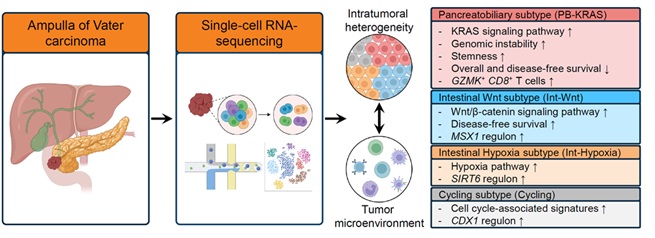
The analysis revealed four definitive subtypes:
Int-Wnt: An intestinal derivative characterized by hyperactive WNT signaling, which drives tumor cell growth.
Int-Hypoxia: An intestinal derivative adapted to survive in low-oxygen tumor environments.
PB-KRAS: A pancreatobiliary derivative marked by pronounced KRAS-related signaling and severe genomic instability.
Cycling: A distinct subtype defined by hyperactive cell division and rapid proliferation..
The Aggressive PB-KRAS Profile and Immune Suppression
Among the four classifications, the PB-KRAS subtype proved to be the most dangerous. Tumors exhibiting this profile demonstrated elevated genomic instability and strong KRAS signaling—traits that encourage tumor survival, treatment resistance, and rapid regrowth.
When cross-referenced with real-world clinical data, patients with a higher proportion of PB-KRAS cancer cells experienced significantly higher rates of recurrence and lower overall survival rates. While statistical modeling yielded an exceptionally high hazard ratio for mortality, researchers noted that this figure reflects the small size of the validation cohort (62 patients). Nevertheless, the association between the PB-KRAS signature and poor prognosis remained consistent across 1,000 repeated bootstrap analyses.
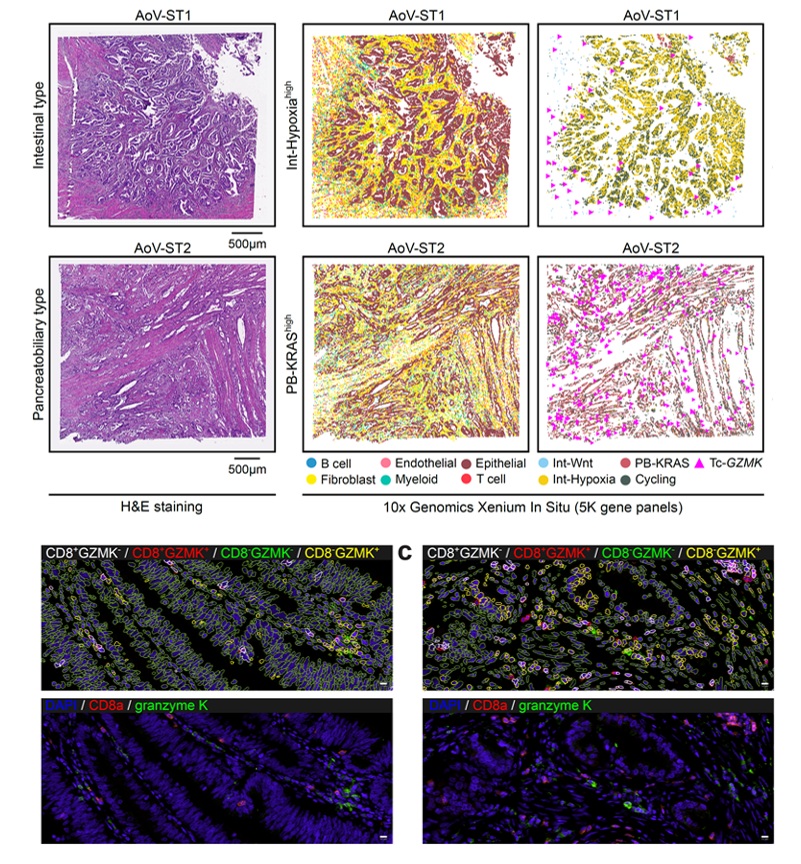
To understand why PB-KRAS behaves so aggressively, the researchers applied spatial transcriptomics, which maps gene activity while preserving the exact physical position of cells within tumor tissue.
The resulting "cell map" revealed a compromised immune microenvironment around PB-KRAS tumors. Essential killer T cells (CD8+ T cells) were clustered in a dysfunctional, exhausted state, while immunosuppressive macrophages flooded the area. Furthermore, key signals known to inhibit anti-tumor immunity—including TGFB2, SPP1, and FGF2—were heavily expressed, suggesting that PB-KRAS tumors actively disarm the body's natural defenses.

Paving the Way for Targeted Therapies
By moving beyond traditional histological grouping, the study provides a roadmap for precision medicine in ampullary cancer. If confirmed in larger clinical trials, these findings could enable doctors to flag high-risk patients early and tailor treatment strategies—such as combining KRAS inhibitors with agents designed to reverse localized immune suppression.
“This study unravels, at the single-cell level, the precise molecular mechanisms that dictate the aggressiveness of ampullary cancer,” said Prof. Park Ju-kyung. “We anticipate these insights will facilitate the early identification of patients at high risk for recurrence and guide the development of novel therapies targeting KRAS and immunosuppressive pathways.”
The study was supported by the National Research Foundation of Korea under the Ministry of Science and ICT, alongside the Korea Health Industry Development Institute under the Ministry of Health and Welfare.