If you are trying to manage your blood sugar, which is the better choice: sweet potatoes, kabocha squash, or regular potatoes? All three supply valuable dietary fiber and essential nutrients, but their actual impact on blood glucose levels can vary significantly depending on carbohydrate content and portion size.
Glycemic Index: Potato (93.6) > Steamed Sweet Potato (70.8) > Steamed Kabocha Squash (52.1)
The World Health Organization (WHO) notes that using the glycemic index (GI) as a guide can help manage diabetes and reduce cardiovascular disease risk in diabetic patients. The GI measures how rapidly a food is digested and elevates blood glucose levels. Foods with a lower GI are generally more favorable for blood sugar control and can also help prevent obesity in non-diabetic individuals.
According to Glycemic Index and Glycemic Load Index of Carbohydrate Foods Frequently Consumed by Koreans, a study published jointly by the Rural Development Administration and Kyung Hee University, a steamed sweet potato has a GI of 70.8, while a baked sweet potato jumps to 90.9. Steamed kabocha squash registers a low GI of 52.1, whereas a steamed potato measures 93.6. Foods with a GI of 55 or below are classified as low-GI, while those at 70 or above fall into the high-GI category.
Why Carbohydrate Content Matters
Does this mean you should completely avoid potatoes and sweet potatoes simply because they fall into the high-GI category? Not necessarily. What matters most is how many carbohydrates you actually consume in a single sitting. Even a high-GI food may not cause a major surge in blood glucose if its total carbohydrate density and serving size are small. The metric that accounts for both factors is glycemic load (GL).
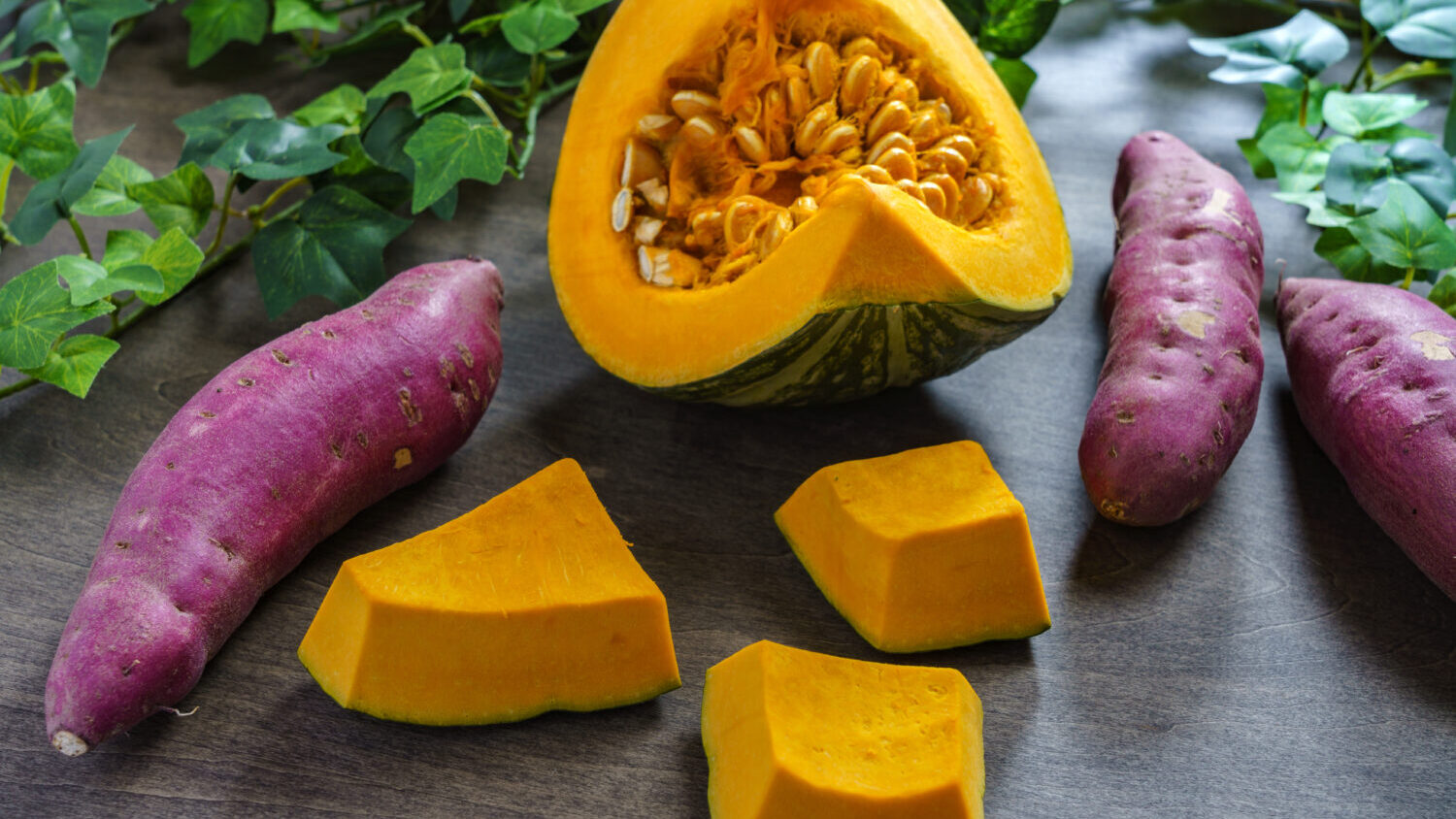
Potatoes, despite their high GI, contain fewer carbohydrates than many people assume. According to the Food Nutrition Component Database, 100 grams of raw kabocha squash contains 13.63 grams of carbohydrates, while potatoes contain 15.08 grams. By contrast, sweet potatoes—which have a relatively lower GI than potatoes—contain 35.52 grams of carbohydrates per 100 grams.
Skip the Sugar, Control Portions, and Eat with Confidence
There is no need to automatically eliminate high-GI staples like potatoes and sweet potatoes from your diet. While looking solely at GI makes sweet potatoes or kabocha squash seem far superior to regular potatoes, that picture changes when you factor in carbohydrate content and actual serving sizes. The glycemic load of a steamed sweet potato is reported at 15.5, compared to 8.5 for a steamed potato and 6.6 for steamed kabocha squash.
You can significantly reduce the blood-sugar burden by capping servings of potatoes or sweet potatoes at about 65 grams per meal. Be cautious with preparation methods: adding sugar or honey can trigger sharp blood sugar spikes, and steaming is far better than baking for blood sugar control.
It is also important to remember that even individuals managing diabetes require an adequate amount of carbohydrates, which serve as essential energy for the body and brain. However, experts recommend that people with diabetes keep carbohydrate intake between 40% and 50% of their total daily diet.
Key Takeaways
When managing blood sugar, consider both glycemic index (GI) and glycemic load (GL) together.
Even high-GI foods may not cause sharp blood sugar spikes if their carbohydrate density and serving sizes remain small.
While potatoes and sweet potatoes have higher GIs than kabocha squash, steaming them and keeping portions modest minimizes the blood-sugar burden.