“Less ice in the oat latte… and, you know, that thing. What is it, the yellow round thing?”
So begins a telling moment in Youngsikxty, a new short film where the main character suddenly fails to recall the name of his favorite cafe dessert—a madeleine. Soon, other subtle lapses follow: he orders a duplicate vinyl record he already owns, struggles to season a familiar stew, and wanders an underground parking garage searching for a car he did not drive that day. Most painfully, he asks his wife of several decades why she is taking insulin shots, completely forgetting her three-month diabetes treatment.
These unsettling scenes depict the onset of mild cognitive impairment and early-stage dementia in Youngsik, a retro-loving man in his 60s. Co-planned by SK Chemicals and JTBC in collaboration with the Korean Dementia Association, Youngsikxty is a 15-minute film set in Seoul 30 years in the future, in 2056. Directed by Yong Yi, the film stars real-life married couple Kwon Hae-hyo and Cho Yoon-hee in the lead roles.
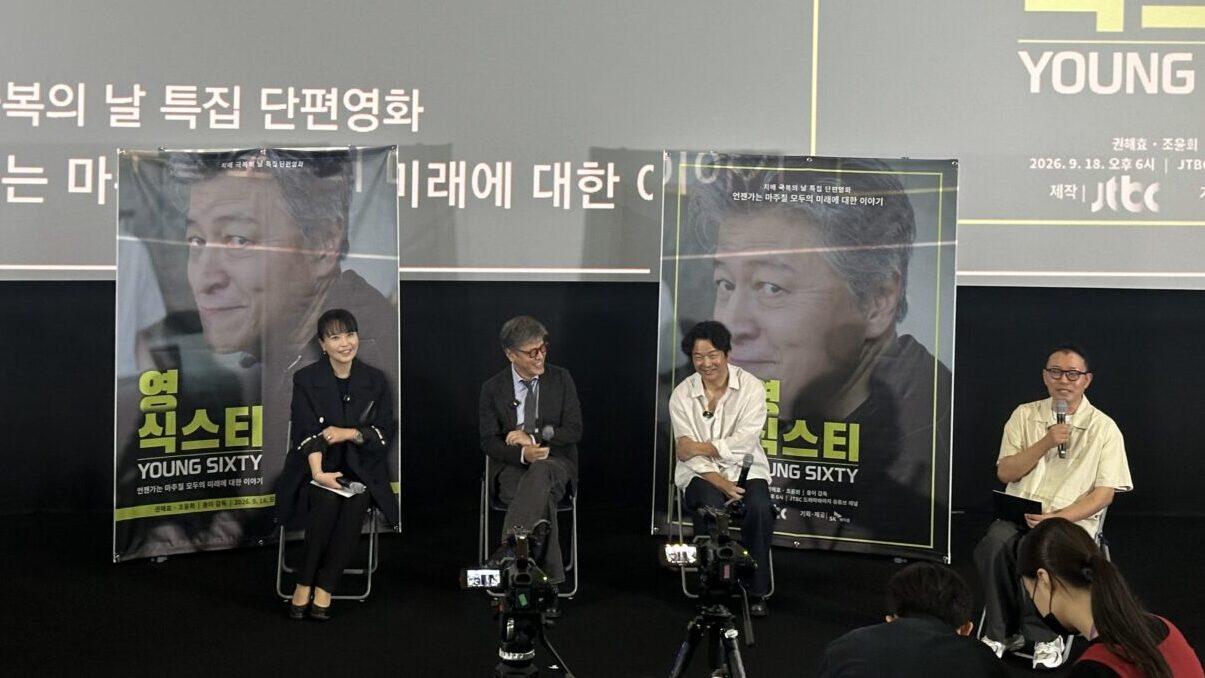
Ahead of South Korea's Dementia Overcoming Day on Sept. 21, SK Chemicals and JTBC held a special press premiere and panel discussion for Youngsikxty on Sept. 16 at Megabox COEX in Seoul. The event brought together the cast and director alongside Lee Sung-hee, president of the Dementia Family Association, representatives from the Korean Dementia Association, and individuals living with dementia and their families. Producers noted that the futuristic setting aims to emphasize that cognitive decline is a reality every generation will eventually confront, underscoring the urgent necessity of early detection.
Recognizing Early Warning Signs Beyond Normal Aging
The daily lapses Youngsik experiences in the film reflect textbook symptoms of mild cognitive impairment and early Alzheimer's disease. Forgetting a family member’s ongoing illness, losing track of close relatives' names, or losing the ability to gauge seasonings—often linked to changes in taste and smell—frequently signal underlying cognitive changes rather than routine forgetfulness.
"When repetitive changes in memory or behavior begin to disrupt daily life, they should never be written off as simple aging," said Kim Hee-jin, a professor of neurology at Hanyang University who served as the film's medical adviser and PR director for the Korean Dementia Association. "Seeking a professional medical evaluation at the first sign of consistent change is critical."
Because lost cognitive function cannot be fully restored once dementia advances, managing controllable risk factors early is paramount. In 2024, the Lancet Commission on dementia identified 14 modifiable risk factors across a lifespan—including hearing loss, hypertension, smoking, obesity, depression, physical inactivity, and diabetes. The report concluded that addressing these factors could prevent or delay up to 45% of dementia cases worldwide.
"One of my patients, a sculptor diagnosed with Alzheimer’s disease in 2014, has consistently managed her condition and has maintained her independence without progressing to full dementia for over ten years," Professor Kim added. "Early intervention allows individuals to preserve their self-esteem, daily autonomy, and quality of life for far longer."
The Vital Role of Family and Proactive Monitoring
Youngsikxty also highlights the crucial role compassionate family members play in navigating cognitive decline. In the film, Youngsik’s wife discreetly leverages an AI assistant to support his daily routines while carefully framing conversations so as not to embarrass or distress him. The story culminates in a hopeful moment as Youngsik agrees to visit a clinic alongside his wife for a formal evaluation.
The Korean Dementia Association emphasizes that older adults who experience "subjective cognitive decline"—feeling that their memory has noticeably worsened despite scoring within normal ranges on objective tests—face a higher statistical risk of developing dementia. For these individuals, medical experts recommend periodic cognitive checkups every one to two years to monitor subtle changes over time.