Cancer cells do not grow simply by switching on genes that drive proliferation; they can also lock away genes that keep normal cells from becoming cancerous, rendering them unreadable. A South Korean research team has uncovered the exact molecular mechanism driving this "gene lock" in certain thyroid cancers.
Seoul National University Hospital announced on the 24th that a joint research team—led by Prof. Lee Chul-hwan of the Department of Pharmacology at Seoul National University College of Medicine, Prof. Lee Gyu-eon of the Breast and Endocrine Surgery Division at Seoul National University Hospital, and Prof. Ryu Je-gyeong of the Department of Physics and Astronomy at Seoul National University—analyzed patient tumor tissue, lab-cultured cells, and animal models to clarify how the "EZH1 Q571R" mutation functions.
The EZH1 Q571R mutation occurs when the 571st amino acid of the EZH1 protein changes from glutamine (Q) to arginine (R). Researchers have frequently observed it in follicular thyroid cancer—which arises in cells that produce thyroid hormones—and in oncocytic thyroid tumors, which are composed of mitochondria-rich cells that stain red under microscopic examination.
Until now, the exact role this mutation plays in tumor progression remained poorly understood. The research team demonstrated that the mutation promotes follicular thyroid cancer by creating epigenetic conditions that suppress tumor-suppressor genes without altering the underlying DNA sequence.
According to 2023 National Cancer Registration Statistics, 587,292 people in South Korea were living with thyroid cancer, representing 21.5% of all cancer prevalence—the highest among all cancer types. Cancer prevalence accounts for individuals diagnosed between 1999 and 2023 who were undergoing treatment or cured as of Jan. 1, 2024.
Why Gene-Silencing Marks Spread to Active Regions
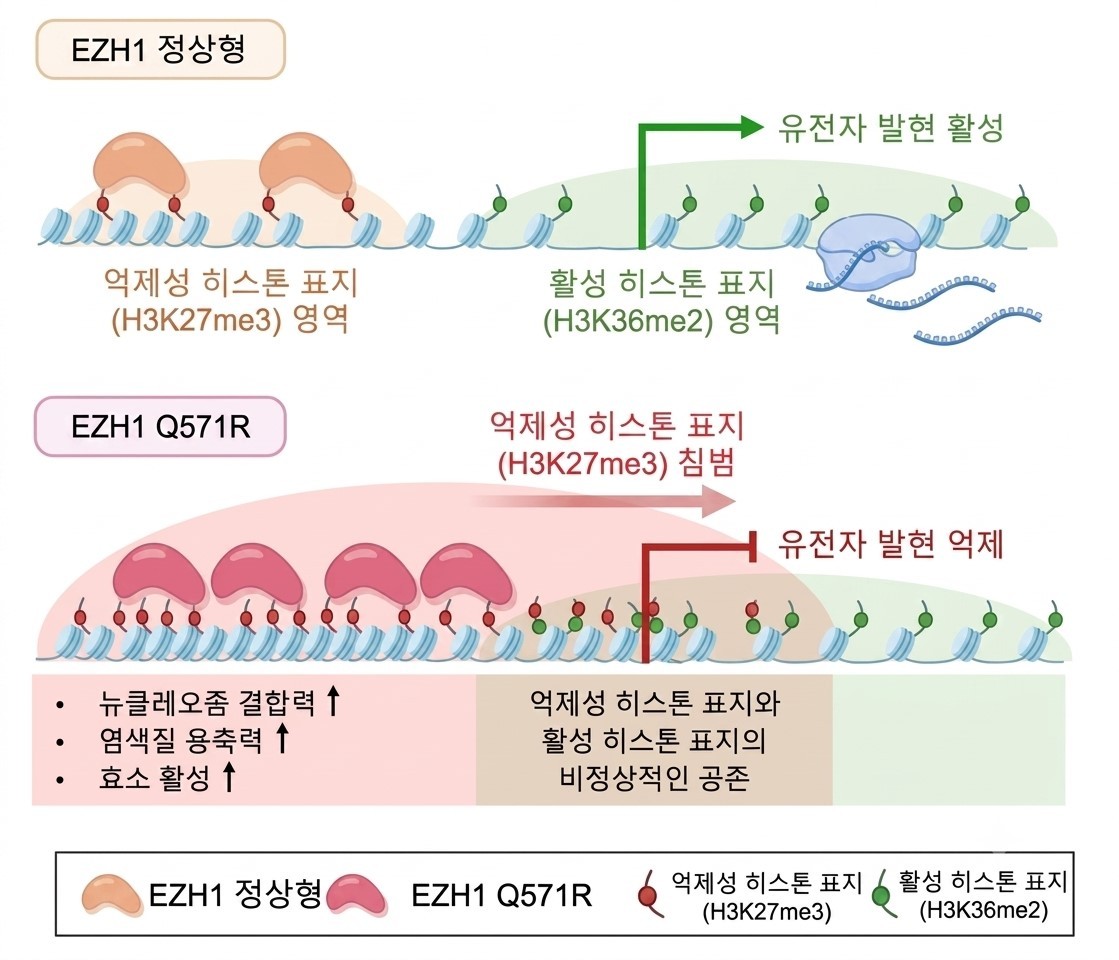
DNA is wrapped around proteins called histones and packaged into a structure called chromatin. When chromatin packaging is loose, cells can easily read genes and produce proteins. When it is tightly compacted, access to genes is blocked and their expression is silenced.
EZH1 is a core component of PRC2, a protein complex that regulates gene expression by adding a repressive mark known as "H3K27me3" to histones, preventing specific genes from activating.
Using biochemical, single-molecule, and epigenomic analyses, the researchers discovered that the Q571R mutation increases both EZH1’s enzymatic activity and its ability to physically compact chromatin. Consequently, repressive marks spread into regions that should normally remain active. As the boundary between active and repressed chromatin collapsed, key tumor-suppressor genes failed to function.
These findings were confirmed in clinical and animal models. Tumor tissue from thyroid cancer patients carrying the EZH1 Q571R mutation showed significantly reduced tumor-suppressor expression. In animal experiments, the mutation accelerated tumor growth by approximately 34% compared with the normal form of the protein.
Why the Equivalent EZH2 Mutation Showed a Different Effect
The team also engineered a corresponding mutation—"Q570R"—in EZH2, a protein structurally similar to EZH1, to compare their behaviors. They utilized magnetic tweezers analysis, a single-molecule biophysics technique that applies minute magnetic forces to DNA-protein complexes to measure the strength of chromatin compaction.
The analysis revealed that while EZH2 Q570R also increased repressive enzymatic activity, it lacked the powerful chromatin-compacting ability of EZH1 Q571R. The researchers concluded that chromatin compaction capability—rather than enzymatic activity alone—is the critical determinant driving tumor growth.
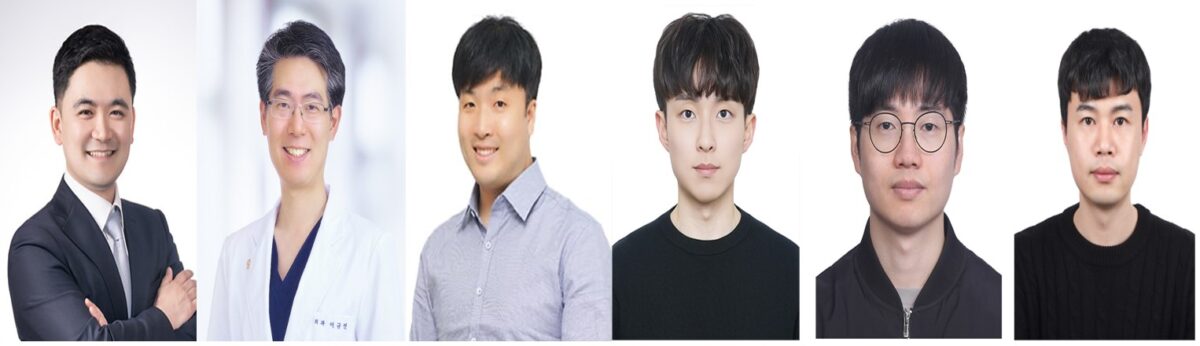
Addressing the significance of the findings, the lead researchers highlighted distinct aspects of the breakthrough:
"The primary significance of this study is that we have explained the molecular function of the EZH1 Q571R mutation for the first time," said Prof. Lee Chul-hwan. "We will now expand this research toward developing therapeutic strategies that target the biological mechanisms of epigenetic mutations."
Prof. Lee Gyu-eon emphasized the clinical impact: "We confirmed that the EZH1 Q571R mutation blocks tumor-suppressor gene expression to fuel tumor growth, and it is meaningful that we identified chromatin compaction as the primary governing factor."
Prof. Ryu Je-gyeong noted the multidisciplinary collaboration: "Through an integrated approach combining medicine, biology, omics, and physics, we are the first to demonstrate—using single-molecule biophysics—that the EZH1 Q571R mutation strengthens chromatin compaction."
Translating Findings into Future Treatments
The study represents an important early-stage breakthrough in identifying how a specific genetic mutation drives cancer. While the team has not yet developed a direct patient therapy or tested existing drugs against this pathway, they plan to pursue therapeutic strategies targeting the chromatin-altering mechanism.
The findings were published online July 3 in the journal Molecular Cell under the title, "Thyroid cancer-associated EZH1 Q571R mutation enhances chromatin compaction and spreads the H3K27me3 repressive mark into active chromatin."