Kolon TissueGene’s knee osteoarthritis cell and gene therapy, TG-C, has failed to achieve statistical significance on its primary endpoints in its first U.S. Phase 3 clinical trial. Beyond the disappointing clinical readout, the company faces mounting criticism over its response, including discrepancies between its official regulatory disclosure and press materials, as well as severe stock price volatility prior to the public announcement that raised questions about information security.
Despite the setback, the company stated it will conduct further analysis into why the placebo group demonstrated an unexpectedly large and prolonged response. It also plans to consult with the U.S. Food and Drug Administration (FDA) regarding its approval strategy following results from a second Phase 3 trial scheduled for October.
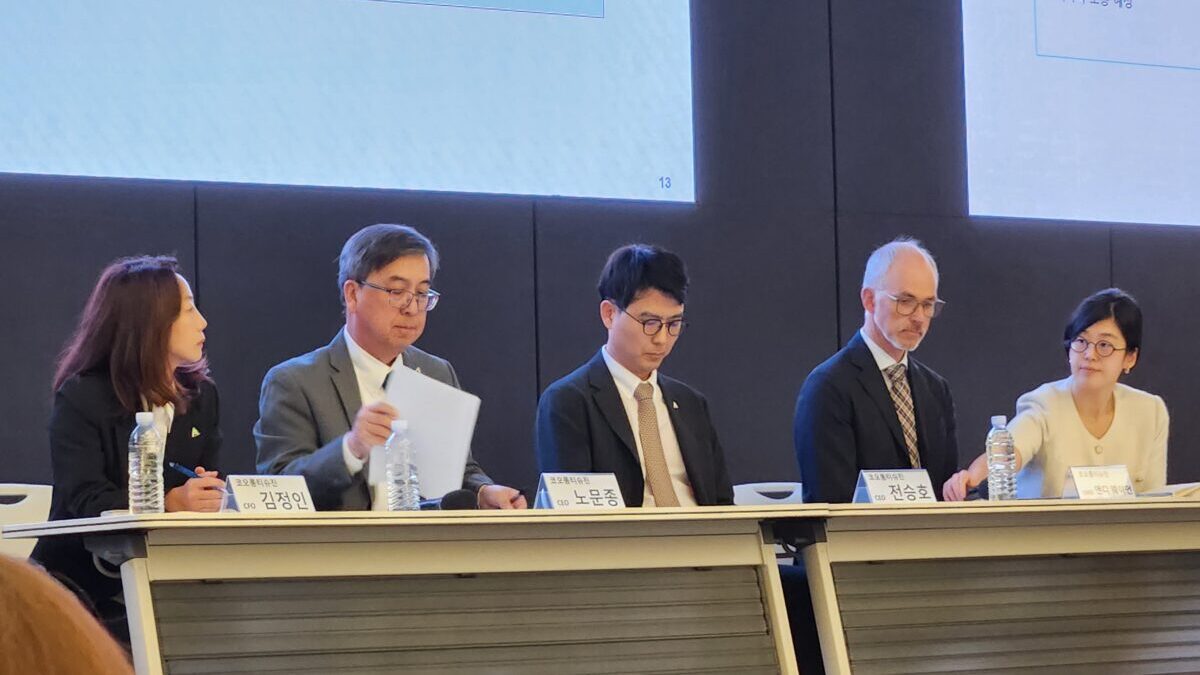
Speaking at a press briefing at the company’s headquarters on the 21st, Jeon Seung-ho, co-CEO of Kolon TissueGene, addressed the U.S. Phase 3 results. "I find it regrettable and sincerely apologize that our vision and goals turned out differently from what our shareholders expected," Jeon said. "However, this result is half a success; while it cannot be called a success, it is not a complete failure either."
Data Discrepancies and In-House Statistical Analysis
While the company insists the trial is not a complete failure, its management of the data release has drawn sharp skepticism. Kolon TissueGene has been running two independent U.S. Phase 3 trials (TG-C 15302 and TG-C 12031) for TG-C. In an official regulatory disclosure filed on the 20th, the company reported that the mean reduction from baseline in the Visual Analog Scale (VAS) pain score was 38.7 points for the TG-C treatment group and 39.2 points for the placebo group. Meanwhile, total Western Ontario and McMaster Universities Osteoarthritis Index (WOMAC) scores fell 27.61 points for TG-C and 26.54 points for placebo.
However, in a press release distributed to the media, the company provided incorrect metrics: stating VAS decreased 38.6 points in the treatment group and 39.1 points in placebo, while WOMAC decreased 26.34 points in treatment and 27.57 points in placebo.
A company official clarified, "The figures in the official regulatory disclosure are correct," explaining that "certain data values were revised during the final compilation process, leading to the differences between the disclosure and the press release."
Pre-Release Stock Volatility Raises Leak Suspicions
Apart from the clinical outcome, the stock’s erratic swings prior to the official announcement have fueled suspicions regarding potential leaks of sensitive clinical data. Kolon TissueGene performed the trial's statistical analysis using an internal team rather than outsourcing it to an external Contract Research Organization (CRO).
Prior to the disclosure, Kolon TissueGene shares traded between the high 80,000-won and low 90,000-won range before falling sharply on the 13th and 16th. Following the Phase 3 disclosure on the 20th, the stock plummeted 29.9% on the 21st to close at 42,900 won.
Addressing concerns of an internal leak, Kim Jung-in, Chief Financial Officer, stated, "Only a small number of personnel participated in the statistical analysis. Furthermore, we prohibited stock trading for all employees, so we do not believe the share price volatility was driven by an internal information leak."
When asked why the company chose not to engage an external CRO, Noh Moon-jong, co-CEO, noted, "Many companies rely on a CRO because maintaining an in-house statistical team is a financial burden, but we have established our own internal team. Choosing between internal analysis and external outsourcing is a strategic decision, and there was no specific motive behind it." The company added that it had an external party review select components of the analysis and plans a comprehensive re-examination as part of its investigation.
Investigating the Placebo Response Ahead of October Readout
At the core of the trial's failure to reach statistical significance is the unexpectedly strong placebo response, where placebo patients experienced a 39.2-point drop in pain score—slightly outperforming the 38.7-point reduction in the TG-C group. The company aims to complete an investigation into the root cause by the end of the year.
The probe will be led by Dr. Andy Weymann, an orthopedic surgeon and former Chief Medical Officer at global medical device firm Smith+Nephew. Regarding the pronounced placebo response, Dr. Weymann noted cautiously, "We are not yet at a stage to draw definitive conclusions. However, because baseline VAS pain scores for enrolled patients were relatively high—at 40 points or above—we can hypothesize that a higher baseline pain score may correlate with a stronger placebo effect." He added that other confounding factors, such as the concurrent use of analgesics, are being examined, though no single cause has been confirmed.
Industry attention now shifts to the results of the second Phase 3 trial (TG-C 12031) due in October. While sharing an identical study design, TG-C 12031 is an independent study conducted across different clinical sites, principal investigators, and patient cohorts.
"If the second trial demonstrates a clear statistical separation from placebo, there is room to initiate discussions with the FDA regarding potential approval pathways," co-CEO Jeon said. "There are regulatory precedents where applications were submitted after one of two pivotal trials achieved significance, though the FDA has not made any final determination." Nevertheless, the company acknowledged that commercialization timelines will inevitably be delayed due to the first trial's failure to demonstrate efficacy.
Kolon TissueGene pointed to total knee replacement rates as a potential secondary signal of disease modification, noting a 0.6% replacement rate in the TG-C arm compared to 5.3% in the placebo group. However, because total knee replacement was not a co-primary endpoint and sample sizes remain small, the company emphasized that long-term follow-up and further validation are required.