Pancreatic cancer remains one of the most formidable malignancies. Because early-stage disease rarely produces distinct symptoms, many cases have already metastasized to surrounding blood vessels or distant organs by the time of diagnosis.
For patients with distant metastasis—where cancer cells migrate from the pancreas to form secondary tumors—the five-year relative survival rate drops to a staggering 2.4%, compared to an overall five-year survival rate of 17% for all pancreatic cancer patients in South Korea.
Now, a newly approved therapy is raising hopes that patient outcomes could begin to improve.
Daraxonrasib (sold under the brand name Rasonque), a targeted anticancer agent developed by U.S. biotechnology company Revolution Medicines that received U.S. Food and Drug Administration (FDA) approval on Aug. 26, is the first therapy capable of directly inhibiting the RAS pathway—the primary growth driver in pancreatic cancer.
Targeting a Mutation Present in 90% of Pancreatic Cancers
RAS is a family of signaling proteins that regulate cell growth and division, normally toggling between active ("on") and inactive ("off") states. The KRAS protein acts as a key molecular switch in this pathway.
When a KRAS mutation occurs, the switch becomes permanently locked in the "on" position, continually instructing cells to proliferate uncontrollably. KRAS mutations are present in more than 90% of pancreatic cancer patients.
For decades, RAS proteins were considered "undruggable" because their smooth surface offered virtually no binding pocket for small-molecule drugs.
Daraxonrasib overcomes this hurdle through a novel mechanism: it first binds to an intracellular chaperone protein (cyclophilin A) to form a complex that attaches to active RAS proteins, effectively blocking cancer-promoting growth signals. Notably, the drug functions as a broad pan-RAS inhibitor, targeting multiple RAS variants rather than a single specific mutation.
In the pivotal Phase 3 RASolute 302 trial, daraxonrasib demonstrated significant clinical efficacy. Median overall survival in the treatment group reached 13.2 months—nearly double the 6.7 months observed in the control group treated with standard chemotherapy.
A Game-Changer or an Incremental Step?
For daraxonrasib to fundamentally transform pancreatic cancer care, several clinical hurdles remain. The FDA approved the drug specifically for adult patients with metastatic pancreatic cancer whose disease progressed after at least one line of systemic therapy or who are not candidates for multiagent chemotherapy. In short, it is not yet indicated as a first-line treatment immediately following diagnosis.
This limitation has tempered expectations regarding an immediate revolution in frontline clinical care.
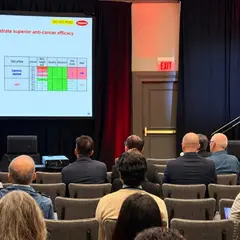
At the American Society of Clinical Oncology (ASCO) annual meeting in May, where Phase 3 data were first presented, Dr. Jennifer Knox, a professor of medicine at the University of Toronto, noted: "While daraxonrasib brings unprecedented hope, its current utility is constrained by its indication as a second-line therapy." She emphasized that a significant portion of pancreatic cancer patients succumb during first-line treatment before ever qualifying for second-line options, adding: "Only if it demonstrates efficacy in first-line or perioperative settings will it significantly alter overall survival at the population level."
Dr. Brian Wolpin of the Dana-Farber Cancer Institute, who led the clinical development program, also highlighted long-term challenges: "This drug is not a cure for metastatic pancreatic cancer. Over time, tumors may alter the RAS structure or activate bypass signaling pathways, leading to acquired resistance in most patients."
South Korean Experts Call It a Potential Paradigm Shift
Despite these caveats, South Korean oncologists have responded enthusiastically to the clinical milestone.
Prof. Lee Gyu-taek, a gastroenterologist at Samsung Medical Center and a leading authority on pancreatic and biliary tract diseases, said in an interview with Comedydotcom on the 28th: "Among pancreatic cancer drugs introduced to date, none has generated as much attention and consensus among clinicians as daraxonrasib. It possesses true potential to reshape the treatment paradigm."
Current standard treatments rely heavily on cytotoxic chemotherapy regimens, which require lengthy intravenous infusions lasting anywhere from an hour to several days. In contrast, daraxonrasib is an oral medication taken daily. "The ease of administration alone represents a major clinical advancement for patient quality of life," Prof. Lee Gyu-taek noted.
Two major global clinical trials involving daraxonrasib are currently underway: one evaluating its combination with chemotherapy as a first-line treatment, and another assessing its use as adjuvant therapy following surgical resection—currently the only potential path to a cure. Both trials include patient cohorts in South Korea. If daraxonrasib receives domestic approval and demonstrates positive results in these trials, it could be integrated directly into local clinical practice.
A Guarded Perspective: Efficacy, Resistance, and Financial Burden
Other experts urge a measured perspective regarding its immediate real-world deployment.
Prof. Jang Dae-young, a professor of hematology-oncology at Hallym University Sacred Heart Hospital and a prominent gastrointestinal cancer specialist, remarked: "The trial results represent encouraging news for an intractable disease like pancreatic cancer. However, achieving long-term survival will require further therapeutic refinements."
In an interview on the 28th, Prof. Jang Dae-young added: "It is highly meaningful that daraxonrasib successfully targeted a genetic mutation present in the vast majority of pancreatic cancers. However, its ultimate integration into frontline clinical practice will depend on the outcomes of ongoing trials." He cautioned that new targeted agents in gastrointestinal oncology rarely replace chemotherapy entirely, but rather serve to reduce toxicity or enhance regimen efficacy.
Financial accessibility also poses a substantial hurdle. With a reported U.S. wholesale price of $39,800 (approximately ₩55 million) for a 30-day supply, annual treatment costs could exceed ₩600 million. "From a healthcare resource allocation standpoint, managing the financial burden of this therapy will be a critical consideration," Prof. Jang Dae-young emphasized.