A man in his mid-50s, identified as Mr. A, underwent rotator cuff repair surgery to alleviate debilitating shoulder pain, only to return to the hospital five months later. An MRI revealed a discouraging result: a retear. His bewildered question—“I had the surgery, so why did it tear again?”—echoes a deeply frustrating experience shared by many patients undergoing shoulder procedures.
The rotator cuff is a crucial group of tendons that envelops the shoulder joint, enabling the arm to lift and rotate. When these tendons tear due to aging or physical trauma, patients struggle with basic movements and often suffer from worsening pain at night. If the tear is severe or symptoms persist despite conservative treatment, orthopedic surgeons typically perform surgery to reattach the torn tendon to the upper arm bone using specialized sutures and anchors. However, preventing a recurrence remains a stubborn hurdle in sports medicine. Data published in 2023 indicates that the vast majority of rotator cuff retears cluster within the first six months following surgery.
Beyond Good Stitching: The Crucial Role of Tendon Health
Even when a surgeon perfectly sutures a shoulder tendon back into its proper anatomical position, the structural integrity of the tissue is not restored overnight. A retear can happen if premature load is applied before the tendon biologically fuses to the bone, if the underlying tissue is too weak to hold the stitches, or if the overall healing response is inadequate. The risk escalates if the initial tear was large or chronic, as the tendon tends to retract inward, triggering muscle atrophy and fatty degeneration. Other critical variables include advanced age, diabetes, smoking, bone density, and non-compliance with post-operative movement restrictions.
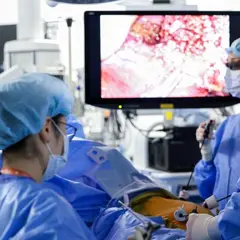
While pre-operative MRIs help assess the size of the tear, tendon retraction, and muscle loss, surgeons often gain the clearest understanding of tissue quality during the operation itself. Consequently, surgical strategies are tailored to the precise condition of the tissue. When the tendon is healthy enough to be reattached, a standard repair is performed. However, if the tissue is significantly compromised, surgeons can integrate advanced bioinductive scaffolds like BioBrace to reinforce the site. In extreme cases where the native tendon has degraded beyond repair, joint reconstruction or alternative procedures must be considered.
[Table] Comparing Surgical Approaches for Rotator Cuff Tears
Surgical Approach | Primary Indications | Key Features |
Standard Rotator Cuff Repair | Small-to-medium tears with robust native tendon tissue quality. | Reattaches the torn tendon to the bone via sutures and anchors; the standard foundational approach. |
BioBrace-Reinforced Repair | Extensive tears, severely compromised tendons, or patients presenting a high-risk profile for recurrence. | Reinforces the repair site using a bioinductive collagen scaffold to stimulate native tissue regeneration. |
Dermal or Synthetic Patch Reinforcement | Cases requiring supplemental structural support to optimize suture retention and tissue strength. | Overlays a biological (dermal/xenograft) or synthetic matrix patch directly atop the repaired tendon. |
Superior Capsular Reconstruction (SCR) | Massive, irreversible tears where severe tendon retraction prevents direct reattachment to the bone. | Restores superior joint stability and anatomy by utilizing a tissue graft to reconstruct the superior capsule. |
Tendon Transfer | Irreparable tears or advanced conditions involving a complete loss of specific muscle function. | Reroutes an adjacent, functional tendon to restore mobility and substitute for the damaged rotator cuff. |
Reverse Total Shoulder Arthroplasty (RTSA) | Complex, late-stage cases involving advanced age, irreparable tearing, and severe glenohumeral arthritis. | Replaces the entire joint with a prosthesis that reverses the natural ball-and-socket anatomy, shifting mechanical reliance to the deltoid muscle. |
Cleared by the U.S. Food and Drug Administration (FDA) via the 510(k) pathway in 2021, BioBrace is an absorbable biocomposite scaffold designed to reinforce weak tendons and ligaments. It features a unique architecture that combines a type I collagen structure derived from bovine tendons with bioabsorbable PLLA microfibers. Acting as a temporary framework, the scaffold allows the patient's own new tissue to naturally grow into it before the material safely absorbs into the body over time.
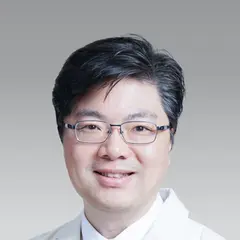
The Joint Center at Haeundae Bumin Hospital recently implemented this bioinductive technology during a rotator cuff repair led by Seo Chang-hyo, the center’s director of orthopedic clinical services. “We actively consider scaffold reinforcement when the tear is large—measuring 2 centimeters or more—when the remaining tendon is thin, or when severe tendinopathy has compromised the overall quality of the tissue,” Seo Chang-hyo explained.

However, utilizing a bioinductive implant does not fast-track a patient's recovery timeline or completely eliminate the risk of failure. The biological healing between tendon and bone still demands time. “For roughly three months post-surgery, patients must commit to intensive rehabilitation focused primarily on restoring the joint's passive range of motion,” noted Seo Chang-hyo. “Lifting heavy objects or rushing back into strenuous activity prematurely significantly spikes the risk of a retear.” Much like a cast stabilizing a fractured bone, BioBrace helps distribute the physical load concentrated on the vulnerable tendon during the critical early healing phase while providing a scaffolding for new tissue regeneration.
Ultimately, successful shoulder restoration requires a comprehensive approach. “We must look beyond just the size of the tear,” Seo Chang-hyo emphasized. “Evaluating the quality of the remaining tendon, the condition of the muscle, and the patient's age and baseline activity level is vital to choosing the optimal path—whether that means a standard repair, a reinforced treatment, or a full reconstruction.”
Frequently Asked Questions
What are the odds of a retear after rotator cuff repair?
The risk varies widely depending on the size of the initial tear, the patient's age, and the baseline condition of the tendon. Larger tears carry a statistically higher risk of recurrence. Furthermore, how strictly a patient follows their post-operative rehabilitation protocol is a critical variable in long-term success.
Can a rotator cuff tear heal without surgery?
Partial tears or cases with mild symptoms can often be managed conservatively through localized injections, physical therapy, and targeted exercise regimens. However, a full-thickness tear—where the tendon is completely severed—rarely heals naturally. If left untreated, the tear can widen over time. Doctors determine the necessity of surgery by evaluating the extent of the tear, symptom severity, and the patient's daily and occupational activity demands.
Which patients are suitable for BioBrace reinforcement surgery?
This reinforcement is considered when a standard rotator cuff repair is anatomically possible, but the underlying tendon tissue is weak, or the tear is extensive enough to present a high risk of a retear. If the tear is small and the native tissue condition is excellent, standard repair alone is usually sufficient for a full recovery.
How long does shoulder rehabilitation take after surgery?
Following surgery, the shoulder is immobilized and protected with a brace. Depending on the tear size and the stability of the repair, patients progress step-by-step through passive motion, active motion, and resistance exercises. Even with an implant supporting the repair site, patients cannot overuse the arm early on. A full return to normal function typically takes between six months to one year.
Is BioBrace covered by national health insurance?
While standard rotator cuff repair surgery is covered under South Korea's national health insurance, BioBrace is classified as an additional, non-covered material. Consequently, the cost of the scaffold implant must be paid out of pocket by the patient.
Expert source: Seo Chang-hyo, director of clinical services (orthopedics) at the Joint Center, Haeundae Bumin Hospital. He graduated from the Pusan National University College of Medicine, completed his training at Pusan National University Hospital, and has served as a full-time orthopedic faculty member. He currently oversees comprehensive orthopedic care at Haeundae Bumin Hospital, specializing in shoulder, elbow, hand, and wrist conditions, as well as traumatic fractures and sports rehabilitation..