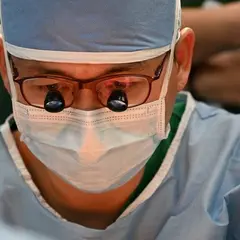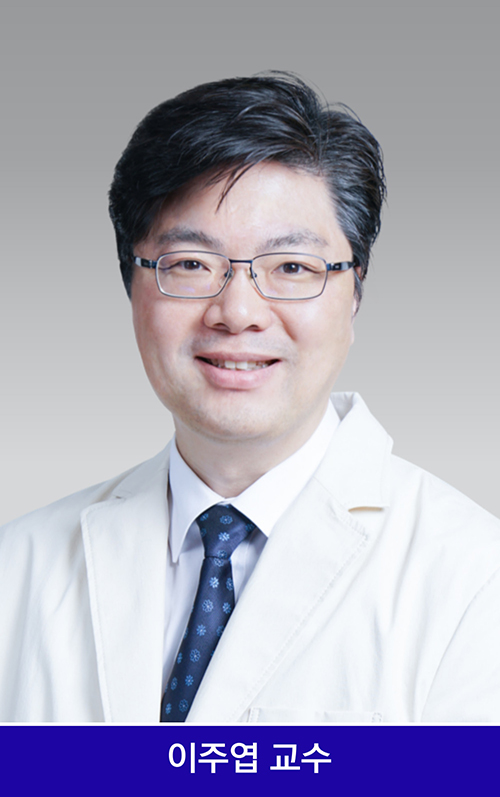
Eunpyeong St. Mary’s Hospital of The Catholic University of Korea announced on Sept. 26 that Professor Lee Joo-yup of its Department of Orthopedic Surgery received the "Most Outstanding Video" award at the American Society for Surgery of the Hand (ASSH) annual meeting, held Sept. 17–19 in Boston.
Lee’s video demonstrating "arthroscopic dorsal scaphotriquetral ligamentoplasty"—a novel surgical technique for complex wrist ligament injuries—earned the most votes to claim first place. The video was based on research conducted alongside Professor Im Jin-hyung of Yeouido St. Mary’s Hospital and Professor Park Il-jung of Bucheon St. Mary’s Hospital, with Lee serving as corresponding author. The findings were published in the international journal Clinics in Orthopedic Surgery.
The scapholunate ligament is the most frequently injured ligament connecting the small bones of the wrist. When damaged, wrist alignment shifts, leading to chronic pain, impaired mobility, and eventually degenerative arthritis. Diagnosis remains challenging because discomfort often flares up only during specific movements or under load. Conventional arthroscopic fusion procedures often carry limitations in preserving post-operative wrist joint mobility.
The newly developed procedure utilizes high-strength suture tape to replicate the ligament's natural stabilizing function. Following the anatomical pathway of the dorsal scaphotriquetral ligament, the suture tape connects the scaphoid to the triquetrum bone. Performed entirely under arthroscopic guidance, the technique requires smaller incisions and minimizes soft tissue damage.
The surgical suture is secured into bone tunnels using knotless anchors, reducing foreign-body sensation and surrounding tissue irritation while preserving wrist rotation. The technique is versatile, offering effective repair for isolated scapholunate ligament tears, lunotriquetral ligament tears, and complex combined injuries.
Between April 2020 and December 2022, the research team performed the procedure on 35 patients—13 with scapholunate ligament injuries, 10 with lunotriquetral ligament injuries, and 12 with combined injuries—and evaluated their recovery over 12 months.
Among patients with scapholunate ligament injuries, average visual analog pain scores dropped from 7.9 before surgery to 1.4 at follow-up. Grip strength increased from 27.4 kg to 37.3 kg, while overall Mayo wrist function scores jumped from 46.5 to 89. For patients with lunotriquetral ligament injuries, pain scores fell from 6.9 to 1.8, grip strength improved from 29.8 kg to 35.7 kg, and Mayo wrist scores rose from 49.5 to 85. No symptomatic wrist catching or major surgical complications occurred during the 12-month monitoring period.
"Developing a new arthroscopic surgical technique for difficult-to-treat scapholunate ligament injuries and receiving international recognition for it is deeply gratifying," said Lee. "I will continue my research efforts to advance hand surgery and restore quality of life for our patients."
Lee completed clinical fellowship training in hand and microsurgery at the Mayo Clinic in the United States and has been recognized as an outstanding researcher by both the ASSH and the Asia Pacific Wrist Association (APWA). Eunpyeong St. Mary’s Hospital also operates a specialized Triangular Fibrocartilage Injury Clinic—the first dedicated wrist pain clinic established at a university hospital in South Korea.