You try to put on socks, but your leg will not lift easily. When you get in and out of a car, you feel a sharp twinge in your groin. If you walk for a long time, your buttocks and the front of your thigh hurt, and at some point your gait has even changed.
In situations like this, most people suspect a back problem. Many patients self-diagnose a herniated disk or spinal stenosis and go to the hospital.
But the real cause may be elsewhere. Sometimes the pain starts not in the back, but in the hip joint.
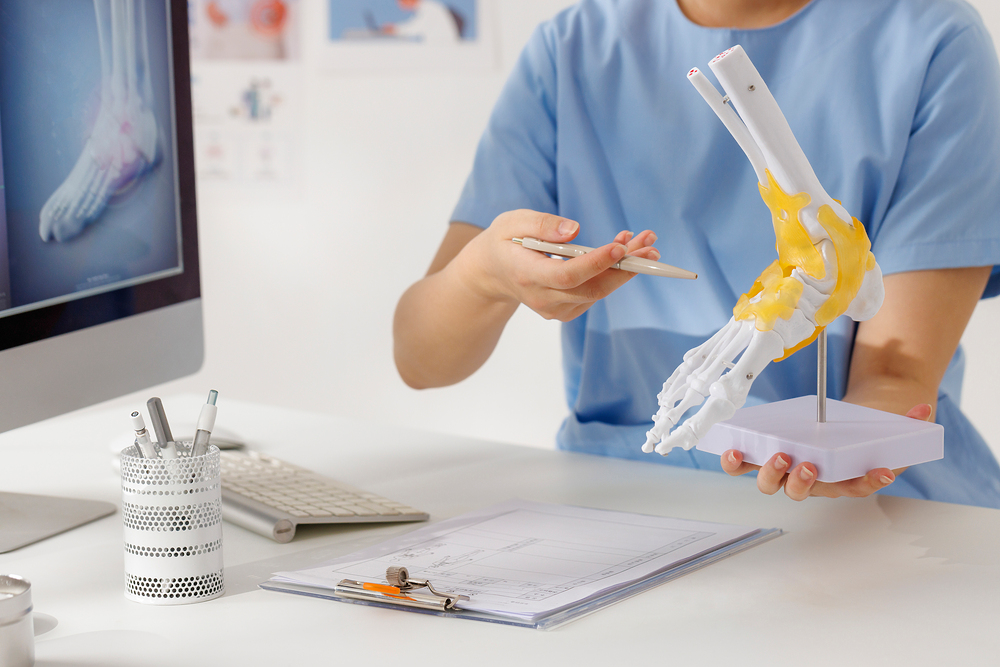
The hip is a deep joint that connects the pelvis and the thighbone. It is involved in virtually every dynamic movement of daily life: walking, sitting, standing, and going up and down stairs.
The problem is that when the hip joint is injured or diseased, the pain does not remain limited to the buttocks. It can radiate to the groin, the front of the thigh and even around the knee, sending warning signals.
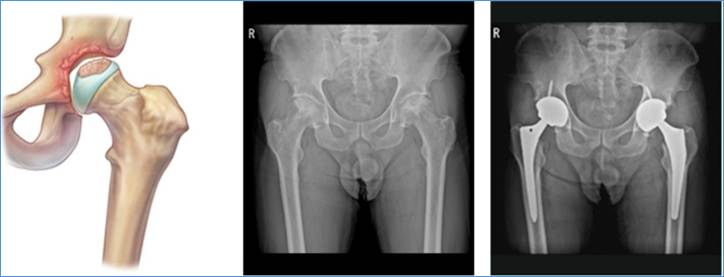
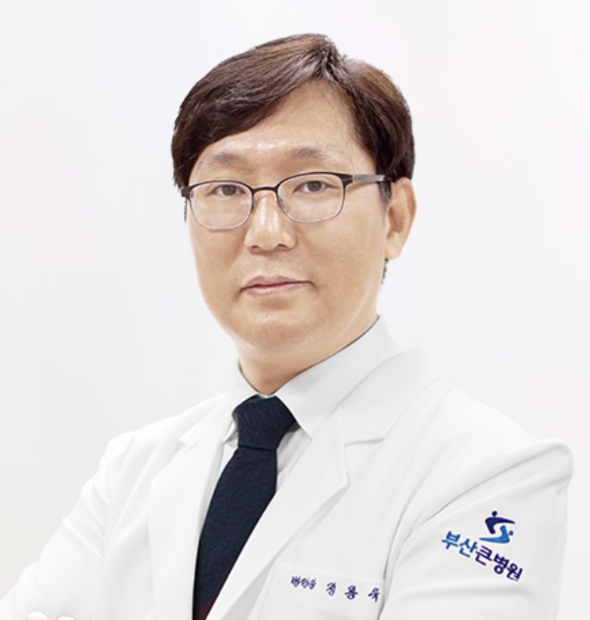
Jung Yong-wook, director of Busan Big Hospital and an orthopedic surgeon, said “Hip pain is easy to mistake for a herniated disk or knee osteoarthritis.” That is why patients who do not improve despite treatment need a detailed evaluation. Clinicians should carefully review everything from the pain location and gait changes to joint range of motion and imaging results.
In one case, a 68-year-old man, identified as Patient A, was diagnosed a year ago with spinal canal stenosis and underwent two procedures. He was also hospitalized for two months at a traditional Korean medicine hospital. Even so, the pain and difficulty walking persisted.
Jung said that when he closely reviewed the lower portion of the lumbar MRI images Patient A had brought from another hospital, necrosis had already progressed in the hip area. Jung called it “a case where focusing only on spinal canal stenosis delayed confirmation that the hip was the cause.”
A sharp twinge in the groin? An SOS from the hip
The first clue to identifying hip disease is groin pain. Because the hip is buried deep in the buttocks, disease there often sends pain not to the outer buttock but forward into the groin or down the front of the thigh.
Pain becomes especially severe when you spread your legs to the side or rotate them inward or outward. Specifically, if ▲you suddenly cannot sit cross-legged well anymore, ▲your pelvis feels stiff or achy when you put on socks or trim your toenails, or ▲you feel a sharp twinge in the groin when getting in and out of a car, you should strongly suspect a hip disorder.
By contrast, with a herniated disk or spinal stenosis, the main symptom is radiating pain that, along with back pain, shoots down with tingling or numbness from the buttocks to the back of the thigh, the calf and the sole of the foot. That is why it is important to seek experienced clinicians early who can pair spinal and joint mobility exams with X-rays and MRI from multiple angles, rather than relying on a quick self-diagnosis.
At a hospital with expertise in hip disorders, clinicians assess the overall picture from the start, combining the pain distribution, joint mobility testing and imaging such as X-ray and MRI. If the cartilage space in the hip has narrowed or the shape of the joint surface looks different, they also check for arthritis.
Jung said “there are several ways to distinguish hip disease from back pain,” adding, “For example, if you sit cross-legged or place one ankle on the opposite thigh and then press the knee of the painful leg downward, and the groin pain is severe and the knee does not go down well, you can suspect a hip problem.”
Of course, it goes without saying that the findings must be considered together with a specialist’s exam and imaging results.
Groin pain in men in their 30s to 50s may be due to osteonecrosis of the femoral head
When people think of hip pain, they often picture hip osteoarthritis, caused by worn cartilage. A hallmark is that it hurts when you move and feels better at rest. But when you look at cases of artificial hip replacement surgery in Korea, the main culprit is different: avascular necrosis of the femoral head (osteonecrosis of the femoral head).
It is a condition in which blood does not reach the head of the thighbone (the femoral head), causing the bone to die and collapse. It is not uncommon even among relatively younger people in their 30s to 50s. Of about 14,000 patients a year, roughly 1,800 are newly identified each year. Male patients are three times as common as female patients.
Jung noted that “both hip osteoarthritis and osteonecrosis of the femoral head are difficult for patients to recognize early on,” adding that “by the time they feel pain, joint damage has often already progressed quite a bit.”
One fall can change everything: femur fractures that shake older adults
In older age, femoral neck fractures or intertrochanteric fractures caused by falls can be fatal. Bones do not gradually weaken and then break. In older adults with osteoporosis, it can happen in an instant when they slip or fall.
More than 63% of hip fracture patients are age 75 or older. This is an emergency situation that requires immediate treatment.
If treatment is delayed, it can lead to life-threatening complications such as pneumonia, pressure ulcers, delirium and sarcopenia. That is why hip fractures are considered a major event that threatens health in old age. In one long-term follow-up study conducted in Korea, older adults who suffered a hip fracture had a 1-year cumulative mortality rate of 17%.
Pain that returns after surgery … 'Complex and revision surgery' experience matters
The most challenging patients to treat are those whose pain returns after hip surgery. That is because multiple issues may be intertwined, including loosening of the artificial joint fixation (loosening), wear, dislocation, infection or a new fracture nearby. Sometimes tendons or muscles are the cause, and revision surgery may be needed.
That means you should not choose a hospital based solely on whether it does surgery. It needs the ability to accurately differentiate causes, an advanced imaging system, a rehabilitation linkage system before and after surgery, and an internal medicine co-management system capable of caring for older patients’ overall medical condition.
For high-difficulty conditions such as osteonecrosis of the femoral head, femur fractures and recurrent pain after surgery, early diagnosis determines whether treatment succeeds. That is why patients should seek clinicians with extensive experience from the outset in hip revision surgery and complex or deformity joint surgery.
[FAQ] Questions patients ask most often
Q1. My groin hurts, but the X-ray was normal. Does that mean I am OK?
A1. You cannot be reassured yet. In the early stages of avascular necrosis of the femoral head, it may not show clearly on X-ray. If pain persists, you should undergo detailed testing such as an MRI.
Q2. An older family member cannot walk at all after a fall because of hip pain.
A2. The likelihood of a hip fracture is very high. Even a minor fall onto the buttocks can fracture the femoral neck in older adults, so you should go to an emergency room or see an orthopedic surgeon immediately.
Q3. Can a herniated disk and a hip disorder happen at the same time?
A3. Yes. Because the pain areas overlap, clinicians need to evaluate spinal nerve symptoms, hip movement and gait patterns from multiple angles to differentiate the two conditions and treat them simultaneously.
Q4. I had artificial hip surgery, but I have developed new pain.
A4. Causes vary, including loosening of the implant, wear, dislocation, a nearby fracture or infection. If the surgical area is swollen and warm, or if it is hard to bear weight, you should return to the hospital where you had the surgery right away.
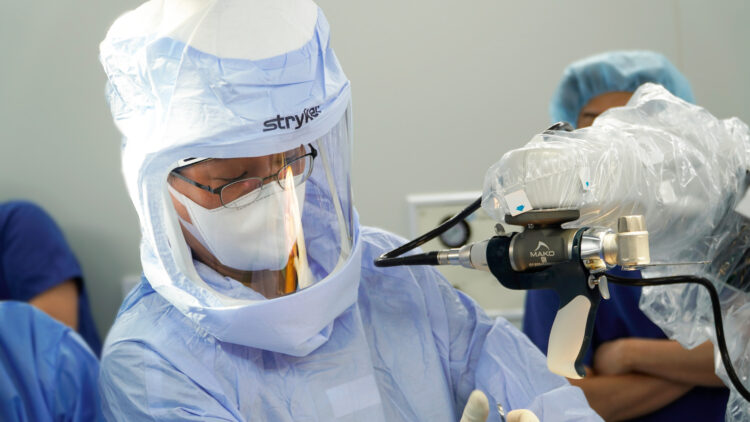
Q5. For which hip patients is robotic surgery necessary?
A5. It depends on the patient’s condition. Outcomes are better when it is applied selectively, such as for patients with severe joint deformity who need precise angle control, or patients whose leg-length discrepancy on both sides must be adjusted with high precision.
Expert source=Jung Yong-wook, director of Busan Big Hospital (orthopedic surgery). He graduated from Kyungpook National University School of Medicine and its graduate school. He primarily performs arthroscopic joint procedures and artificial joint surgery. He also specializes in differentiating causes of hip pain, post-surgical pain, revision surgery and complex joint surgery. Since 2021, he has also performed robotic-assisted joint replacement surgery, building clinical experience.