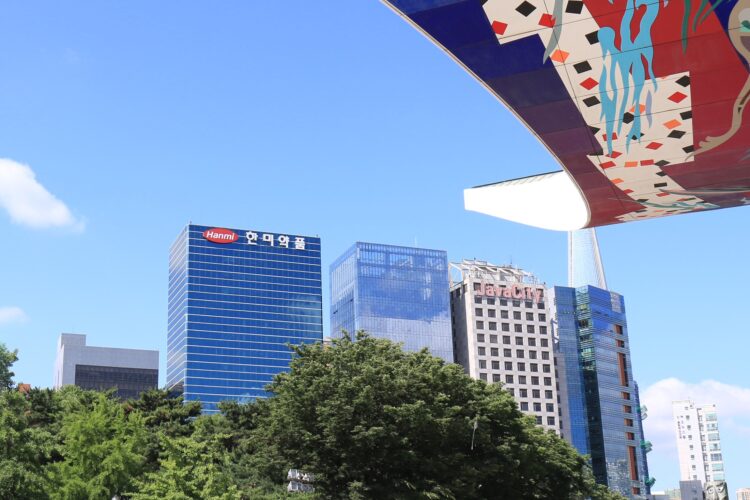
Hanmi Pharmaceutical has licensed its novel drug candidate sonefpeglutide to global pharmaceutical giant Eli Lilly and Company in a deal valued at up to 2 trillion won ($1.26 billion). Sonefpeglutide utilizes Hanmi’s proprietary platform technology, LAPSCOVERY, which was previously licensed to Sanofi and Janssen before being returned. Industry observers note that a top-tier global pharmaceutical company has once again validated the platform technology behind assets whose rights were previously returned.
Hanmi Pharmaceutical announced on June 1 that it has entered into an exclusive licensing agreement with Eli Lilly covering the development, manufacturing, and commercialization of sonefpeglutide, a glucagon-like peptide-2 (GLP-2) analog.
The total contract value is $1.26 billion (approximately 1.8973 trillion won). Hanmi Pharmaceutical will receive an upfront payment of $75 million (approximately 112.9 billion won). Upon meeting specified development, regulatory, and commercialization milestones, Hanmi is eligible to receive up to $1.185 billion (approximately 1.7844 trillion won) in milestone payments, alongside tiered royalties based on product sales following its commercial launch.
Sonefpeglutide is designed as a treatment for short bowel syndrome (SBS), an ultra-rare, debilitating gastrointestinal condition in which more than 60% of the small intestine is lost or dysfunctional, severely impairing the body's ability to absorb nutrients and fluids. The disease affects fewer than one in a million people. In adults, it typically arises when a large portion of the small intestine is surgically removed due to conditions such as Crohn's disease, intestinal necrosis, or severe intestinal obstruction.
Because they cannot absorb adequate nutrition from food alone, patients with short bowel syndrome frequently rely on total parenteral nutrition (PN), a method where essential nutrients are delivered directly into the bloodstream through a central vein. GLP-2 therapies aim to stimulate intestinal mucosal growth, enhancing the remnant bowel's absorptive capacity and reducing a patient's lifelong dependence on intravenous nutrition.
The short bowel syndrome treatment market is currently led by teduglutide, developed by Japan's Takeda Pharmaceutical. However, teduglutide requires a demanding daily injection regimen, posing a significant inconvenience to patients. In contrast, sonefpeglutide leverages Hanmi's LAPSCOVERY platform with the therapeutic goal of a once-monthly dosing interval. LAPSCOVERY is Hanmi's proprietary technology designed to extend the in-body half-life of biologic therapeutics to prolong their efficacy, which is expected to substantially improve patient adherence and convenience.
In 2015, Hanmi Pharmaceutical transferred the global rights for efpeglenatide, a GLP-1 receptor agonist utilizing LAPSCOVERY technology, to Sanofi in a multi-billion-dollar deal, though the development rights were subsequently returned in 2020.
Another LAPSCOVERY-applied candidate, efinopegdutide, was originally out-licensed to Janssen in 2015 as a treatment for obesity and diabetes before being returned in 2019. Rather than halting development, Hanmi pivoted efinopegdutide's indication to metabolic dysfunction-associated steatohepatitis (MASH) and successfully re-licensed the asset to U.S. drugmaker Merck (known as MSD outside the United States and Canada) in 2020.
With the successful technology transfer of sonefpeglutide, Hanmi Pharmaceutical’s LAPSCOVERY platform is drawing renewed industry attention. The company stated that it is currently advancing global clinical trials for five separate drug candidates powered by the platform technology.
Hanmi Pharmaceutical plans to continue managing and funding the ongoing global Phase 2 clinical trial for short bowel syndrome through its completion, while Eli Lilly plans to design and pursue additional clinical trials for sonefpeglutide moving forward.
Under the agreement, Eli Lilly secures exclusive rights to develop, manufacture, and commercialize sonefpeglutide globally, excluding South Korea. Eli Lilly, which currently leads the incretin market with blockbusters like the obesity drug Zepbound and the diabetes treatment Mounjaro, expands its therapeutic footprint into rare gastrointestinal disorders with this acquisition.