
TV personality Park Ji-yoon has drawn widespread attention after revealing a newly defined waistline and a toned physique achieved through a balanced, health-focused diet.
Park recently posted a relaxed update on social media, wearing a fitted top and jeans that highlighted a slim, fat-free midsection. Resisting extreme starvation diets, she managed her weight gradually through consistent exercise and nutritional discipline. Having previously shared proof of reaching 55.7 kg—down from roughly 63 kg—Park achieved an overall weight loss of 7 to 8 kg. Standing 164 cm tall, her current Body Mass Index (BMI) is approximately 20.7 kg/m², which falls comfortably within the 18.5 to 23 kg/m² normal range recommended by the Korean Society for the Study of Obesity (KSSO).
Central to Park's sustainable routine is a commitment to eating a nutrient-dense breakfast rather than skipping morning meals.
Whole Grains, Protein, and Fats Drive Satiety
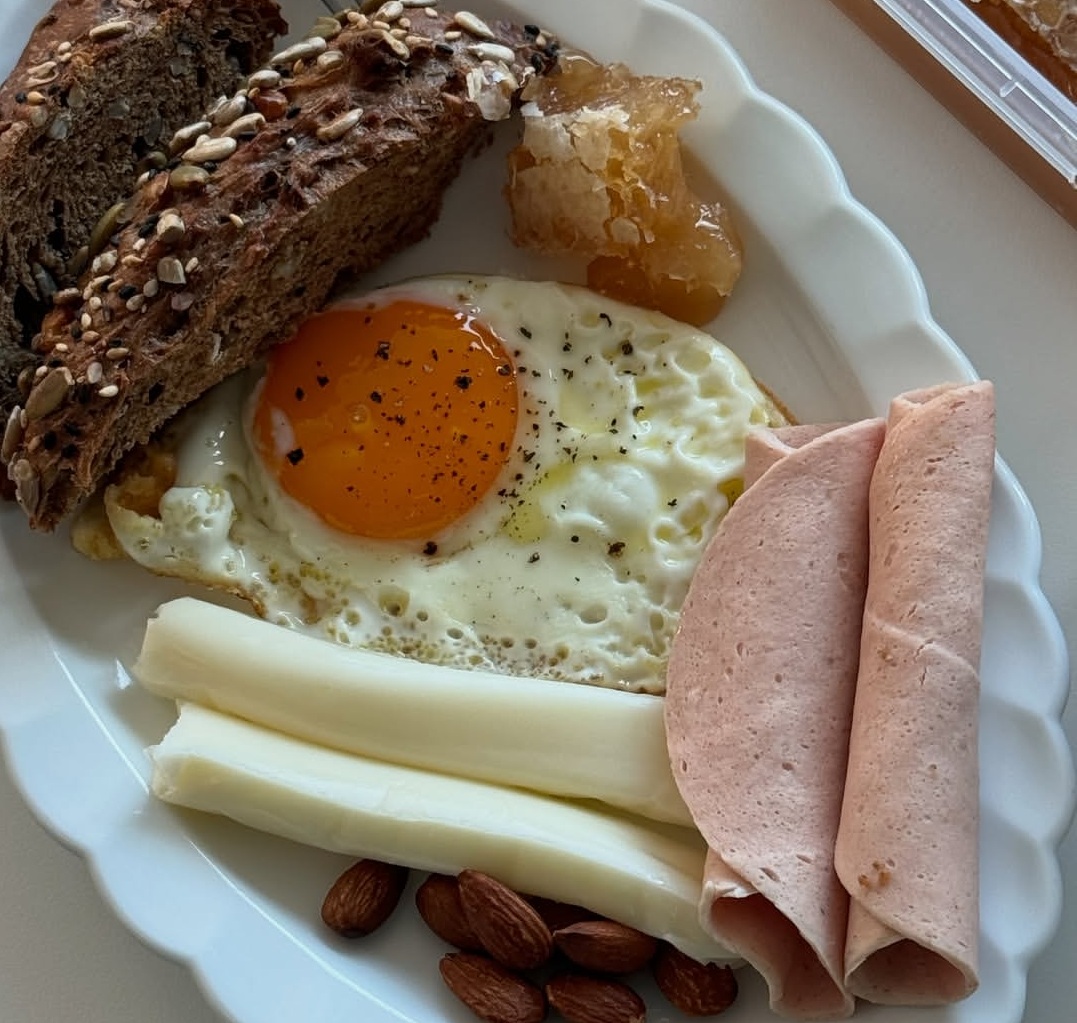
Park’s morning plate typically features whole-grain, seed-topped bread paired with eggs, ham, cheese, and almonds. Instead of eliminating carbohydrates—a common pitfall in rapid weight-loss plans—she pairs complex carbohydrates with healthy fats and protein to prolong fullness and prevent mid-morning blood sugar spikes. Whole-grain bread delivers complex dietary fiber that takes longer to digest than refined white bread.
This mechanism is supported by clinical research. A 2014 study conducted by researchers at the Swedish University of Agricultural Sciences and published in Nutrition Journal compared the effects of whole-grain rye bread against refined wheat bread. Participants consuming whole-grain rye bread reported significantly reduced hunger and decreased desire to eat, which directly led to lower caloric intake during subsequent meals. Researchers attributed these findings to the high dietary fiber content, which promotes gastric distension and satiety signaling.
Protein Preservation and Portion-Controlled Fats
The addition of eggs, cheese, and ham supplies essential dietary protein, while almonds contribute unsaturated fatty acids, fiber, and micronutrients. Consuming a balanced macronutrient mix raises overall meal density and helps preserve lean muscle mass during a caloric deficit.
Almonds in particular offer measurable weight-management benefits when consumed in moderation. A 2024 meta-analysis co-authored by researchers at Yasuj University of Medical Sciences and published in Obesity Reviews found that dietary almond supplementation was associated with mean reductions of 0.45 kg in total body weight, 0.66 cm in waist circumference, and 0.66 kg in total fat mass. However, because nuts are energy-dense, maintaining strict portion control—as demonstrated in Park's modest serving size—remains critical.
Balancing Calories, Free Sugars, and Sodium
While Park’s breakfast is nutritionally well-rounded, dietary experts emphasize the importance of portion mindfulness. Nutrient-rich foods like seed bread, cheese, nuts, and honeycomb honey carry high energy density. Honey, though natural, consists primarily of simple sugars. The World Health Organization (WHO) classifies the sugars in honey as "free sugars" and recommends limiting their intake to under 10% of total daily energy consumption.
Additionally, processed meats and cheeses can contain elevated sodium levels. Health authorities recommend enjoying ham and cheese in moderation while incorporating fresh vegetables or low-glycemic fruits to boost intake of potassium, vitamins, and raw fiber.
Ultimately, Park’s success highlights the effectiveness of dietary harmony: rather than restricting entire food groups, long-term physical conditioning relies on controlling energy density while keeping core macronutrients balanced.