A Reuters report said the U.K. media outlet The Guardian reported on the 19th (20th in Korea time) that the World Health Organization (WHO) is considering the use of experimental vaccines amid a sharp rise in suspected Ebola infection cases and deaths in the Democratic Republic of the Congo (DRC). An experimental vaccine refers to one whose clinical trials and approval process have not yet been completed. If WHO is considering deploying a trial vaccine whose effectiveness and safety have not been fully established, it suggests the situation is serious. Against this backdrop, this examines the 2026 Ebola outbreak in the DRC and what related experimental vaccines are.
WHO moves to issue a crisis alert early Sunday morning—concerns accelerate as cases and deaths mount
On the morning of Sunday the 17th (local time), WHO declared the Ebola outbreak in the DRC a Public Health Emergency of International Concern (PHEIC). The basis at the time was 246 suspected cases reported over the previous five months and 80 deaths. But by the 20th, Reuters reported that suspected cases had risen to more than 500 and deaths to 131. It shows that the pace of new outbreaks and deaths has accelerated.
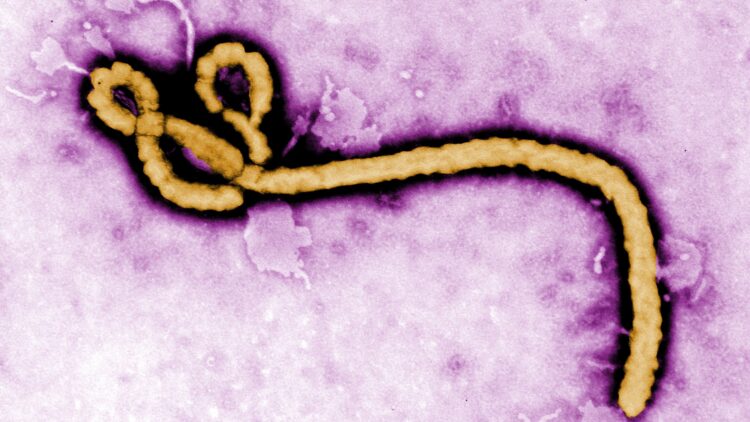
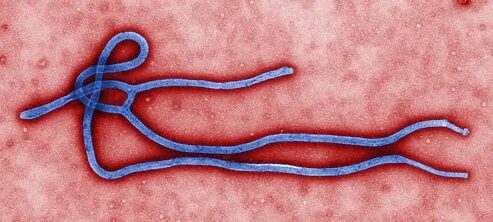
Also called Ebola hemorrhagic fever, Ebola is a zoonotic disease caused by the Ebola virus that occurs in humans and animals. It spreads when an infected person or animal is exposed to the virus through contact with bodily fluids or contaminated materials. After an incubation period of 2 to 3 weeks following exposure, bleeding symptoms appear along with fever, sore throat, muscle aches, headaches, and diarrhea. Depending on the type, timing, and circumstances, the case fatality rate can range from 25% to 90%, reaching an average of 50%, making it highly lethal.
Seventeenth outbreak since the first report in 1976—case fatality rate peaks at 90%
According to WHO and the U.S. Centers for Disease Control and Prevention (CDC), Ebola has been spreading in various outbreaks, both large and small, in West Africa and Central Africa—17 times in total since it was first reported in the DRC in 1976. During the first outbreak, 318 people were infected and 279 died, for a case fatality rate of 88%. That sparked considerable fear around the world. In 1995, 315 people were infected and the case fatality rate was 81%. In 2000, in Uganda in Central Africa, 425 infected people were reported.
During the West Africa-wide outbreak in Guinea, Liberia and Sierra Leone from 2014 to 2016—the largest on record—28,610 people were infected and 11,308 died, for a case fatality rate of about 40%. But even in 2018 to 2020, 3,524 people were infected and 2,325 died, for a high case fatality rate of 66%.
Of the four Ebola species, the Zaire species has vaccines and treatments
As international consensus formed that vaccines were needed in the wake of the 2014 to 2016 outbreak, vaccines and treatments were developed. U.S. drugmaker Merck (operating as MSD outside the U.S. and Canada) developed a vaccine called VSV-EBOV and received authorization from the U.S. Food and Drug Administration (FDA) and the European Medicines Agency (EMA) in 2019. It was then supplied under the brand name Ervebo. By genetically modifying vesicular stomatitis virus, it produces the surface glycoprotein of the Zaire Ebola virus. Based on that glycoprotein, the human body mounts an immune response and produces antibodies to fight the Ebola virus.
In 2020, Belgian drugmaker Janssen (a subsidiary of Johnson & Johnson in the U.S.) developed and received approval for an Ebola preventive vaccine regimen that alternates between two types of vaccines—Zabdeno and Mvabea—administered 8 weeks apart. As a result, two Ebola vaccines are currently available worldwide.
Treatments for Ebola have also been developed. Inmazeb (INMAZEB) is a therapy approved in 2020 and released by Regeneron, a biopharmaceutical company based in New York state in the U.S. It combines three human monoclonal antibodies (atoltivimab, maftivimab and odesivimab) that target the glycoprotein of the Zaire Ebola virus. Monoclonal antibodies are antibodies manufactured artificially to precisely attack only a specific part of a cell or the causative substance of a particular disease, to treat the illness.
The Ebola species spreading now has no vaccines or targeted treatments—biotech companies race to compete
The problem is that there are six Ebola virus species, and four of them cause disease in humans. So far, the vaccines and targeted therapies developed have shown effectiveness for only one species: the Zaire Ebola virus. Because the Zaire Ebola virus is common and deadly—capable of triggering large-scale outbreaks in West Africa during 2014 to 2016—this level of progress could be seen as achievable since pharmaceutical companies and international organizations have been working on vaccine development.
For Ebola caused by the currently spreading Bundibugyo Ebola virus (BDBV), there are still no vaccines or treatments that can prevent the disease or reduce the case fatality rate when it occurs. The situation is the same for other Ebola viruses that cause disease in humans, including the Sudan virus that caused outbreaks multiple times in Sudan and Uganda, and the rarely found Tai Forest virus. Species that have not had documented human infection cases, such as the Reston virus that causes disease in monkeys and pigs and the Bombali virus found in bats in Sierra Leone, inevitably fall behind in research priorities. However, some vaccines against the currently circulating BDBV are being developed to at least some degree. That is why WHO is considering giving an experimental vaccine. It means that basic efficacy and safety have been verified to some extent.
From a U.S. focus to India and China as well—an array of different biotech technologies
In developing vaccines and treatments against the BDBV species, biotech technologies accumulated or developed so far in the fight against Ebola itself and also against other diseases such as COVID-19 are being brought together to an almost exhaustive degree. Among the candidate products in development, there are three notable ones in total: one vaccine and two treatments.
The VesiculoVax vaccine, produced by Auro Vaccines in New York state, is a vaccine candidate that showed good results in animal studies. The vaccine applies vector technology. It aims to induce immune responses by delivering the antigen protein of BDBV—by using vesicular stomatitis virus (VSV) with greatly reduced virulence as a carrier (vector)—into the body. When the vaccine is administered and the antigen protein is injected into the body, the human body recognizes it as infection with BDBV and activates the immune system. The company is a vaccine-development-focused firm and is the U.S. subsidiary of Aurubindo Pharma, an Indian drugmaker. It is also working on a Nipah virus vaccine development, which is common in countries such as Malaysia, India and Bangladesh, and has completed Phase 1 clinical trials of its current candidate material.
MBP134, developed by Mapp Biopharmaceutical in San Diego, California, is an experimental pan-Ebolavirus therapeutic. It is a cocktail therapy made by combining broad neutralizing clonal antibodies (bNAbs) isolated from patients who survived the Ebola outbreak in West Africa from 2013 to 2016. MBP134 used a neutralizing antibody technology in which antibodies attach first to the site where the virus binds to human cells, blocking viral entry itself at the source. The principle of neutralizing antibodies is applied broadly not only to virus vaccines but also to the development of various targeted anti-cancer therapies and therapies for autoimmune diseases such as rheumatoid arthritis. In administration studies targeting non-human primates, it showed significant effects against BDBV, but clinical trials in humans have not yet been conducted.
NV-387, an experimental candidate developed by NanoViricides in Connecticut, is considered a promising player in the broad-spectrum nano-antiviral field. It has completed Phase 1 clinical trials targeting the MERSA (?) MPXV in India and respiratory syncytial virus (RSV) in the U.S., and is now preparing for Phase 2. However, no tests have yet been conducted against BDBV. NV-387 blocks the entry of viruses by blocking the “heparan sulfate proteoglycan” receptor, through which viruses attach to the surface of host cells such as human cells and penetrate them, stopping viral entry by more than 90%. Because of this universal antiviral capability, it is expected that NV-387 will also be effective against BDBV.
It is a true showcase of biotech companies across the United States putting their full effort into developing Ebola vaccines or treatments based on the biotech technologies they have built up over the years. If a vaccine for BDBV or a treatment with strong efficacy is developed, their skills would be proven and investment would likely pour in. The technologies and experience built in the development of Ebola-related vaccines and treatments can also be used sufficiently to fight other viruses.
Even at the animal-study stage, diverse biotech technologies are being mobilized for Ebola vaccine development. In China, efforts are underway to develop vaccines based on mRNA technology that was applied during the time of COVID-19 in the past. Animal studies in mice showed promise, but to move to clinical trials, further experiments targeting non-human primates and others still remain.
In the United States, including at Stanford University, researchers are pursuing vaccine development by applying an immunology-based “multi-epitope” technology. Multi-epitope refers to multiple different “epitopes” (sites that trigger immune responses) that exist on a single antigen protein. By connecting them, multiple immune responses can be induced at the same time, yielding a powerful vaccine effect. The technology is designed to maximize immunity against the virus by simultaneously activating B cells that neutralize invaders by secreting antibodies into the blood, and T cells that recognize antigens, directly destroy infected cells, and coordinate other immune cells. It is a biotech technology aimed at making vaccines with strong efficacy and minimal side effects.
As such a variety of biotech technologies are mobilized, the development of new Ebola vaccines is gaining considerable momentum. That is the reason expectations are high that development speed will increase.