“They only teach theory, and we never get to meet patients.”
This cry from students who boycotted lectures became the starting point for moving the curriculum of Germany’s top medical school from the lecture hall to the ward. It happened in 1989 at Germany’s Charité Medical School.
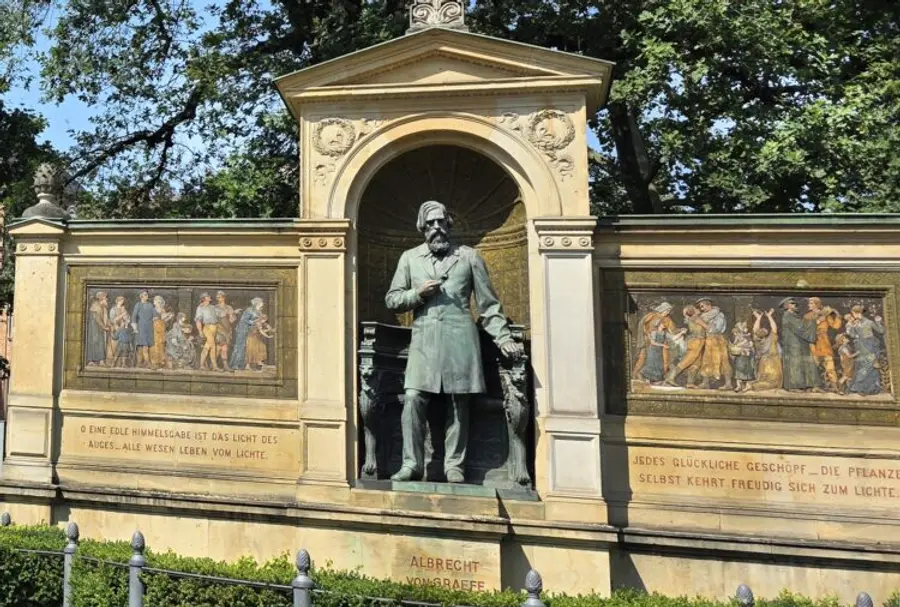
What kind of institution is Charité? Opened in 1710 by order of Frederick I of Prussia, it has grown to encompass four campuses, 17 centers, roughly 100 clinics, 3,000 beds, and approximately 15,500 staff—including more than 4,400 physician-scientists. The footsteps of 19th-century medical luminaries Rudolf Virchow and Robert Koch can be traced here, and more than half of Germany’s Nobel laureates in Physiology and Medicine have been associated with it. As a partner of the Einstein Foundation, it is a vast knowledge ecosystem where researchers and clinicians from around the world interact. At this very institution, considered one of Europe’s best, a decades-long education reform was carried out to train "real doctors for patients."
A Blueprint for Reform: Understanding the Human Being
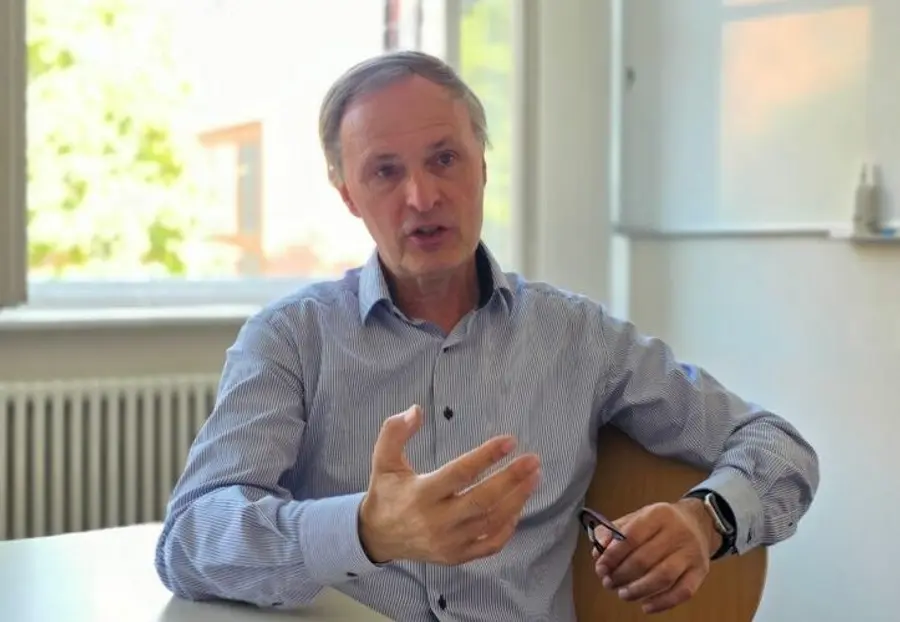
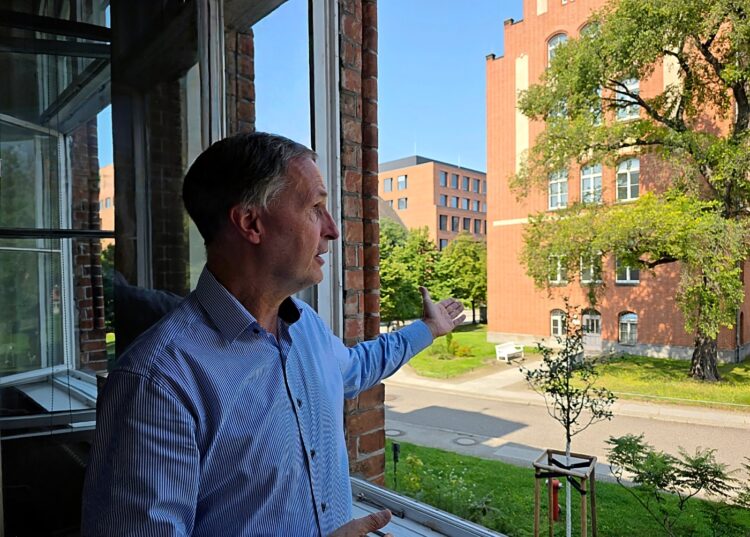
When I visited Charité on August 14, morning fog drifted between the red-brick buildings along the Spree River in Berlin. I was on my way to meet Professor Harm Peters, who led Charité’s medical education reform. He is the president of the Association of Medical Schools in Europe (AMSE), an executive board member of the World Federation for Medical Education (WFME), and director of the Dieter Scheffner Center for Medical Education and Educational Research.
When I opened the door to his second-floor office, wide windows facing the lecture halls were thrown open. After taking a breath, Professor Peters spoke his first line: “Becoming a doctor is not about accumulating knowledge; it is about understanding the patient.”
What sounded like a declaration was actually a blueprint for reform. Professor Peters documented this major overhaul in the international journal Medical Teacher in a paper titled ‘Moving a mountain: Practical insights into mastering a major curriculum reform at a large European medical university.’ What felt like moving a mountain was the process of creating doctors who understand patients, not just those full of academic knowledge.
The Question Raised by the Student Boycott
The reason for the 1989 boycott was simple. Lectures were packed, but opportunities to meet patients at the bedside and learn hands-on were extremely rare. Even bedside teaching had become formalistic. In the traditional separation of lectures and practicals, students who performed well on exams were praised, while those who could explain things well to patients or perform procedures carefully were not properly evaluated.
Facing these complaints, university authorities immediately began experimenting. They selected 10% of the student body for a pilot Problem-Based Learning (PBL) program that examined patient cases from multiple angles rather than teaching simple diseases. Communication, teamwork, and clinical skills were systematically trained.
The results were telling. When asked, “Are you ready to work as a doctor tomorrow?” only 20% of students in the traditional program answered “yes,” compared to 70% of those in the innovative pilot. These numbers moved the faculty. Professor Peters recalled that asking this single question—"Do students feel prepared?"—was the true starting point of the reform.
Moving the Mountain: Overcoming Resistance
Willpower alone did not solve every problem. Germany tightly regulates undergraduate medical education at the national level, meaning Charité had to negotiate to revise national regulations. Long debates followed with faculty who believed the traditional approach was correct. Changing the curriculum for an organization with 4,000 students was, in Peters’ words, like ‘moving a mountain.’
“Reform cannot be achieved by a plan alone,” Peters noted. It requires leadership, clear evidence, and the political skill to move stakeholders. The greater the change, the greater the resistance. The task was to endlessly engage with opponents and turn them into collaborators. Peters often witnessed staunch opponents becoming the reform’s greatest champions over time.
An Integrated Six-Year Program: Solving Patient Problems
The full overhaul unfolded over years. After a decade of pilot experience, Charité eliminated the separation between the two-year preclinical phase and the four-year clinical phase. From 2009–2010, an integrated six-year curriculum was applied to all new students. The core was the "Modular Curriculum of Medicine."
Competencies—knowledge, skills, and attitudes—expected at graduation were defined first, and the curriculum was designed backward so that these skills deepened annually. Instead of listing subjects separately, the curriculum placed real patient problems at the center. For example, while studying a patient with impaired myocardial function, anatomy, physiology, pathology, pharmacology, and cardiology are taught together.
The classroom changed completely. From the first semester, students practice patient interviews in small groups of seven or eight. Through the ‘Communication, Interaction and Team Competence’ workshop, they practice explaining technical terms in everyday language and mediating conflicts within multidisciplinary teams.
Learning with the Body and the Mind
Material learned intellectually during the semester was internalized through practical training during vacations. Training began with nursing practicums, followed by clinical rotations where students shadowed doctors like shadows. Classes were organized around a “patient of the week,” combining seminars and practicals.
“We designed education so that what is learned mentally is thoroughly learned physically,” Professor Peters explained. Through this, students learn the patient’s language early on. Moon Da-un, a Charité alumnus and neuropsychiatrist at University Hospital Zurich, described this as “training to see the patient’s life context.” He learned to listen to the patient’s whole life, an experience that shaped his current clinical attitude.
Assessment: Focus on Actual Competence
Assessment methods also evolved. While written exams were preserved, the core became Objective Structured Clinical Examinations (OSCEs), simulation consultations, and portfolio assessments. Charité introduced the concept of Entrustable Professional Activities (EPAs).
A doctor’s daily tasks are broken into work units—taking histories, physical exams, prescribing, and documenting. Supervisors assess how safely and independently a trainee can perform each. “Initially, students perform tasks with an instructor, then under supervision in the same room, and as they become proficient, supervision is reduced to being called in only when needed,” Peters explained. Students are now asked first, “What can you do safely?” rather than just “What do you know?”

A Culture of Co-Creation
The power behind this long-term reform was ‘open governance.’ Approximately 2,500 instructors participate each year, and module design is completely open to both faculty and students. Students participate as co-responsible members, helping determine class planning and teaching methods.
Since the full adoption of this curriculum, the ‘workplace shock’ felt by students in their final practical year has decreased. Students who start ward work within a month of admission feel familiarity rather than awkwardness by their final year. They convincingly apply what they’ve learned in front of patients.
Professor Peters pointed out several remaining tasks: maintaining continuity in the doctor-patient relationship within a changing clinical environment, the upcoming role of AI tutors in personalized learning, and connecting primary and tertiary care settings to ensure equivalent learning everywhere.
The reform at Charité, which began with a student boycott in 1989, is now showing results at the patient’s bedside. The mountain they set out to move is, in fact, moving.
〈Who is Professor Harm Peters?〉 He graduated from the Free University of Berlin in 1987 and became a specialist in internal medicine (subspecialty in nephrology) in 1998. He joined Charité as a professor of internal medicine in 2000. Beginning in 2003, he led the curriculum reform as a member and vice-chair of the Charité Education Reform Curriculum Committee, eventually overseeing cross-disciplinary operations and innovation projects. Since 2013, he has chaired the 'Student Teaching Activities' committee of the German Association for Medical Education (GMA). In 2015, he was elected to the executive board of the Association of Medical Schools in Europe (AMSE) and was chosen as its president in 2020. As a board member of the World Federation for Medical Education (WFME), he is currently developing standardization and quality control indicators for global medical education and patient care.
Interpreting and reporting assistance: Choi Won-tak
Reporting assistance: Moon Da-un, Neuropsychiatrist at University Hospital Zurich, Switzerland (Charité Medical School Graduate)
This project received support from the Press Promotion Fund created by government advertising fees.