Editor’s Note: Senior community centers across South Korea have long been dominated by Go-Stop—a popular traditional Korean card game played with Hwatu cards—fueled by the widespread belief that playing it helps ward off dementia. To mark Dementia Overcoming Day, Kormedi.com examines a growing wave of evidence-based prevention programs offering dynamic alternatives to the card table. As these innovative initiatives gain traction nationwide, it may finally be time to step away from the cards.
At 1 p.m. on Sept. 16, the atmosphere inside a senior center in Michuhol-gu, Incheon, was strikingly different from its usual quiet routine. About 15 kindergarteners filled the hall where older adults typically gather to pass the time over cards. As the children paired up with seniors and opened board games, the room quickly came alive with laughter, chatter, and cheers.
The children taught the seniors how to play, and the older adults clapped enthusiastically every time a child completed a turn. After the board games, both generations joined in physical activities—tossing balls into net pockets and snatching colorful ribbons in energetic group games.
“When Wednesday comes around, I put extra thought into what I wear. I look forward to seeing the kids so much,” said Kim Jeong-hee, 71, during a game session. “The senior center, which used to be so quiet, is suddenly full of energy and laughter. On Wednesday mornings, I wake up early and get ready right away. It’s a shame the program ends in October.”
Intergenerational Connection Through Play
Ahead of the 19th Dementia Overcoming Day on Sept. 21, the center was bustling with an “intergenerational empathy program” jointly operated by Wootso, a children’s character and content company, and the Korea Senior Care Research Association.
The program pairs young children with seniors to play two types of board games designed to stimulate numerical reasoning and memory. It also incorporates physical activities that combine cognitive challenges with light exercise. Launched last year to enthusiastic feedback, the program returned this year for a 10-week run from Aug. 26 through Oct. 28, meeting every Wednesday at 1 p.m.
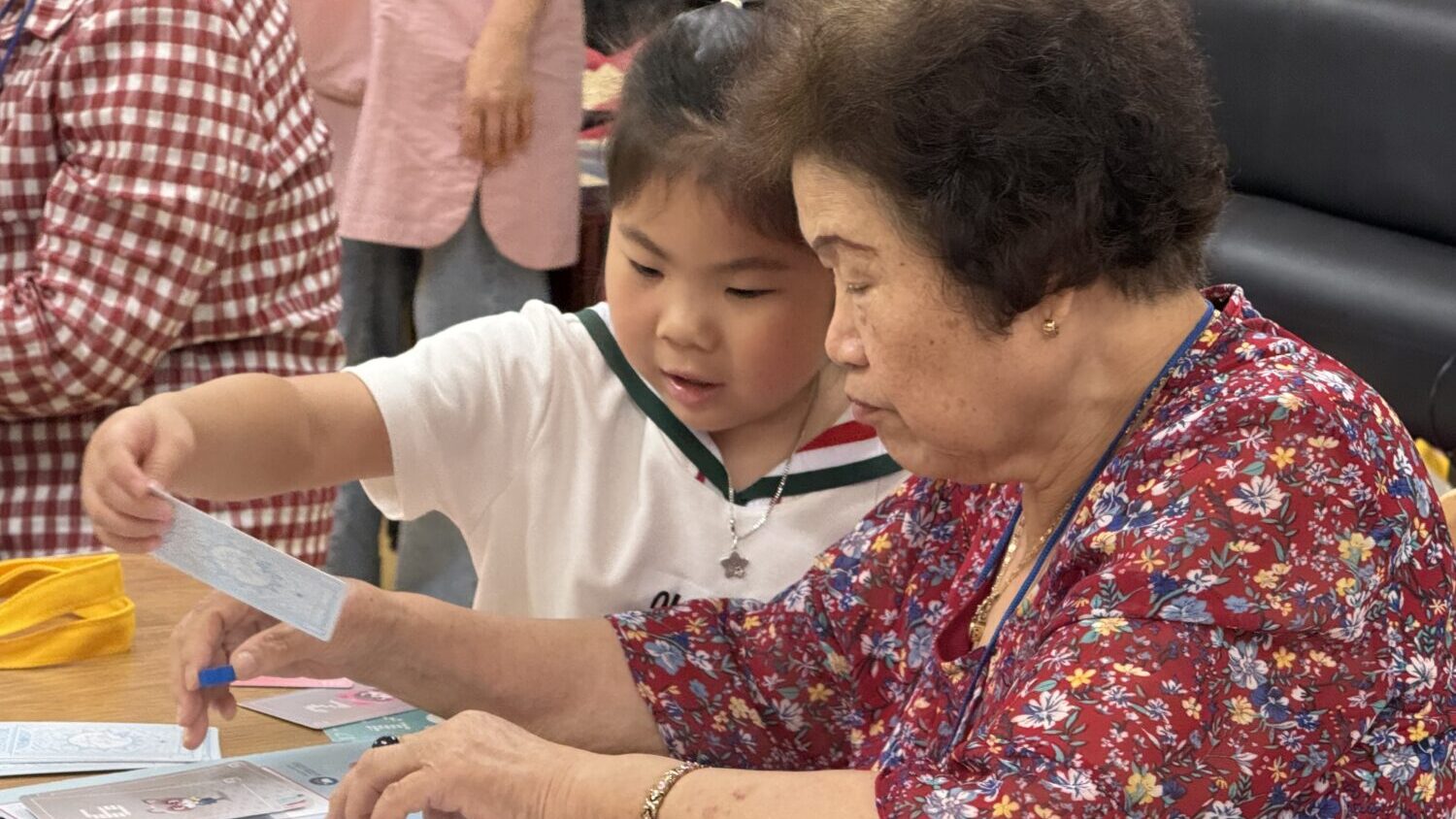
The initiative aims to move away from isolated cognitive exercises and shift toward active, shared play across generations.
“Conventional cognitive stimulation programs for dementia prevention are usually conducted individually or target seniors in isolation,” said Kim Jong-se, CEO of Wootso, who helped design the program. “We wanted to give children an opportunity to communicate with the grandparent generation—an experience that is increasingly rare today—while boosting enjoyment and cognitive processing for seniors.”
Measurable Cognitive Gains in Clinical Assessments
Organizers verified the program's efficacy through objective cognitive evaluations. Last year, Wootso and the Korea Senior Care Research Association assessed 24 senior participants at the center using the Korean version of the Cognitive Impairment Screening Test (CIST), developed by the Ministry of Health and Welfare and the National Institute of Dementia.
A comparative analysis of pre- and post-program scores demonstrated statistically significant improvements in cognitive function, with particularly pronounced gains in memory.
Board games have long been recognized in clinical settings as effective therapeutic tools. A 2024 meta-analysis conducted by researchers in the Department of Occupational Therapy within Baekseok University’s Division of Health Sciences reviewed eight studies on board-game interventions. The analysis revealed that structured board-game therapy for dementia patients significantly improved attention span, working memory, cognitive flexibility (task switching), and self-esteem, while reducing depressive symptoms.
“Playing board games naturally forces participants through a repeated cycle of understanding rules, formulating strategies, and solving problems,” explained Kim Jong-se. “Sustained cognitive training combined with emotional connection across generations yields powerful therapeutic synergy.”
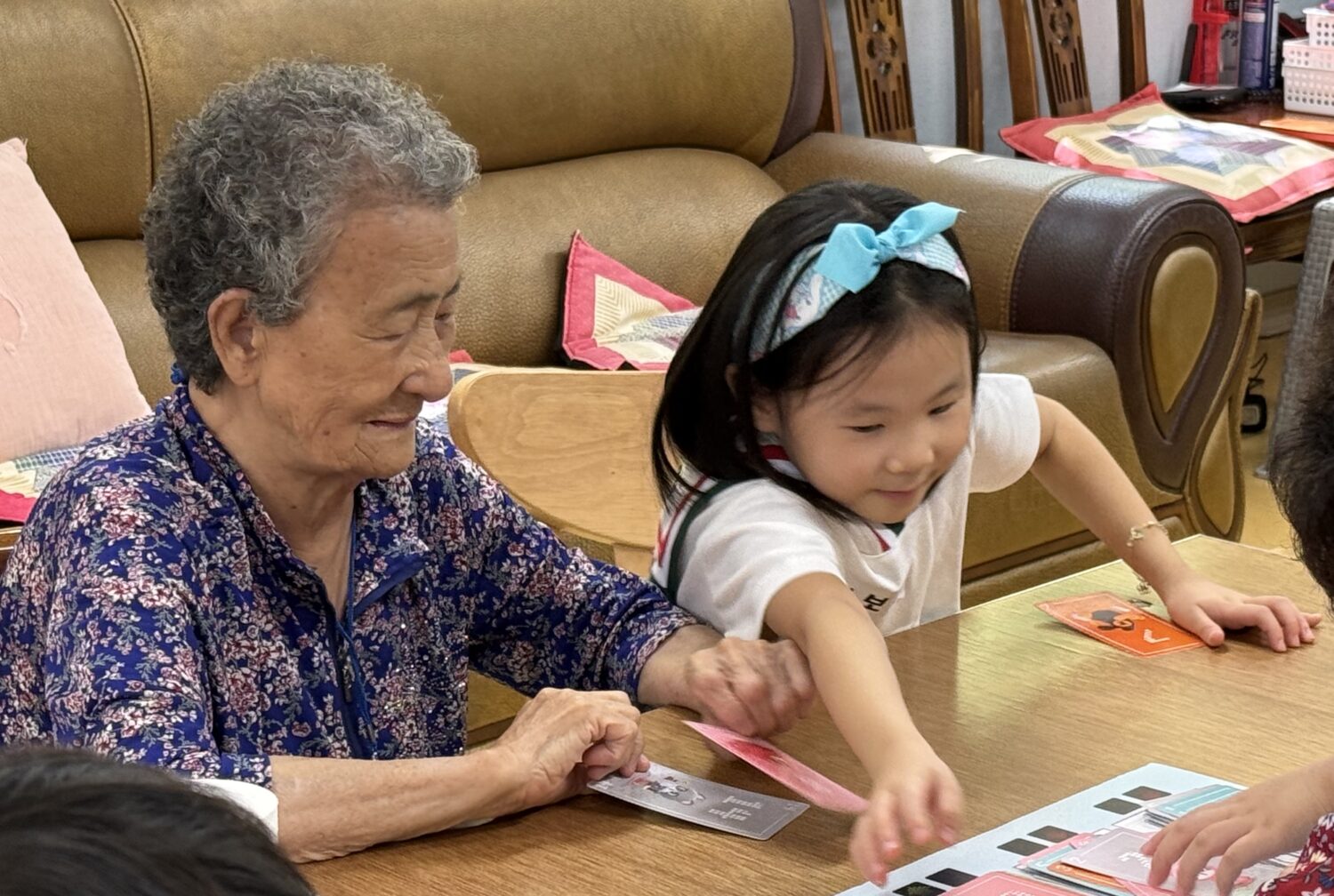
This year’s curriculum expanded to include physical games—such as team ball-tossing and ribbon-snatching—engaging mind and body simultaneously without causing physical strain.
“Cognitive stimulation in older adults produces far better outcomes when participation is voluntary and active,” said Kim Seong-eun, an instructor with the Korea Senior Care Research Association. “Sharing joyful moments with children gives seniors something to look forward to each week, motivating them to participate wholeheartedly.”
Senior participants expressed strong enthusiasm for the initiative. “These days, it’s rare to see children around, so having them come to our senior center every week is an absolute joy,” said Nam Mi-hye, 67. “Even the oldest members here completely transform their attitude and participate actively when the kids are in the room.”
Overcoming Initial Doubts to Build Lasting Bonds
The partnership was not without initial apprehension. Kim Hye-in (a pseudonym), 31, a kindergarten teacher who accompanied the children, recalled her early worries: “When we were first approached to collaborate with the senior center, I was quite concerned.” She worried that parents might feel uncomfortable if seniors, delighted to see the children, held their hands or patted them affectionately.
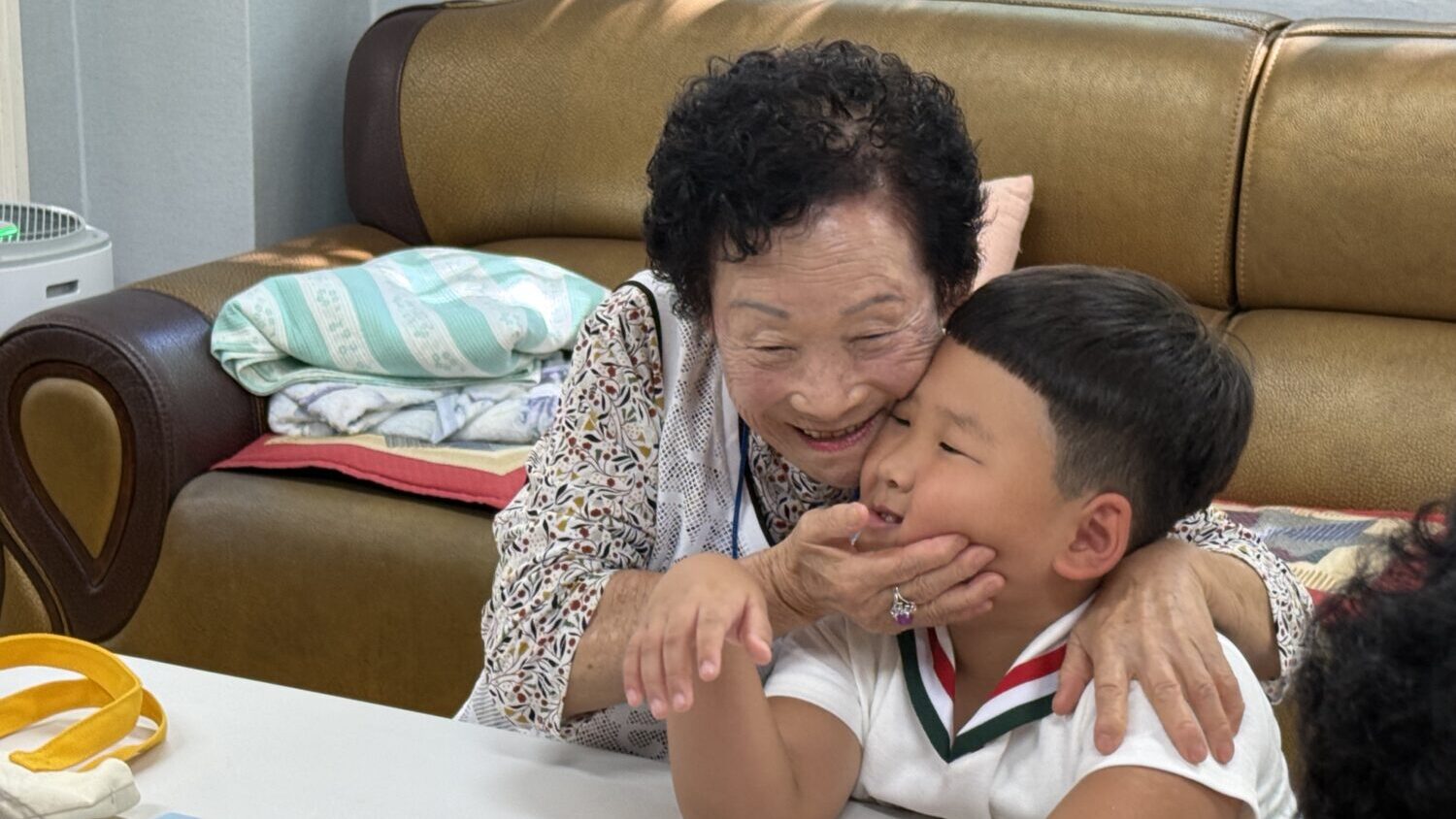
However, those concerns proved unfounded. “Seniors today are extremely considerate about personal boundaries,” Kim Hye-in noted. “In fact, after two or three sessions, the children were the ones running up to hug the seniors and rub cheeks with them. Parents also noticed positive changes at home, reporting that their children were singing traditional songs learned from the seniors and playing hand-clap games.”
She added, “There’s an old saying that it takes a village to raise a child, and seeing this program made me realize what that truly means. It was deeply moving to watch children and seniors with no prior connection form genuine friendships.”
The Global Rise of Integrated Intergenerational Care
Intergenerational care models that bring seniors and children under one roof are gaining momentum worldwide under the framework of "integrated intergenerational care."
In Japan, co-located care facilities combining senior daycare centers and preschools emerged as early as the late 1980s. A leading model is Kotoen in Edogawa, Tokyo, where elderly residents and children share daily routines, meals, and recreational walks within a unified environment.
In the United States, Providence Mount St. Vincent in Seattle, Washington, established an Intergenerational Learning Center within its senior care facility in 1991, allowing residents and young children to engage daily in art, music, and social activities.
Similarly, China—facing the twin challenges of declining birth rates and a rapidly aging population—is implementing its “one old, one young” (一老一小) national policy framework. Local governments across China are co-locating senior care facilities and child daycare centers within shared residential complexes to foster intergenerational interaction.
While formats vary, the overarching objective remains uniform: providing seniors with meaningful social engagement while helping children develop empathy and connection with older generations. This approach also reflects a broader societal shift toward shared community caregiving.
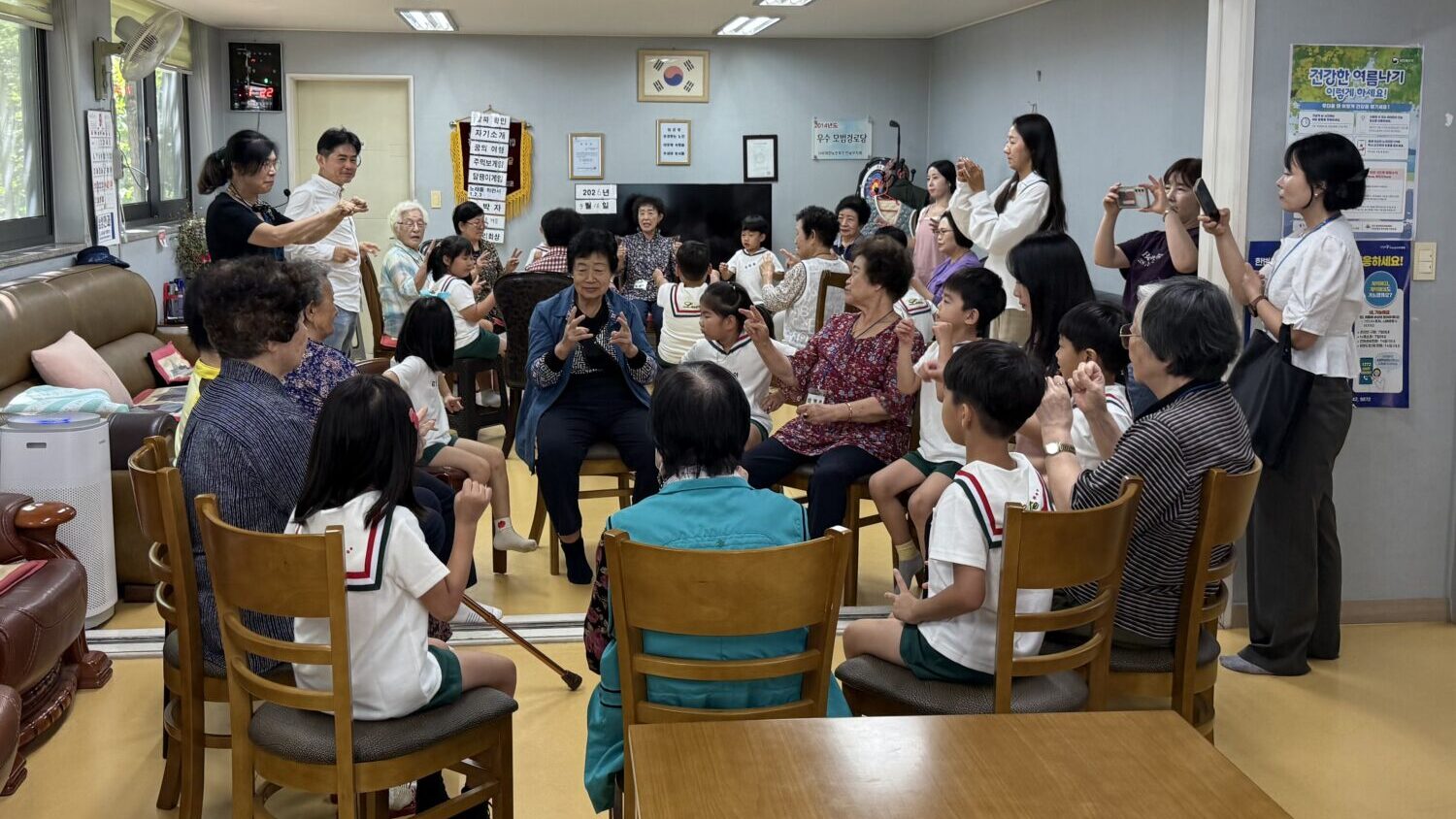
At a small senior center in Incheon, that shift unfolds every Wednesday. Seniors and children who began as strangers now eagerly count down the days until their next meeting.
“On the days I get to see the kids,” said Kim Jeong-hee, “my whole day is fun from the moment I step through the door.”
(Editor’s Note: Part 2 will explore cognitive prevention programs run by local dementia relief centers and welfare facilities nationwide.)