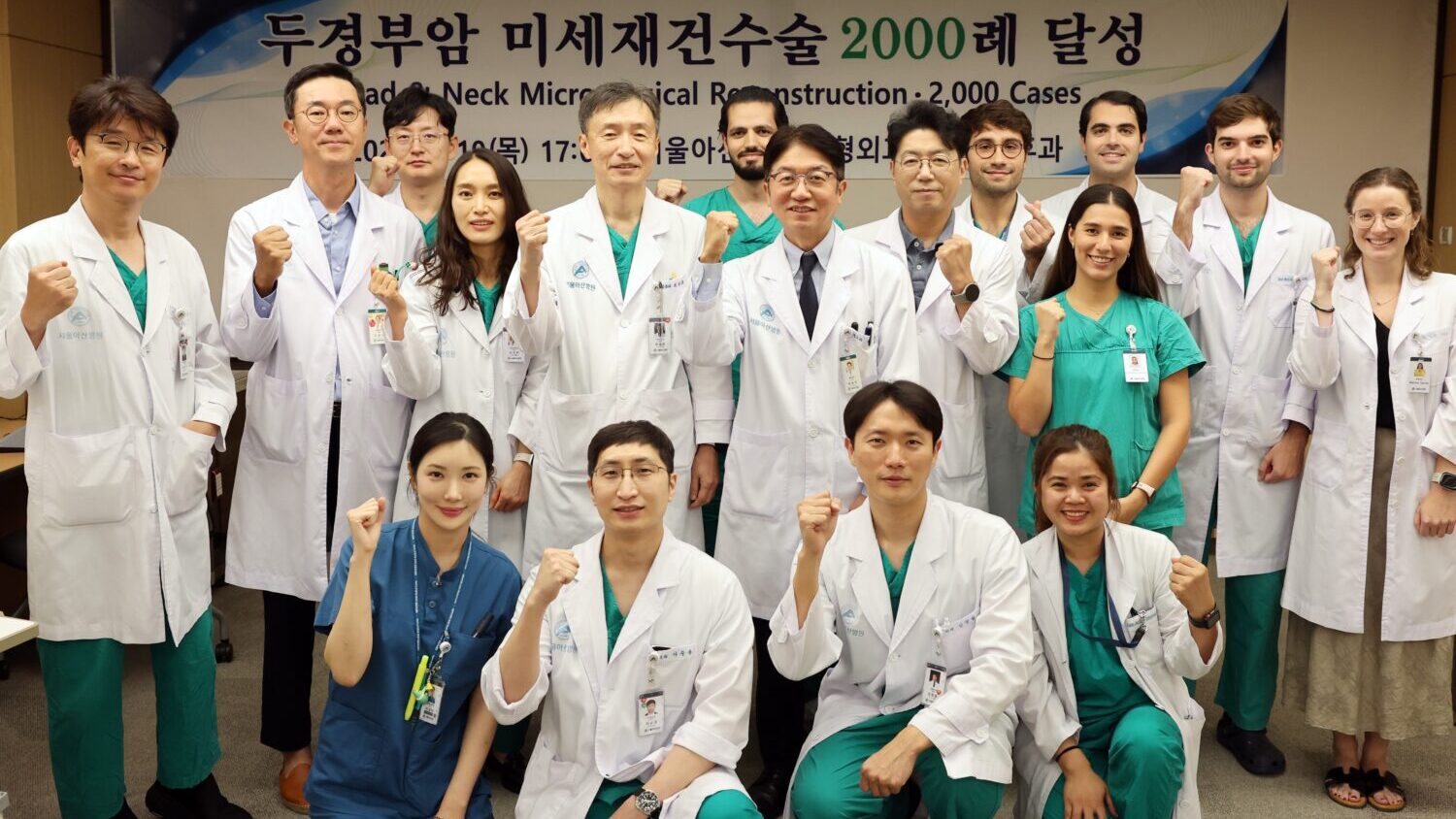
When a 50-year-old patient named Song was diagnosed with oral cancer, he underwent surgery to remove his entire tongue. The operation did not end with the cancer resection; surgeons immediately performed microsurgical reconstruction to restore his ability to speak and swallow. Song’s procedure marked a major milestone for Asan Medical Center, where a plastic surgery team led by Choi Jong-woo, Oh Tae-seok, Jung Woo-sik, and Kim Young-chul announced on the 14th that it had become the first in South Korea to complete 2,000 head and neck cancer microsurgical reconstructions.
After beginning the procedures in 1996 and surpassing 1,000 cases in 2019, the hospital added another 1,000 cases over the subsequent seven years. In Song’s case, surgeons transplanted an anterolateral thigh free flap (ALT)—combining skin, soft tissue, blood vessels, and nerves from his thigh—alongside the gracilis muscle to reconstruct the missing tissue. Micro-surgeons connected blood vessels measuring just 1 to 2 millimeters in diameter under a microscope. Following recovery and rehabilitation, Song successfully returned to daily life, regaining his speech and swallowing function.
Restoring Essential Functions and Quality of Life
While Asan Medical Center averaged roughly 30 head and neck reconstruction procedures annually in the 2000s, the hospital has averaged over 130 cases per year over the past five years—a more than fourfold increase. This growth has been supported by a multidisciplinary care system where plastic surgery collaborates closely with otolaryngology, medical oncology, radiation oncology, rehabilitation medicine, dentistry, and nursing teams.
Head and neck cancer encompasses malignancies arising in the oral cavity, pharynx, larynx, maxilla, and mandible. In advanced cases, aggressive tumor resection is necessary, but without immediate reconstruction, patients face severe impairments in eating, speaking, and facial appearance. Restoring lost tissue and organ function is therefore as critical as removing the tumor itself.
Pioneering Functional Muscle Transplantation
Choi Jong-woo’s team has advanced microsurgical techniques by combining tissue transfer with functional muscle transplantation to restore actual tongue movement—a method designed to minimize post-operative swallowing difficulties. The innovation earned global recognition when Choi received the "Best Save Award" at the 12th World Society for Reconstructive Microsurgery meeting in Singapore in 2023 for a complex jaw and tongue reconstruction utilizing dynamic reconstruction, composite free flaps, and augmented reality.
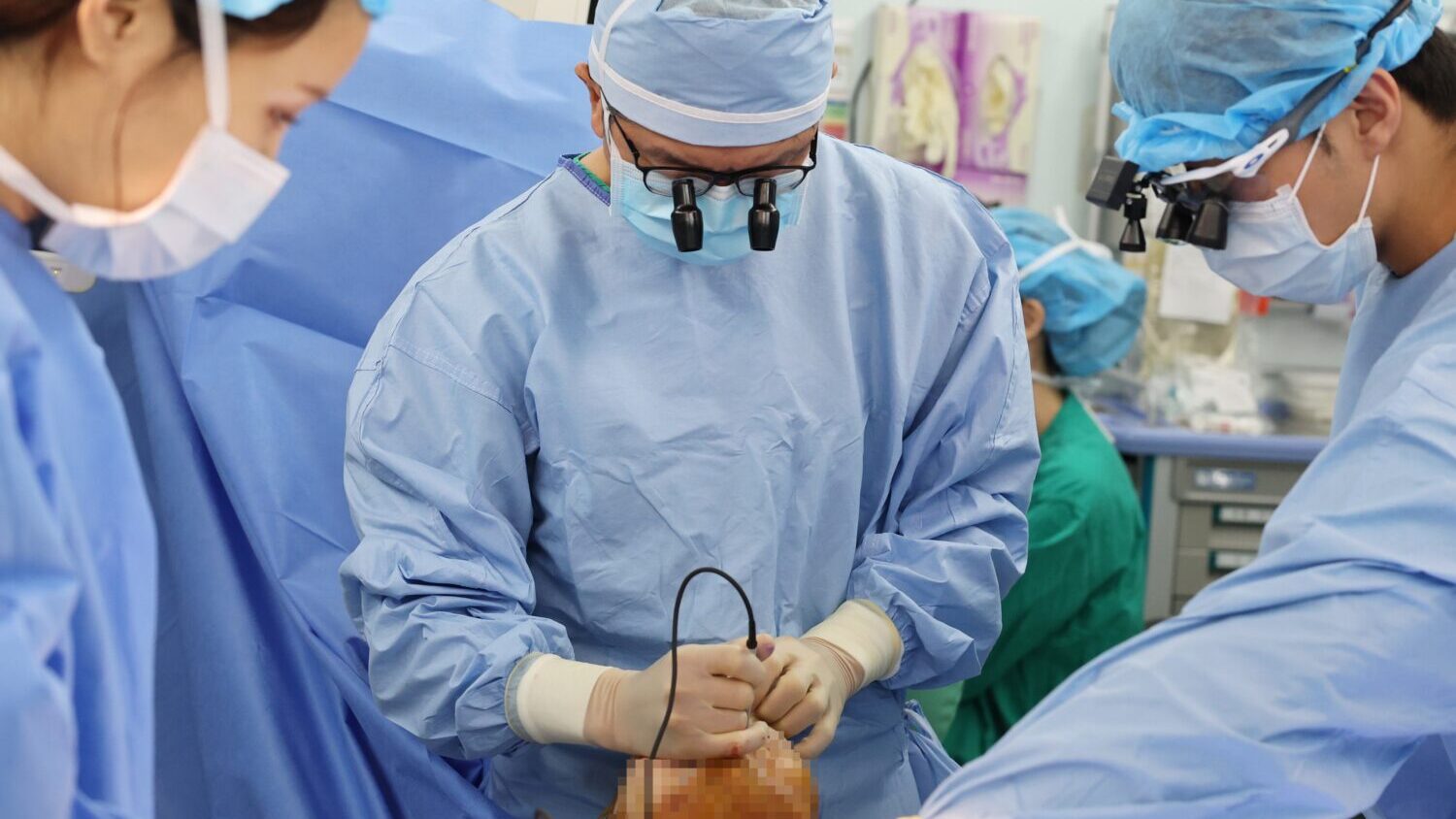
A typical head and neck reconstruction requires a marathon effort: otolaryngologists spend 5 to 6 hours resecting the tumor and neck lymph nodes, after which plastic surgeons spend another 5 to 6 hours meticulously rebuilding three-dimensional oral structures and connecting microvessels. Despite the extreme complexity, Asan Medical Center maintains a 97% success rate.
“Head and neck microsurgical reconstruction requires intense precision over long hours, often requiring emergency intervention if blood flow in transplanted tissue is compromised,” said Choi Jong-woo. “Yet seeing patients speak, eat, and return to their families provides immense professional fulfillment. Reaching 2,000 cases is a testament to years of seamless teamwork across multiple departments dedicated to helping patients regain their normal lives.”